

Is Trump Forcing Netanyahu to Stand Down? US President Warns Israel Would Be 'On Its Own' If It Strikes Iran
As tensions between Israel and Iran reach a boiling point, President Trump has intervened, signalling a shift in the US approach to Middle East diplomacy.
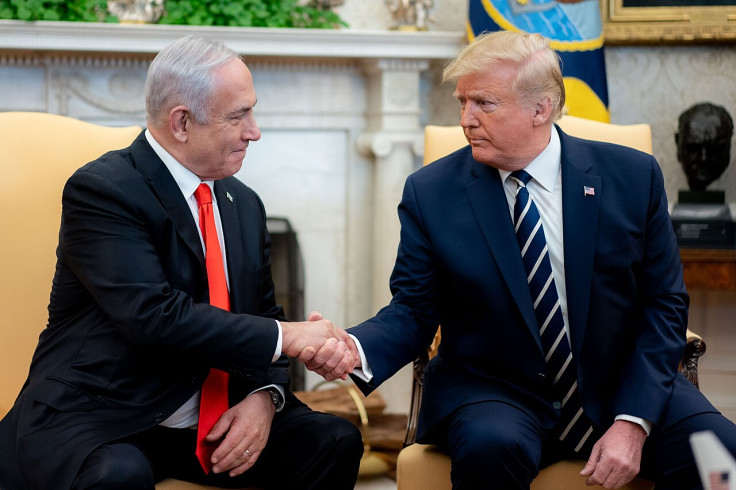
United States President Donald Trump has delivered a stern message to Israeli Prime Minister Benjamin Netanyahu, warning that Israel risks complete diplomatic isolation if it proceeds with further military action against Iran. The caution follows reports of a tense phone call between the two leaders, which reportedly influenced Israel's decision to pause a major wave of planned airstrikes.
The President's message, described as unusually direct, signals a potential fracture in the long-standing security partnership between Washington and Jerusalem.
'Bibi, You'll Be On Your Own', Trump's Reported Warning To Netanyahu
President Trump reportedly told Netanyahu in a private call, 'Bibi, you better be careful, or you will be on your own very soon.' The phrase quickly became the focal point of international attention, reinforcing concerns about shifting US-Israel relations tensions at a critical moment in the Middle East.
In another reported line from the same conversation, Trump said, 'you don't have a green light,' signalling that while Israel may act independently, it would not have explicit US approval.
Israel's Planned Strikes Reportedly Paused After US Intervention
The exchange comes after Iran launched missile attacks on Israel, marking a sharp escalation in hostilities. Israeli officials were reportedly preparing a significant wave of airstrikes in response, targeting sensitive sites inside Iran. However, those plans were later put on hold following high-level discussions with the United States.
This has fueled speculation that Netanyahu cancelled airstrikes on Iran operations being paused under direct diplomatic pressure.
Private Tensions Surface in Trump-Netanyahu Phone Call
Behind the scenes, US officials and Israeli sources told Axios about a complex and tense exchange.
Netanyahu, according to Israeli officials, had been preparing what could have been the largest strike operation against Iran since the April ceasefire period.
The plan involved multiple targets, but it was ultimately halted after the Trump-Netanyahu phone call and internal military reassessments.
Israel's Military Dependence On US Support Under Scrutiny
The broader context points to growing Israeli military dependence on US support, especially for sustained operations involving ammunition supply, intelligence coordination, and regional logistics.
Security analysts, including Yehoshua Kalisky from Israel's Institute for National Security Studies, have noted that long-term military engagement without US backing would be extremely difficult.
UPDATE: President Trump told Israeli PM Netanyahu: "Bibi, you better be CAREFUL, or you will BE ON YOUR OWN [against Iran] VERY SOON!" — Axios
— Secretary Melania Brooke (@mmkingzz) June 8, 2026
TRUMP: "[Iran] called us and said that they are not doing any more attacks and asked us to tell Israel not to do any more attacks. pic.twitter.com/qLS0O6xFdu
Iran Response And Regional Escalation Risks Remain High
Iran, meanwhile, has continued to escalate its regional posture, linking any potential ceasefire agreement to broader conditions involving Israeli military activity in neighbouring territories such as Lebanon. This has further complicated diplomatic efforts and intensified Israel-Iran conflict escalation risks across the region.
In parallel, Trump has used Truth Social to issue a Trump ceasefire demand Truth Social message, urging both Israel and Iran to halt hostilities immediately. He also stated that both sides were 'looking to do an immediate CEASEFIRE,' reflecting his continued push for rapid de-escalation.
Regional reactions have also added pressure, with Gulf Arab states reportedly seeking a quick resolution to avoid further destabilisation of energy infrastructure and trade routes. Past rounds of conflict have already impacted airports, oil facilities, desalination plants, and industrial sites across the region.
What Happens Next
At the heart of the situation is a shifting power dynamic between Washington and Jerusalem, where strategic alignment is being tested amid real-time conflict. The phrase 'Bibi, you'll be on your own' has become symbolic of a potential recalibration in US-Israel relations tensions.
For now, Netanyahu's next steps remain closely watched, particularly as Iran continues missile activity and Israel reassesses its military response options.
Meanwhile, the global community watches closely, noting that the traditional framework of Middle East diplomacy is undergoing a significant and public recalibration.
© Copyright IBTimes 2026. All rights reserved.