

Fired Workers Awarded Six-Figure Payouts After Losing Corporate Jobs Over Charlie Kirk's Death Posts
First Amendment claims lead to significant payouts for public employees dismissed over online posts about Charlie Kirk.
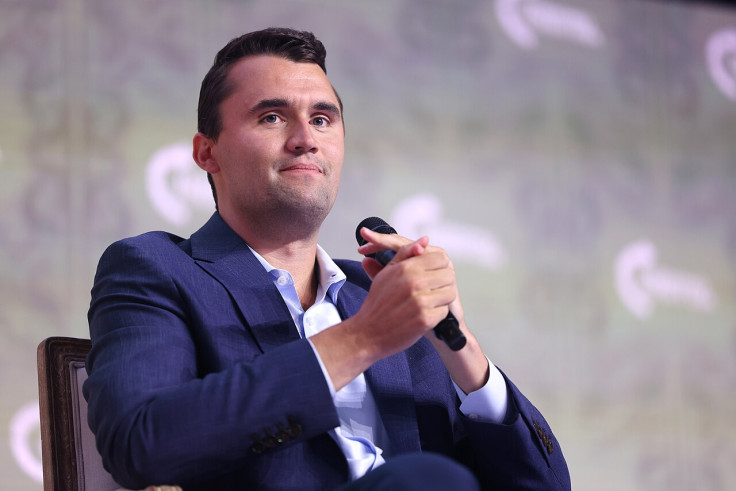
Public workers who were sacked over what they wrote online about Charlie Kirk's assassination are now collecting six-figure settlements, with one payout reaching £657,000 ($835,000) as their First Amendment claims hold up in court.
Nine months after the conservative activist was shot dead at a Utah university, a run of First Amendment retaliation cases has been resolved in favour of people who lost their livelihoods over social media posts.
Every known resolved case so far involves someone employed by a government agency or a public institution, where free-speech protections are at their strongest.
A Wave of First Amendment Settlements Across Public Payrolls
Maria Ruhtenberg, an attorney who had served 15 years as an Iowa public defender, was dismissed last September after writing on a private Facebook page that 'you reap what you sow' and that whoever shot Kirk should go to prison. She won her job back on appeal in November, then sued the state and her supervisor in federal court for retaliation. The two sides settled in May and Ruhtenberg received £98,000 ($125,000) in damages, she told NPR, which first reported her account.
Suzanne Swierc, a health educator at Ball State University in Indiana, was fired six days after a post that began, 'If you think Charlie Kirk was a wonderful person, we can't be friends.' Her complaint, filed by the ACLU of Indiana, records that the meeting at which the university president terminated her lasted about five minutes and that her page had been set to private since 2007. She settled for £177,000 ($225,000) and left the university.
Brittney Brown, a biologist with Florida's Fish and Wildlife Conservation Commission, was dismissed a day after the right-wing account Libs of TikTok, run by Chaya Raichik, singled her out for reposting a satirical post. She settled with the state for £382,000 ($485,000).
Melissa Crook, a teacher in Iowa's Creston Community School District, settled for £114,000 ($145,000) and full benefits after commenting on a relative's post, while a tenured Austin Peay State University professor in Tennessee was reinstated with a £394,000 ($500,000) payout. The professor, who had merely reposted a 2023 news headline quoting Kirk's own words on gun deaths, was also represented by FIRE.
From a Sacking to a Jail Cell in Tennessee
Not every case stopped at the loss of a job. Larry Bushart, a retired Tennessee law enforcement officer, was jailed for 37 days on a £1.6 million ($2 million) bond after sharing a meme that quoted President Trump's remark, 'We have to get over it,' made after a 2024 school shooting at Perry High School in Iowa. Local deputies treated the post as a threat against the similarly named Perry County High School in Tennessee, even though the meme plainly referred to a different state.
Perry County Sheriff Nick Weems later acknowledged he knew the meme pointed to the Iowa shooting, and the felony charge was dropped in October. Bushart, represented by the Foundation for Individual Rights and Expression and the firm Phillips & Phillips, sued Weems, an investigator, and the county in federal court.
The parties announced an $835,000 settlement on 20 May 2026, which converts to about £657,000. 'I am pleased my First Amendment rights have been vindicated,' Bushart said in the joint statement. A public records request later showed the school had exchanged no communication about his post.
FIRE senior attorney Adam Steinbaugh said no one should be 'hauled off to jail in the dark of night over a harmless meme.' During his weeks in custody, Bushart lost a post-retirement job and missed both his wedding anniversary and the birth of his grandchild, according to the lawsuit.
The Heckler's Veto and the Workplace Disruption Defence
The firings followed a coordinated push by pro-Trump influencers, lawmakers, and Vice-President JD Vance, who urged the public to report posts they considered unsympathetic to Kirk. An investigation by Reuters counted more than 600 people who were fired, suspended, or investigated over their statements about his death.
Lawyers describe the dynamic as a 'heckler's veto,' where outsiders manufacture disruption so that a speaker is punished for an unpopular view. For a public employee, Cary Davis of FIRE told NPR, the decisive legal question is whether the speech actually disrupted the government workplace. In several settled cases, that argument collapsed under scrutiny.
Florida's wildlife agency told the court it had fielded 'hundreds of citizen contacts' over Brown's post, yet produced only dozens during discovery and drew a court sanction. In Ruhtenberg's case, the office had received a single complaint and one media inquiry. FIRE says it is tracking nine more similar cases still moving through the federal courts.
The settlements have delivered vindication and money, yet several of the workers told NPR the ordeal left a mark that no cheque can erase.
© Copyright IBTimes 2026. All rights reserved.