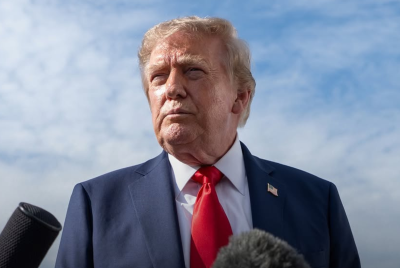
'More Popular Than Any Politician': Abortion Group Launches Record $23.5M Plot to Flip Trump Voters
Reproductive Freedom for All is investing $23.5 million in key states to sway swing voters and support Democrats who back abortion rights.

A major US abortion rights organisation, Reproductive Freedom for All, is launching what it calls a record 'Abortion Group Launches Record $23.5M' push in 2026, pouring $23.5 million into races across Arizona, Michigan, Nevada, California and Georgia this year in a targeted effort to flip Trump voters and elect Democrats who back abortion access.
The news lands four years after the US Supreme Court overturned Roe v Wade, scrapping the nationwide constitutional right to abortion and handing the issue back to individual states.
Since then, at least 21 states have moved to restrict or ban the procedure, creating a messy patchwork of rules that depends on where a woman happens to live. Reproductive Freedom for All, which was previously known for state-level fights and ballot measures, is now openly pivoting towards the midterms and control of Congress, arguing that only federal action can rebuild nationwide protections.
Abortion Group Launches Record $23.5M As Roe Fallout Deepens
The group, known by its initials RFFA, says the $23.5 million war chest is the largest midterm spend in its history.
The money will fund advertising, field organising and digital outreach aimed not at the Democratic base, but at what campaign operatives like to call the squishier middle, independents, 'soft Republicans' and split-ticket voters in swing districts.
These are voters who, according to the organisation's own polling, tend to support abortion rights but still backed Donald Trump or other Republican candidates in 2024. The campaign will zero in on those mixed messages and try to prise them away from Trump-aligned Republicans in 2026.
As the group itself put it, it is targeting people 'whose support for abortion access puts them at odds with Trump and his endorsed candidates.'
RFFA president and chief executive Mini Timmaraju is blunt about the political calculus. 'Abortion is popular, more popular than any individual politician,' she said in a statement announcing the push. In her view, it is Trump and what she calls the 'MAGA movement' that have drifted out of step with the mainstream, as one state after another introduces tighter rules on the procedure.
'What's not popular is Trump and the MAGA movement, who continue to lose voter support with every new attack on abortion access,' Timmaraju argued, accusing Republicans of advancing policies that 'make it harder for people to decide whether, when, and how to grow their families.'
In an interview, she did not sugarcoat the current landscape. Timmaraju described the state of reproductive rights as 'pretty bleak,' citing those 21 states with bans and severe restrictions.
Yet she also insisted that many of the major state-level battles have already been fought and, in her telling, largely won where abortion rights advocates had the chance to put the issue directly to voters. 'We've won most of the state battles' and there are not many left, she said.
From Ballot Wins To Federal Power Play
The new push to flip Trump voters is rooted in a paradox that emerged in 2024. Voters in several states approved abortion rights ballot measures, but then backed Trump and other Republican candidates who oppose abortion. That split-screen result has clearly rattled and energised campaigners.
Timmaraju still believes the ballot box is on her side. 'I think in every state where we have a chance to go state by state and fight this battle, where we have the opportunity to take something to the ballot, we win,' she said. The problem, as she tells it, is that ballot wins alone are not enough, particularly for residents of the most restrictive states.
That helps explain why she is putting what she calls an 'outsized' focus on the midterms, even as Democrats talk more loudly about the economy and security than about reproductive rights this cycle. RFFA will still engage in governor's races, attorney general contests and state ballot measures, she said, but the centre of gravity has shifted.
'If we don't win at the federal level, we cannot restore access in all 50 states, and that's becoming more and more urgent,' Timmaraju warned. For voters who live in states with bans, the stakes are not abstract. The choice is often between travelling across state lines, risking legal penalties, or carrying an unwanted pregnancy to term.

RFFA is leaning heavily on its own polling to argue that the politics are not as risky as some Democratic strategists fear. In a survey of voters in battleground US House districts, commissioned by the group, eight in ten respondents said it was important for lawmakers to protect access to reproductive care, with 58 per cent calling it 'very important.'
Half of those battleground voters said lawmakers should pass laws protecting abortion access nationwide.
The poll deliberately oversampled a very specific slice of the electorate, voters who did not support Kamala Harris in 2024 but voted 'yes' on abortion rights ballot initiatives in Arizona, Michigan and Nevada. In other words, precisely the kind of people RFFA now wants to nudge away from Trump-endorsed Republicans in 2026.
The polling methodology or the full data tables have not been verified, so everything should be taken with a grain of salt. That said, the top-line numbers track with what both parties have privately acknowledged since Roe fell, that abortion restrictions can be politically toxic in suburban swing territory, even for voters who normally lean right.
This is the unresolved tension RFFA is now spending $23.5 million to test. Can abortion rights, framed as a basic freedom 'more popular than any politician,' really pull wavering Trump voters across party lines in the heat of a midterm campaign, when plenty of other stuff is competing for their attention
© Copyright IBTimes 2026. All rights reserved.
- Recommended For You