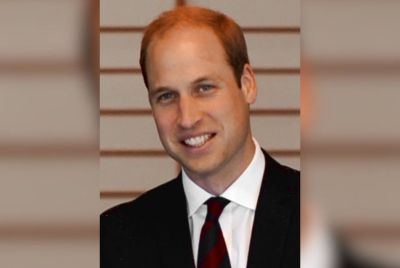
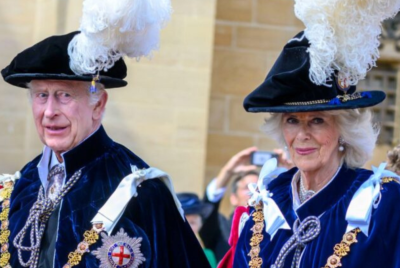
Prince William, King Charles Reportedly Humiliated as Audit Proves 'Era of Privacy Is Over'
National Audit Office scrutiny puts King Charles and Prince William's royal rental deals under renewed focus.

Prince William and King Charles have been drawn into a growing row over royal finances in London this week, after a National Audit Office report and subsequent TV commentary suggested the 'era of privacy' for the monarchy is effectively over.
The latest flare-up stems from a National Audit Office document that set out, in unusual detail, the rental deals enjoyed by several members of the royal family. The report, hailed in some quarters as a move towards transparency, has instead exposed how fragile the palace's long‑cultivated line between public accountability and private arrangements has become.
On GB News Breakfast, Mail on Sunday editor-at-large Charlotte Griffiths argued that the report has fundamentally altered expectations about what is considered the private financial business of Prince William, King Charles and their wider family.
'It's a very dangerous game to play,' she told the programme, responding to the newly published figures. In her view, the royal household cannot present itself as a 'new open monarchy' while still ring‑fencing some of the more favourable set‑ups enjoyed behind palace walls.
The End of Royal Financial Privacy
The National Audit Office, an official watchdog, has now laid out aspects of royal property and rental arrangements in a way that previous generations of monarchs never had to tolerate. Once those numbers are out there, Griffiths suggested, the public will not easily accept a return to 'that's private' whenever questions get awkward.
'You can't have a National Audit Office document revealing everything and laying your cards on the table and saying we are a new open monarchy, look how transparent we are, but then at the same time, when it actually gets to the nitty gritty, they're saying, "No, everything's private,"' she said. 'I don't think it works.'

Her remarks are not official policy, but they capture a shift in mood that Buckingham Palace has long tried to keep at bay. Royal finances have always attracted scrutiny, yet the combination of a formal audit, modern media and a public weary of cost‑of‑living pressures creates a far more unforgiving backdrop.
Griffiths argued that Prince William, at least, appears alive to that reality. She pointed out that 'only a couple of weeks ago' he revealed he was selling off £500,000 worth of assets from his Duchy of Cornwall estate, a detail that places him firmly on the record as taking a more commercial, accountable approach.
She also noted his insistence that he pays full market rent for his new Windsor home, Forest Lodge. The property, she said, costs £300,000 a year, or about £842 a day. The timing, in her reading, was no coincidence.
'How interesting that he was careful to make sure that was all in the public domain before this report came out, because he, of course, wants to be seen as not getting freebies and paying the full rent,' she said.
Audit Scrutiny Extends Beyond Prince William, King Charles
If William has tried to get ahead of the story, some of his relatives have been dragged into it. The National Audit Office document put a spotlight on members of the extended royal family whose arrangements look, by normal standards, especially generous.
One example highlighted by Griffiths was Princess Alexandra, a first cousin of the late queen. She described the princess as having carried out royal duties 'for quite a long time' but noted that Alexandra, now described as being of 'a very great age,' still lives in an expansive grace‑and‑favour home.
According to Griffiths, the princess pays £1,500 a year for 'a palatial home in the middle of Richmond Park.' '£1,500 quid a year is not too bad for that,' she observed, letting the understatement do most of the work.
The same report also drew attention to the situations of Princess Beatrice and Princess Eugenie. The sisters, now in their late thirties, are said not to pay any rent themselves for their apartments in royal palaces. Instead, Griffiths said, King Charles covers the cost in full.
'Beatrice lives at St. James's Palace when she's in London, that's where she stays, that's her pied à terre,' she said, adding that the princess also owns a £3 million house in Oxfordshire. In London, Beatrice reportedly has the use of a two or three‑bedroom apartment in St. James's Palace, which she once shared with Eugenie.
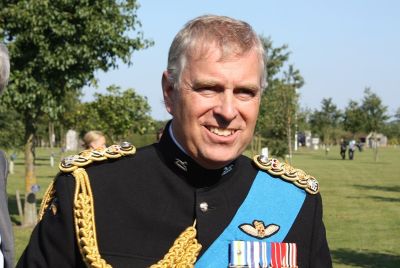
After Eugenie's marriage, Griffiths said, the younger sister was allocated a place at Kensington Palace. 'So they've got now two rent‑free properties,' she continued. 'Andrew isn't paying the rent, I think it is a reduced rent, it's 60% of the market value or something, but that's coming out of the privy purse.'
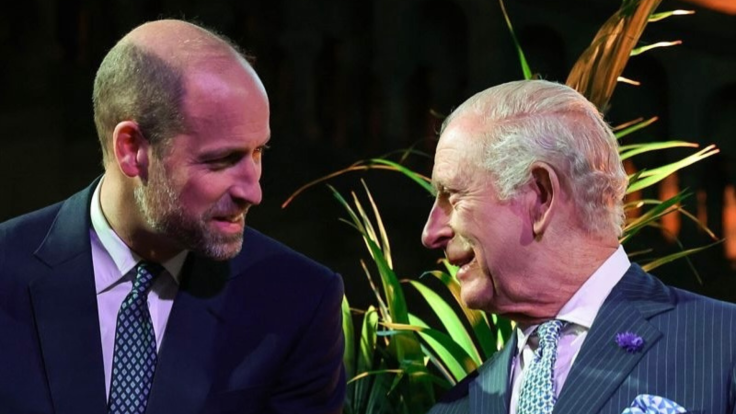
None of these details have been publicly disputed by the palace at the time of writing, yet there has been no detailed line‑by‑line rebuttal either. Buckingham Palace and Kensington Palace did not, in the material cited, offer comment on the specific claims about rental values, funding sources or the suggestion that Prince William and King Charles have been left looking exposed by the new audit culture.
Without official clarification, some figures and interpretations must be treated with caution. Where Griffiths refers to reduced rents or precise percentages, for instance, those points remain her account of the National Audit Office's findings rather than newly released royal paperwork. Nothing is confirmed in full public detail yet, and further clarity may depend on any additional details released by the Palace or the auditors. Until then, definitive conclusions cannot be drawn from the information currently in the public domain.
What is clear, though, is that once an official audit opens the door on royal finances, closing it again will be difficult. The days when the monarchy could rely on a polite silence over who pays how much, and for what, look increasingly far away.
© Copyright IBTimes 2025. All rights reserved.
- Recommended For You