

Trump Lifts Turkey Sanctions and Dangles F-35 Jets, Defying a Law Congress Wrote to Stop Exactly This
US President Trump signals potential policy shift on Turkey sanctions and F-35 sales at NATO summit
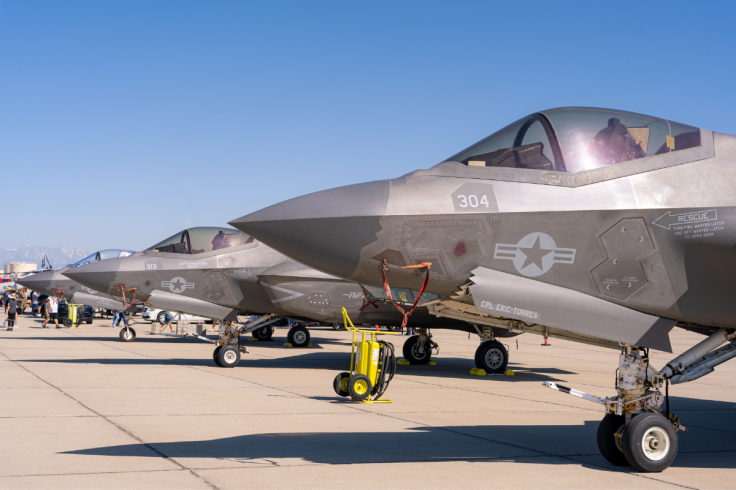
President Donald Trump has said the United States will lift sanctions on Turkey and will consider selling F-35 fighter jets to the country. Speaking to reporters ahead of his meeting with Turkish President Recep Tayyip Erdogan during the NATO summit in Ankara on Tuesday, Trump indicated that his administration was actively working on removing the sanctions.
He described the prospect of supplying the advanced American stealth fighter jets as 'certainly something we will consider'.
The Sanctions And Legal Restrictions
The sanctions were imposed in 2020 under the Countering America's Adversaries Through Sanctions Act after Turkey took delivery of Russia's S-400 air defence system despite US objections. This transaction also prompted Turkey's expulsion from the multinational F-35 fighter jet programme during Trump's first term in office.
Section 1245 of the Fiscal Year 2020 National Defense Authorisation Act explicitly prohibits the transfer of F-35 aircraft to Turkey unless the president provides written certification to Congress. The certification must confirm that Turkey has removed all S-400 equipment and personnel, committed never to reacquire the system, and does not possess any other Russian defence articles that could jeopardise the jet's advanced technology.
These provisions were crafted precisely to prevent the United States from proceeding with sales or transfers under the current circumstances.
Congressional And Allied Opposition
The announcement has met with swift criticism in Washington. Bipartisan groups of lawmakers have sent letters to the administration calling for strict adherence to existing statutory requirements before any further steps on F-35 sales. They have pointed to ongoing concerns about Turkey's foreign policy choices and the potential risks to sensitive US military technology.
Senator Lindsey Graham, a close ally of the president, has warned that attempts to lift the CAATSA sanctions could encounter significant resistance in Congress. Israeli Prime Minister Benjamin Netanyahu has publicly stated his opposition to any F-35 transfer to Turkey, highlighting the potential impact on the regional military balance and on Israel's qualitative military edge.
Analysts have noted that co-locating or integrating the Russian S-400 with F-35 aircraft could provide Russia with valuable data on Western stealth capabilities through electronic warfare interactions. Lawmakers have stressed the need to maintain the integrity of the F-35 supply chain and protect allied pilots from potential compromises.
Strategic Context For NATO And Turkey
Turkey remains one of NATO's most important members, contributing the alliance's second-largest armed forces and participating in a range of operations. Erdogan has repeatedly emphasised the importance of readmission to the F-35 programme as part of efforts to modernise Turkey's air capabilities alongside its indigenous KAAN fifth-generation fighter jet project.
The sanctions removal is seen as a diplomatic overture to strengthen ties with a key strategic partner in a volatile region. Trump has highlighted the close personal relationship with Erdogan and the loyalty shown by Turkey in various matters. Cabinet officials, including the secretaries of state and defence, are reported to be coordinating the sanctions lifting process.
Recent approvals for sales of F110 jet engines to Turkey have already been notified to Congress as part of broader defence cooperation. While the sanctions can be lifted through executive action, any actual delivery of F-35 jets would still need to satisfy the certification demands set out in law, giving Congress an opportunity to review and potentially object to the move.
© Copyright IBTimes 2026. All rights reserved.