Weeks After Bombing Iran, Trump Now Says It's 'A Little Bit Unfair' For Iran Not To Have Ballistic Missiles
US President Trump calls for fairness in missile possession, marking a significant policy shift.

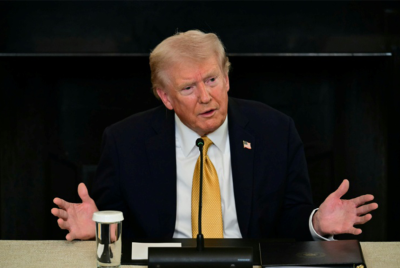
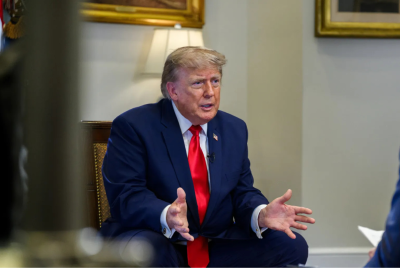
Donald Trump has stunned allies and critics alike by declaring it 'a little bit unfair' for Iran to be denied ballistic missiles, only weeks after American bombs fell on the very programme he once vowed to destroy.
The US president remarked on 17 June 2026 at a press conference on the sidelines of the G7 summit in France, hours after a memorandum of understanding with Tehran took effect and ended the 2026 war.
He argued that Iran deserved parity with armed neighbours such as Saudi Arabia and Qatar, drawing a sharp line between conventional missiles and nuclear weapons. The comment landed as one more jolt in a conflict that has lurched between threats of annihilation and offers of accommodation.
A Reversal Delivered on the Sidelines of the G7
Speaking to reporters in France, Trump said plainly that Tehran should be allowed to keep part of its arsenal. 'If other countries have them, it's a little bit unfair for them not to have some,' he said, in remarks reported by Reuters and Business Standard and captured on video that spread quickly online.
He went further when pressed on the distinction between Iran's missiles and its nuclear ambitions. 'A ballistic missile is not the same thing as what we're talking about when we talk nuclear, but if Saudi Arabia and Qatar, and they all have some, I would say in relative proportion, I think it's OK,' he told reporters, according to ABC News.
Trump endorses Iran having ballistic missiles: "I'm saying that if other countries have them, it's a little unfair for them not to have some" pic.twitter.com/WouRflHFyF
— Aaron Rupar (@atrupar) June 17, 2026
He added that 'they have to have some because other people have some', and said his administration would pursue 'a parallel effort with the Gulf nations to address non-nuclear issues, such as the conventional ballistic missiles.'
Trump also played down the danger the weapons pose. 'Missiles aren't the problem... They hurt a little location, but they don't blow up the planet,' he said, The Times of Israel reported.
When Destroying Iran's Missiles Was the Mission
The position marks a striking turn. When the United States and Israel opened their assault on Iran on 28 February 2026, they said the operation was meant in part to dismantle Tehran's ballistic missile programme alongside its nuclear work, the UK House of Commons Library noted in its briefing on the war. American forces struck Iranian missile sites repeatedly through the spring, including operations near the Strait of Hormuz as recently as late May.

By framing the missiles as a matter of fairness, Trump effectively abandoned one of his original justifications for the campaign. Reuters observed that the president had 'withdrawn at least one of his stated rationales for attacking Iran in the first place,' having earlier promised to obliterate the arsenal. He told reporters he found it awkward to insist that Iran disarm while its neighbours stayed armed, asking what he was supposed to do, let Saudi Arabia keep missiles and bar Tehran alone.
That logic alarms analysts who see ballistic missiles as the core of Iran's ability to threaten Gulf capitals and Israeli cities. Destroying the programme had ranked as a central aim for Israel when the war began, which helps explain the unease the comment provoked in Jerusalem.
A Rift With Israel and Charges of Capitulation
The agreement has opened daylight between Washington and Jerusalem. Trump gently rebuked Prime Minister Benjamin Netanyahu over Israeli operations in Lebanon, saying he was 'a good man' who 'gets a little excited sometimes' and urging 'a little softer touch,' The Times of Israel reported.
Israel has distanced itself from the deal, and a Times of Israel opinion piece branded it a 'catastrophic capitulation' that leaves the country exposed.
Iranian officials, by contrast, have presented the outcome as a vindication, with negotiators telling state media they secured through talks far more than they could have defended on the battlefield. The dispute over who won now turns partly on a single sentence about fairness.
In the space of a few months, Trump has moved from pledging to erase Iran's missiles to calling it unjust that Tehran should be without them.
© Copyright IBTimes 2026. All rights reserved.
- Recommended For You