UAE Billionaire Publicly Slams Donald Trump After Iran War Turns the Gulf Into Battlefield
Khalaf Ahmad Al Habtoor, a leading UAE businessman, denounces Trump's military actions in the Gulf.

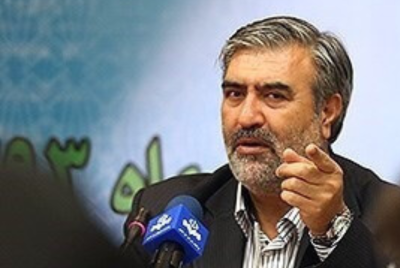
One of the Arab world's most prominent business figures has broken ranks and openly condemned Donald Trump for launching a war that has turned the Gulf into a target zone. Khalaf Ahmad Al Habtoor, the founding chairman of Dubai-based Al Habtoor Group, has become the first high-profile Middle Eastern businessman to publicly denounce the US president over the military campaign against Iran.
This conflict has sent air-raid sirens ringing from Manama to Dubai and upended the strategic calculations of every Gulf state. His lengthy open letter, posted in Arabic on X on 5 March 2026, arrived at a moment of acute regional anxiety, and from a man whose public silence on Trump had, until now, been near-total.
A Former Business Partner Turns Critic
The rebuke lands with particular force given who Al Habtoor is and what he once meant to Trump's ambitions in the region. In 2008, Habtoor Leighton Group, his construction and engineering arm, was part of a joint venture awarded a 2.9 billion-dirham contract, approximately £166 million ($214 million) at today's rates, for the proposed Trump International Hotel and Tower on Dubai's Palm Jumeirah. The project was shelved in 2011 after the global financial crisis guttered Gulf real estate investment.
In August 2015, Al Habtoor penned an op-ed for the UAE newspaper The National titled 'Why I'm backing The Donald's bid to be president,' calling Trump a 'fearless doer' and a successful businessman.
That endorsement collapsed within months. After Trump called for Muslims to be barred from entering the United States in December 2015, Al Habtoor told NBC News that he regretted his support for the Republican frontrunner. He has remained largely silent on Trump until now.
According to Forbes, Al Habtoor is ranked 335th among the world's wealthiest individuals, with a net worth of £1.78 billion ($2.3 billion). His privately held group spans luxury hotels, shopping malls, construction, engineering, hospitality and sports investment across the Gulf and beyond. That commercial reach is what gives his words their edge: when a man of his stature in the UAE speaks this way, it reflects pressures that go far beyond personal opinion.
'Who Gave You Permission to Turn Our Region Into a Battlefield?'
Al Habtoor's X post did not mince words. Addressing Trump directly in Arabic, he condemned the decision to strike Iran as 'dangerous' and asked whether the president had calculated the collateral damage before acting.
'You have placed the countries of the Gulf Cooperation Council and the Arab countries at the heart of a danger they did not choose,' he wrote. 'Thank God, we are strong and capable of defending ourselves, and we have armies and defences that protect our homelands, but the question remains: Who gave you permission to turn our region into a battlefield?'
سيادة الرئيس دونالد ترامب،
— Khalaf Ahmad Al Habtoor (@KhalafAlHabtoor) March 5, 2026
سؤال مباشر: من أعطاك القرار لزجّ منطقتنا في حرب مع #إيران؟ وعلى أي أساس اتخذت هذا القرار الخطير؟
هل حسبتَ الأضرار الجانبية قبل أن تضغط على الزناد؟ وهل فكّرت أن أول من سيتضرر من هذا التصعيد هي دول المنطقة!
من حق شعوب هذه المنطقة أن تسأل أيضاً: هل كان…
He also accused Washington and Tel Aviv of igniting the war 'before the ink has dried' on Trump's Board of Peace initiative, launched in January 2026. That body, initially approved by the UN Security Council as a temporary Gaza-focused reconstruction mechanism, has since expanded into a broader voluntary coalition of states operating outside the formal UN peacekeeping system.
Permanent membership carries a fee of $1 billion, and Trump holds sweeping executive authority over its operations. Gulf states including Bahrain, Qatar, Saudi Arabia and the UAE are all permanent members.
Al Habtoor pointed directly to that financial commitment as evidence of betrayal. Much of the funding for the Board of Peace, he argued, came from Middle Eastern countries that contributed billions of dollars 'on the basis of supporting stability and development.' He then asked: 'Where did this money go? And are we funding peace initiatives or funding a war that exposes us to danger?'
Gulf Investment, Shattered Expectations
The wider economic stakes that Al Habtoor alludes to are considerable. During Trump's May 2025 Gulf tour, the president announced approximately£2.47 trillion ($3.2 trillion) in investment agreements spanning AI infrastructure, defence hardware and energy contracts across the Arabian Peninsula. Gulf sovereigns have staked enormous sums on the premise that Trump's second term would deliver regional stability alongside transactional gains. The outbreak of a US-Iran war has placed both assumptions under immediate strain.
Al Habtoor's post catalogued what he described as Trump's broken campaign promises, specifically, pledges not to entangle the United States in foreign wars and to focus exclusively on domestic renewal.
He noted that Trump has ordered foreign military interventions in seven countries during his second term: Somalia, Iraq, Yemen, Nigeria, Syria, Iran and Venezuela, in addition to naval operations in the Caribbean Sea and the eastern Pacific Ocean. He argued that these forays have 'severely reflected' on Trump's approval ratings, a claim supported by aggregated data from The New York Times and RealClearPolitics, both of which show the president's rating has been net negative since spring 2025.
His closing appeal struck a different note; less angry, more pointed. 'True leadership is not measured by war decisions,' he wrote, 'but by wisdom, respect for others, and pushing toward achieving peace. And if these initiatives were launched in the name of peace, then we have the right today to demand full transparency and clear accountability.' Al-Monitor reported that it had contacted the White House for comment; no response was received before publication.
For a region that has spent decades threading the needle between alignment with the West and self-determination, Al Habtoor's public break with Trump may prove to be a marker of something larger, a moment when the Gulf's patience with being treated as a strategic backdrop finally ran out.
© Copyright IBTimes 2025. All rights reserved.
- Recommended For You