

Nancy Guthrie Could Finally Get Answers if Digital Trail Identified by Detectives Leads to Missing Evidence
Investigators turn to digital evidence in the unsolved case of Nancy Guthrie's abduction.
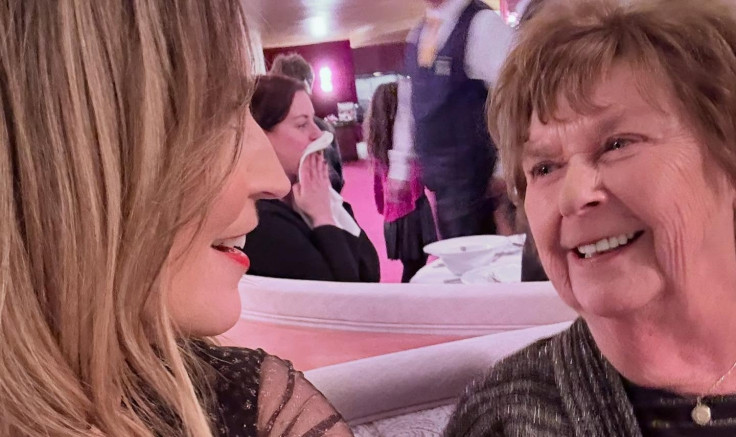
Four months after 84-year-old Nancy Guthrie was taken from her Tucson home in the dead of night, the most promising route to her abductor may now lie not in the desert, but in a server farm.
Guthrie, the mother of NBC Today co-host Savannah Guthrie, was last seen by family at her Catalina Foothills residence on the evening of 31 January 2026. She was reported missing at noon the following day. The FBI's Phoenix Field Office and the Pima County Sheriff's Department have since processed over 30,000 public tips, deployed approximately 400 investigators, and conducted DNA analysis on blood evidence recovered from her front porch, yet the case remains unsolved. Now, retired detectives and forensic specialists are converging on a single theory: the answer may already exist in digital records that investigators have yet to fully examine.
The Masked Man And What He Left Behind
The FBI confirmed on 13 February 2026 that surveillance footage recovered from Nancy Guthrie's Nest doorbell camera, images retrieved from 'residual data located in backend systems' after the physical device had been removed, showed a masked, armed man on her front porch in the early hours of 1 February. The camera recorded activity at 02:12, and Guthrie's pacemaker application disconnected from her phone at 02:28. Forensic analysis by the FBI's Operational Technology Division identified the suspect as a male of average build, approximately 5 feet 9 to 5 feet 10 inches tall, carrying a black 25-litre Ozark Trail Hiker Pack, a backpack sold exclusively through Walmart.
What the footage also revealed was premeditation. The FBI and Google worked jointly to recover images showing the same masked individual at Guthrie's doorstep on a separate occasion, several weeks before the abduction, this time without the backpack. That visit suggests deliberate reconnaissance. CNN's Ed Lavandera put the implications plainly: 'This kind of gets to the question about whether or not this was just a random act.'
Retired FBI profiler Jim Clemente, who spent 22 years in the bureau, analysed the blood evidence publicly. 'We also know at least that she was alive at that time,' Clemente said, describing a pattern of round droplets near the front door thinning toward the driveway. 'The blood trail stops at the edge of the driveway. So we know there was a car.'
A Digital Footprint Months In The Making
The most striking evidence of planning does not come from the night of the abduction; it comes from months before it. Google Trends data, first reviewed by Fox News Digital and subsequently confirmed by People magazine, shows searches for Nancy Guthrie's Catalina Foothills address originating in Arizona between 21–28 June 2025, seven months before she vanished. Google Image searches for her specific address followed in March and November 2025. A further address search was recorded on 11 January 2026, three weeks before the abduction, the same date Pima County Sheriff's investigators separately asked residents to review their security camera footage.
Most telling of all, someone in Tucson searched for 'Savannah Guthrie salary' between 13–20 December 2025. Investigators and independent analysts have described this sequence as consistent with pre-offence target profiling, researching both the victim's location and her daughter's perceived wealth before acting. Google issued a caution, however, telling Newsweek that its Trends tool 'will often mix in random noise to protect people's privacy' for low-volume searches. Investigators have not publicly confirmed whether they have subpoenaed the underlying account-level search records that would either confirm or refute that pattern.
Nancy Guthrie search history / data prior to her abduction.
— Just Lookin 🪙🦩 (@JustLookingMon) February 20, 2026
Via "Google Trends"
🔸 Additional searches were performed regarding: Savannah Guthrie's NBC salary.
New Mexico ~ Arizona 🌵🏜️#NancyGuthrie #NancyGuthrieCase pic.twitter.com/psVoG9J2Oh
What Detectives Say Could Break The Case
Retired Modesto Police Department detective Jon Buehler, now a law enforcement consultant, outlined the dominant investigative theory in a recent interview with NewsNation's Brian Entin. He drew a direct parallel to the 1999 Yosemite killings, in which a hand-drawn map sent by suspect Cary Stayner sat unnoticed for days in a stack of mail. 'When tips come in on a case like Nancy Guthrie's, they're prioritised as best they can, but you still don't know for sure if they're prioritised correctly, and so there might be something in there that we're waiting on, that could break it wide open,' Buehler said.
His specific recommendation centres on two forms of digital evidence. The first is GPS and surveillance camera data capturing vehicle movements around Guthrie's neighbourhood in the weeks before 1 February 2026. The second is a 'reverse keyword search', a technique by which investigators subpoena map service providers to identify every account that queried a specific address within a set time period. 'If somebody ever plugged her address into a Google search for Google Maps or whatever, if they did a reverse keyword search on that because those records are maintained for a period of time, to see any random person that would have typed in her address, you'd contact that person and find out why,' Buehler explained.
A Family Left Waiting
Savannah Guthrie and her siblings announced a £770,000 ($1 million) family reward in late February 2026, alongside a stark acknowledgement: 'We also know that she may be lost. She may already be gone,' Savannah said. Combined with a £77,000 ($100,000) FBI reward and a £79,000 ($102,500) anonymous donation to the county's 88-CRIME tip line, the total reward now exceeds £920,000 ($1.2 million). All of Nancy Guthrie's children and their spouses have been formally cleared by investigators. Sheriff Nanos confirmed they 'have been 100% cooperative with us through everything we've asked,' voluntarily surrendering phones, vehicles and access to their homes.
Nancy Guthrie is described in the FBI's official wanted notice as a vulnerable adult who has difficulty walking, relies on daily medication for a heart condition, and carries a pacemaker, an app connected to which went offline at 02:28 on the morning of 1 February 2026, a timestamp that may yet prove to be the case's most significant piece of evidence.
For Nancy Guthrie's family, the digital trail is not abstract; it is, four months on, the last and best hope.
© Copyright IBTimes 2026. All rights reserved.