Three Americans Charged With Funding ISIS To Kill US Soldiers With Drones While the Iran War Was Still Hot
The FBI has arrested three people in Kansas and California for allegedly providing financial support to ISIS-linked drone attack operations.
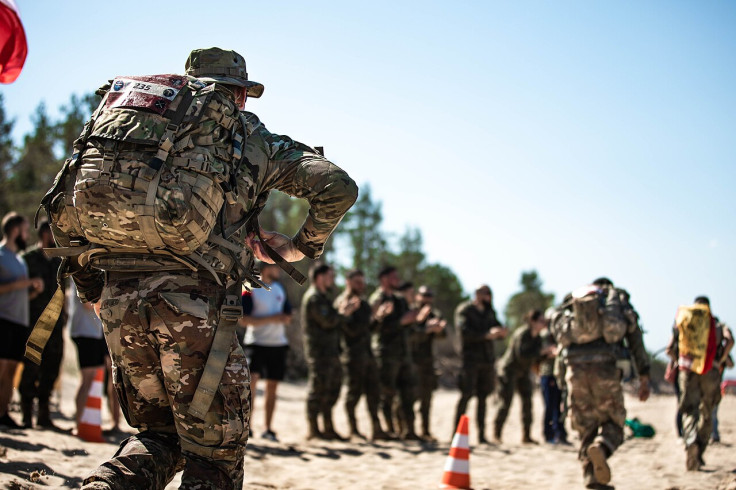
Three US citizens have been arrested and charged with allegedly funnelling money to ISIS for drone and rocket attacks targeting American troops deployed overseas, in a plot that unfolded across Kansas and California over more than a year.
The FBI made the arrests on 6 June 2026 after a joint terrorism investigation spanning five field offices, cutting off what prosecutors describe as a sustained conspiracy to finance lethal weapons against US servicemembers.
According to the Department of Justice, the three men collectively transferred more than £1,580 ($2,000) to an individual they believed to be an ISIS operative, intending the funds to be used to purchase drones and rocket-propelled grenades for attacks targeting American troops overseas. The arrests come as US forces remain engaged in conflicts across the Middle East, although authorities have not linked the alleged plot to any specific military operation or to the recent US-Iran conflict.
The Three Defendants and What They Are Accused Of
The criminal complaint, filed in the US District Court for the District of Kansas, names Bisaam Ghafoor, 21, of Leawood, Kansas; Elias Shamsaldeen, 21, of Porterville, California; and Bereen Dzayee, 25, of Lakeside, California. All three are US citizens. Each faces a single count of conspiring to provide material support to a designated foreign terrorist organisation, which carries a maximum sentence of 20 years in federal prison.
The case originated in early March 2025, when an anonymous tipster flagged a social media account posting pro-ISIS content and claiming to have pledged bayat, or an oath of allegiance, to ISIS. The FBI traced the account to Ghafoor. By March 2025, agents had also linked Shamsaldeen to the same online network, while Dzayee was identified as a participant in January 2026. A confidential FBI source, who has been working with the bureau since 2017, was subsequently introduced into the group and communicated directly with all three men.
Court records detail the most alarming exchanges. Ghafoor told the confidential source it would be 'sick' if his name appeared on a drone used against Americans. The source later sent him a photograph of a rocket-propelled grenade bearing Arabic script spelling out his full name, purportedly destined for an overseas strike on US servicemembers.
In other messages, Ghafoor asked the source 'How many do you hope to kill?' and stated he had always wanted to behead a female soldier, writing: 'I wish I could kill 300,000,000 Americans.' Dzayee separately suggested that US Special Forces, specifically Green Berets, should be prioritised as drone targets.
Shamsaldeen's alleged conduct was more operationally focused. In May 2026, prosecutors allege, he drove more than 90 miles from his home to a cryptocurrency ATM at a petrol station in an attempt to transfer funds without detection. He ultimately sent £1,250 ($1,590) through a financial app to an FBI undercover account, believing the money would be used to support ISIS drone attacks targeting US military personnel overseas. Court documents state that he told the group's online chat as early as August 2025 that he 'no longer wanted to just talk about it' and wanted to take action.
Cash in Envelope, Cryptocurrency Schemes and RPG Engraved With Name
The mechanics of the alleged plot drew on both old-fashioned cash drops and attempted cryptocurrency transfers. In May 2026, according to court records cited by KCTV5, Ghafoor met an FBI undercover employee at a Kansas City mosque and handed over a wax-sealed envelope containing £197 ($250) in cash, telling the agent the money was intended for a 'munasir,' a supporter group in Syria operating for ISIS.
He subsequently provided a further £158 ($200). After the transfer was confirmed, Ghafoor texted the undercover employee: 'BRO THANK YOU BARAKALLAH FEEK' and 'You fed a mujahid wallah.' He later messaged: 'They are confirmed to be closing it; we really got away with this. Committed grand treason and literally got away with it.'
Dzayee's role, according to the complaint, centred on coordinating the money movement and providing strategic direction. He told the group the transfer should be classified as 'charity,' stating: 'In my head it's charity.' He and Ghafoor both described the payment as 'bigger' than their existing fraud activities and explicitly acknowledged it constituted treason. Dzayee attempted his own cryptocurrency transfer but encountered account difficulties. The FBI continued surveillance throughout.
The broader communication network sustained the conspiracy for over a year. From at least February 2025 through to approximately June 2026, the three men used Discord chats, voice calls and encrypted messaging platforms to pledge allegiance to ISIS and its leader, discuss attack planning, and exchange messages within pro-ISIS social media groups that actively promoted violence. All three also expressed a desire to travel abroad and fight directly for ISIS, according to the complaint, with some communications indicating they were prepared to die in that effort.
Homegrown Terror in Time of Active US Military Engagement
The timing of the alleged plot is significant. The conspiracy ran during an extended period of US military engagement abroad, including operations directly tied to the conflict following the US-Iran war. Prosecutors allege the defendants specifically targeted servicemembers deployed in that context; with Dzayee naming US Special Forces and Ghafoor referencing Green Berets as desired targets.
The case also illustrates a pattern federal prosecutors have flagged repeatedly in recent years: ISIS radicalisation happening within US borders, facilitated almost entirely through online platforms. The investigation began with a single social media tip. It expanded to encompass three states, multiple messaging applications and a financial trail running from a Kansas City mosque to a California petrol station cryptocurrency terminal.
The criminal complaint was signed by a US Magistrate Judge on 4 June 2026. Initial court appearances have not yet been scheduled as of the time of reporting.
The case is a reminder that the threat from IS-affiliated networks has not diminished with the group's territorial losses; it has moved online, and, authorities allege, closer to home.
© Copyright IBTimes 2026. All rights reserved.
- Recommended For You