Donald Trump Threatened With Unprecedented Lawsuit After 'Blatant Violation' of War Powers Law
A late‑night threat to drag Donald Trump into court over Iran lays bare a half‑century struggle over who in Washington holds the power to start and stop a war.
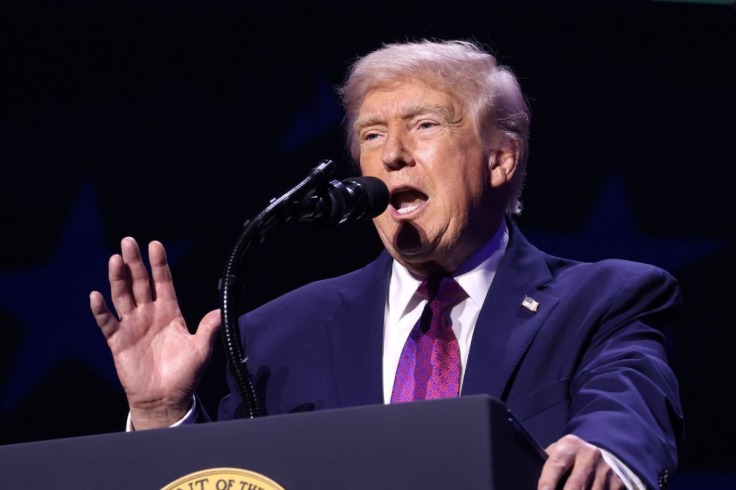
Donald Trump faced the threat of an unprecedented lawsuit in Washington on Saturday as Democratic congressman Ro Khanna accused the president of ordering fresh US airstrikes on Iran in 'blatant' violation of the War Powers Resolution and warned he was prepared to take the administration to court.
The warning followed a report, highlighted on social media by journalist Acyn, that the United States was carrying out new strikes on Iranian targets. The broadcast, which featured footage labelled 'unclassified' from US Central Command, suggested the situation was deteriorating and raised doubts over whether any ceasefire arrangements could hold.
At the time of Khanna's comments, the Pentagon had not publicly detailed the alleged operations and nothing has been independently confirmed, meaning all claims about the scope and targets of the strikes should be treated with caution.

Khanna Accuses Donald Trump Of 'tant' War Powers Breach
Khanna, a California Democrat who has built much of his profile around challenging unchecked military action, moved quickly once the Fox segment gained traction. He did not hedge his language.
'These strikes are a blatant violation of the War Powers Resolution that we passed,' he wrote, accusing Donald Trump of ignoring a law that Congress has repeatedly cited as its main lever to restrain presidents from dragging the country into unauthorised wars.
He followed that with an explicit legal threat aimed squarely at the White House: 'Trump must stop this war now or we will take him to court to compel him to do so.'
What Khanna appears to be asserting is less a narrow procedural gripe and more a constitutional line in the sand. The War Powers Resolution, enacted in 1973 in the shadow of the Vietnam War, requires the president to notify Congress within 48 hours of committing US forces to hostilities and forbids sustained military action beyond 60 days without explicit congressional authorisation.
Lawyers and lawmakers have argued for decades over how far the law actually bites. Presidents of both parties have habitually insisted that their role as commander-in-chief under the US Constitution gives them flexibility to act first and consult Congress later, particularly in fast-moving crises. Congress, in turn, has often avoided forcing a definitive showdown, preferring grumbling oversight hearings to outright litigation.
Khanna is signalling that, in the case of Trump and Iran, he is willing to push that long‑avoided confrontation into court.
Renewed Iran Strikes Put Donald Trump's War Powers Under The Microscope
The row over Iran did not materialise from nowhere. For starters, tensions between Washington and Tehran had already been running high, with critics in both parties accusing the Trump administration of edging towards conflict without a clear congressional mandate or defined endgame.
The reported 'renewed' strikes, if they are ultimately confirmed in official briefings, would mark a sharp escalation in a pattern that has already unnerved members of Congress who see themselves being bypassed. Lawmakers have argued repeatedly that air campaigns and targeted strikes, however surgical they may be presented, still amount to hostilities that fall squarely under the War Powers Resolution.
That is why the language from Khanna matters. To describe the reported actions as a 'war' is not a casual flourish. It suggests he views Trump as having crossed from limited, defensible self-defence operations into something that looks far more like an undeclared armed conflict, conducted without the legislature's explicit blessing.

The legal stakes are substantial. Courts in the United States have historically been wary of wading into fights between Congress and the president over war powers, often dismissing such cases as political disputes better resolved by the elected branches. Khanna's threat tests that reluctance. Should he and like‑minded colleagues follow through, any lawsuit would force judges to confront whether the War Powers Resolution has real teeth or remains more of a strongly worded suggestion.
As of now, no formal complaint has been filed and the Trump administration has not publicly responded in detail to Khanna's accusations. Without an official account of the alleged strikes their targets, legal justification, and duration much of the argument rests on contested ground. Nothing about the timing, scale or authorisation of the reported operations has been definitively confirmed, so all claims should still be taken with a grain of salt.
What is clear is that the threat itself is extraordinary. A sitting member of Congress openly pledging to haul a president into court over an ongoing military operation underscores just how brittle the understanding between the branches has become. It also exposes a broader unease in Washington about how easily modern presidents, Trump included, can deploy force first and explain themselves later.
For voters watching from a distance, the dispute raises an oddly simple question that the American system has struggled to answer for half a century: who actually decides when the country goes to war, and what happens when a president and Congress cannot even agree on whether a war has begun.
© Copyright IBTimes 2026. All rights reserved.
- Recommended For You