Trump DOJ U-Turn: Administration Asks Supreme Court to Revive Blocked Voter Purge Rules Ahead of Midterms
Arizona's voter registration system faces scrutiny as the Supreme Court considers a pivotal election law case.
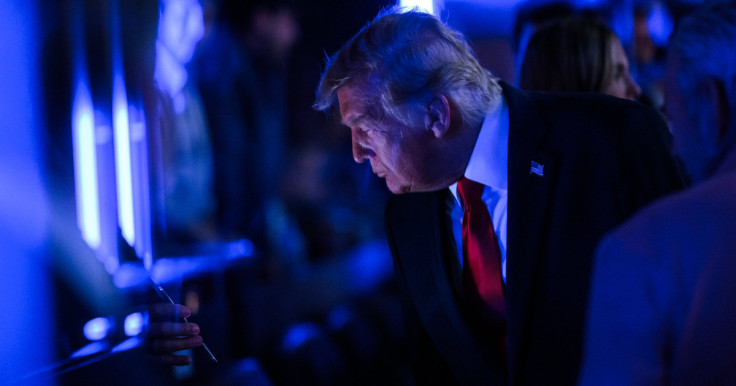
The Trump administration has asked the US Supreme Court to revive Arizona voting rules that lower courts blocked during Joe Biden's presidency, setting up what could become one of the most significant election-law battles before the 2026 midterms.
At the centre of the dispute are Arizona's proof-of-citizenship requirements and its process for removing suspected non-citizens from voter rolls. The Justice Department, which challenged the measures under Biden, is now backing efforts by Arizona Republicans and the Republican National Committee to restore them, marking a sharp reversal in the federal government's position.
𝗦𝗧𝗘𝗣𝗛𝗘𝗡 𝗠𝗜𝗟𝗟𝗘𝗥 𝗝𝗨𝗦𝗧 𝗖𝗢𝗡𝗙𝗜𝗥𝗠𝗘𝗗 𝗪𝗛𝗔𝗧 𝗘𝗩𝗘𝗥𝗬𝗕𝗢𝗗𝗬 𝗔𝗟𝗥𝗘𝗔𝗗𝗬 𝗦𝗨𝗦𝗣𝗘𝗖𝗧𝗘𝗗.
— M.A. Rothman (@MichaelARothman) March 21, 2026
The Trump administration did something simple and entirely reasonable at the start of this term. They asked every state — red and blue — to share their voter… pic.twitter.com/1aIBYlA0Ev
The Supreme Court has not yet decided whether it will hear the case. But if the justices agree to review it, the outcome could shape how states verify voter eligibility, maintain voter rolls and balance election security against access to the ballot.
Arizona Case Takes Centre Stage
The most consequential dispute heading towards the Supreme Court centres on Arizona's voter registration system. Under the National Voter Registration Act, states must 'accept and use' a standard federal voter registration form for federal elections. Applicants must swear, under penalty of perjury, that they are US citizens.
Arizona's requirements go further. State officials require documentary proof of citizenship for certain voting activities and have adopted procedures allowing election officials to investigate and remove individuals suspected of lacking citizenship status.
Republicans argue those safeguards are necessary to protect election integrity and prevent non-citizens from voting. Voting-rights advocates counter that the measures create barriers for legitimate voters and conflict with federal registration protections.
Lower courts largely sided with challengers, prompting Republicans to seek Supreme Court review. The Trump administration is now supporting that effort. In court filings, the Justice Department urged the justices to take up the case and resolve what it described as important election-law questions outside the pressure of a contested election cycle.
Citizenship Checks and Voter Roll Challenges
The legal battle extends beyond registration forms. One issue is whether Arizona can require additional proof of citizenship from voters who register using the federal form before allowing them to vote by mail. Another concerns whether voters who submit Arizona's state registration form without immediate proof of citizenship must still be allowed to participate in federal elections.
The case also challenges Arizona's process for removing suspected non-citizens from voter rolls.
Federal law generally prohibits systematic voter-roll maintenance programmes within 90 days of a federal election. Opponents argue Arizona's procedures risk violating that restriction, while supporters maintain states have a duty to keep registration lists accurate.
Because the dispute combines voter eligibility, citizenship verification and voter-roll maintenance, election-law specialists view it as one of the most important voting cases currently approaching the Supreme Court.
Other Election Cases Waiting for Review
Arizona is not the only voting dispute seeking the court's attention. The justices are also considering appeals from Arkansas, Texas and Pennsylvania that could further define the scope of federal voting protections.
The Supreme Court is considering new appeals regarding voting laws in Arkansas, Texas, Arizona and Pennsylvania. https://t.co/zhWtoY4QW9
— USA TODAY (@USATODAY) June 21, 2026
In Arkansas, a challenge focuses on a law limiting how many voters a non-election official may assist. The case has evolved into a broader debate over whether private individuals and organisations can bring certain Voting Rights Act claims.
Texas has brought a separate dispute involving restrictions on paid assistance for mail-ballot voters. Civil rights groups argue the law harms voters with disabilities and limited English proficiency, while state officials say it protects election integrity.
Pennsylvania Mail Ballots Remain in Focus
Pennsylvania's case centres on mail ballots rejected because voters failed to write proper dates on return envelopes. A federal appeals court ruled that the requirement serves little anti-fraud purpose and cannot justify discarding otherwise valid ballots.
Republicans argue the decision weakens states' authority to regulate elections, while Democrats contend the rule no longer serves the purpose for which it was originally created. Because Pennsylvania remains one of the country's most closely watched battleground states, the dispute carries significance beyond the technical issue of envelope dates.
Setting the Ground Rules for Future Elections
The Supreme Court is expected to decide soon whether it will hear any of the pending election cases. If the justices accept review, arguments would likely be heard during the next term beginning in October, with decisions expected after the midterm elections.
For the Trump administration, the Arizona case represents the clearest test of its approach to election law. By backing rules previously challenged by the federal government, the Justice Department has placed itself at the centre of another major fight over voting rights, election administration and how future elections will be conducted across the United States.
© Copyright IBTimes 2026. All rights reserved.
- Recommended For You