Donald Trump Shock: New Poll Finds 59% Of Americans View POTUS As A 'Dangerous Dictator'
A presidency built on strongman politics is now confronting a public that increasingly fears the strength has gone too far.
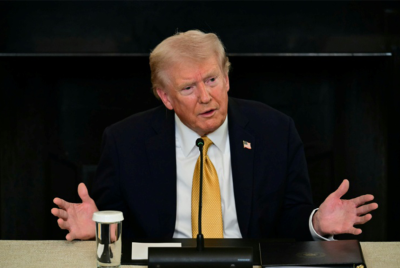
A majority of Americans now say President Donald Trump is a 'dangerous dictator' whose power should be curbed, according to a nationwide survey by the Public Religion Research Institute (PRRI) released in Washington this week. The poll, carried out between 1 and 18 May across all 50 states, suggests mounting unease over how Trump has used presidential power during the Iran war and a turbulent second term in the White House.
For context, the new findings land after months of fierce criticism of Trump's decision to launch military action against Iran, a conflict that has remained broadly unpopular even as his administration edges towards a peace agreement. The war, combined with tariff fights with Europe and sharply higher petrol prices at home, has reshaped the political climate around the president and sharpened long‑running arguments over whether he is defending American democracy or corroding it.
PRRI said 59% of respondents agreed with the statement that Donald Trump 'is a dangerous dictator whose power should be limited before he destroys American democracy,' up from 52% in March and 56% in September 2025. The survey of 5,469 adults has a margin of error of plus or minus 1.53 percentage points, a sizeable sample that underlines how quickly public attitudes have shifted in barely a year.
A still‑sizeable minority, 38%, backed the alternative characterisation that 'Trump is a strong leader who should be given the power he needs to restore America's greatness.' That split has defined US politics since Trump's first rise to power. To his critics, the language he uses about enemies at home and abroad looks uncomfortably authoritarian. To his base, that same language sounds like strength and clarity after years of muddle.
Growing Concern Over Donald Trump's Wartime Power
The timing of the poll is not incidental. The survey was conducted while US troops were still deeply enmeshed in the Iran conflict, a war that has drawn bipartisan blowback in Congress and beyond. Several Republican lawmakers publicly questioned whether Trump had any legal authority from Capitol Hill to initiate large‑scale military action in the first place.
Despite the administration's recent push towards a ceasefire and a broader peace deal, Americans appear unconvinced by Trump's record on the conflict. PRRI found 66% view his handling of the war with Iran unfavourably, including 51% who described their view as 'very unfavourable'. Only 29% said they viewed his stewardship of the war positively.
The partisan gaps are predictable but still stark. According to the PRRI numbers, 87% of Democrats say they have a very unfavourable view of Trump's management of the war, compared with 67% of Republicans who approve. That means roughly a third of his own party is no longer fully on board with how the commander‑in‑chief has overseen a major military campaign, which is not nothing.
A separate ABC News/The Washington Post/Ipsos poll, cited alongside the PRRI findings, painted a similar picture. In that survey, 61% of Americans said it was a mistake for Donald Trump to begin the war with Iran at all. Support for the decision remained strongest among self‑described MAGA Republicans, 86% of whom backed the move, but 91% of Democrats and 71% of independents opposed it.
Reuters/Ipsos polling has tracked a similar slide in patience for military escalation. Approval for strikes against Iran fell from 38% in March to 34% in April, while opposition rose to 51%. Put bluntly, the longer the war has dragged on, the less appetite there has been for Trump's 'strong leader' approach abroad.
Republicans Still Rally Behind Donald Trump, But Cracks Show
Even so, Republican loyalty to Donald Trump as a figure of authority remains resilient. The PRRI poll found 78% of Republicans still support his decision to order strikes on Iran, down only slightly from 81% in March. A three‑point dip is not a collapse, but it does suggest the war has started to test the boundaries of partisan loyalty.
Inside the party, the conversation has become more complicated. Some Republican senators joined Democrats this month in supporting a war powers resolution in the US Senate intended to rein in Trump's ability to continue the Iran conflict without fresh congressional sign‑off. The measure ultimately failed by a 47–48 vote, but four GOP senators broke ranks to back it, a notable symbolic rebuke to a president who has made projecting power his brand.
A similar resolution had passed the House of Representatives earlier in the month by a narrow 215–208 margin, formally expressing lawmakers' desire to limit the president's ability to conduct military operations in Iran without further approval. In response, administration officials argued that the war powers push was effectively moot because a ceasefire had brought active hostilities to a halt.
There is a certain circular logic here. Trump's critics in Congress say they moved to check him precisely because they fear he is behaving like a would‑be autocrat abroad. The White House response is essentially that the problem has faded away. Voters, judging by the latest polling, are not convinced everything is so tidy.
White House Brushes Off 'Dangerous Dictator' Label
If the language in the PRRI poll stings, Trump's team is not showing it. The White House dismissed the 'dangerous dictator' framing and, in familiar fashion, waved away the numbers altogether by pointing back to the president's election victory.
'The ultimate poll was November 5, 2024, when nearly 80 million Americans overwhelmingly elected President Trump to deliver on his popular and commonsense agenda,' spokesperson Davis Ingle told Newsweek, insisting that 'no other president in history has accomplished more for the American people than President Trump.'
Ingle cited job creation, efforts to cool inflation and attempts to make housing more affordable as evidence of what he called Trump's 'historic progress' both at home and abroad, adding that 'this is just the beginning as his agenda continues taking effect.'
IBTimes UK has reached out to President Donald Trump's reps for comments.
© Copyright IBTimes 2026. All rights reserved.
- Recommended For You