37,000 Planted Trees and a Decade of Work: Female Tiger 'Hope' Released Into Kazakhstan's Wild After 70 Years
Kazakhstan's decade-long effort to reintroduce tigers to the wild begins with Umit's release
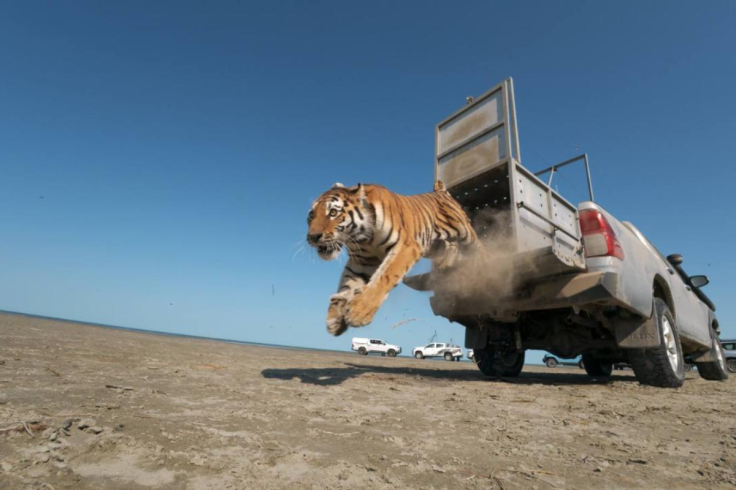
A female Amur tiger has become the first of her species released into Kazakhstan's wild in more than 70 years, marking the practical start of a reintroduction programme more than a decade in the making. The tiger, named Umit, meaning 'hope' in Kazakh, was released on 31 July at the Ile-Balkhash State Nature Reserve in the country's southeast, according to Kazakhstan's Ministry of Ecology and Natural Resources.
Veterinarians checked Umit's health, hunting ability and behaviour around people before her release. She now wears a GPS/GSM satellite collar, and reserve staff are tracking her movements around the clock through satellite data and camera traps.
A Decade of Preparation
The release did not happen overnight. Kazakhstan first announced its intention to bring tigers back at the International Tiger Conservation Forum in St Petersburg in 2010, beginning a restoration effort that stretched across 16 years.
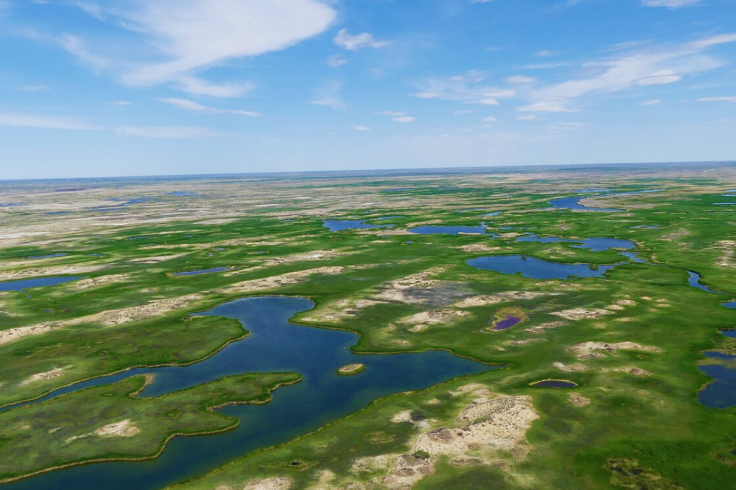
Part of that preparation involved rebuilding the habitat itself. Conservationists planted 37,000 seedlings and cuttings in the South Balkhash area, restoring the tugai forests and reed beds that once supported both tigers and their prey. Hunting, habitat loss and the collapse of wild prey populations had driven the original Caspian, or Turan, tiger out of the region by the late 1940s.
That habitat work also revived species beyond tigers. Rare mammals such as the Bukhara deer and the kulan, a type of wild ass, now graze across more than 50 hectares of restored forest in the reserve, evidence that the ecosystem was recovering well before Umit ever arrived.
From Russia to the Reserve
Umit was one of four wild-caught Amur tigers transferred from Russia's Khabarovsk region in May, arriving as part of a joint programme between Kazakhstan and Russia. Her release joins two captive Amur tigers, Bogdana and Kuma, transferred from the Netherlands in September 2024 for breeding purposes.
That pair will remain in an enclosure, with any suitable offspring later prepared for eventual release. Kazakhstan's Ecology Minister, Yerlan Nysanbayev, said, 'Today we witnessed a truly historic event,' describing the release as the outcome of more than a decade of work by Kazakhstan, Russian specialists, scientists and international conservation partners.
The Science Behind the Substitution
No Caspian tigers remain alive, so Kazakhstan is using Amur tigers as genetic stand-ins. Researchers found the surviving Russian Far East population and the extinct Caspian population are extremely closely related, with their main mitochondrial DNA types differing by only one nucleotide.
After more than 70 years without wild tigers, Kazakhstan has released its first tiger into its natural habitat, marking a milestone in one of the world’s most ambitious wildlife restoration and conservation efforts.https://t.co/CNRs21SKgT
— The Times of Central Asia (@thetimesoca) August 4, 2026
The last confirmed Caspian tiger in the country was killed in 1948. Officials say the genetic overlap gives the reintroduction programme a scientific basis, rather than simply substituting one big cat species for another.
Umit's release is being watched as a test case for cross-border tiger reintroduction, something conservationists have rarely attempted at this scale. Kazakhstan and Russia signed a joint roadmap in November 2025 to support further transfers and help the animals adapt to their new habitat.
If Umit and future releases go on to establish a breeding population, it would restore an apex predator to an ecosystem that has functioned without one for three-quarters of a century. That has knock-on effects for prey species, vegetation and the wider Ile-Balkhash delta that Kazakhstan has spent 16 years rehabilitating specifically for this purpose, with officials hoping the programme eventually supports a self-sustaining wild tiger population in Central Asia.
For now, conservationists are watching Umit's tracks and waiting to see whether an animal once lost to this land can truly return.
© Copyright IBTimes 2026. All rights reserved.
- Recommended For You