

What's the Price of a Boeing B-52? Taxpayer Asset Lost Forever After Catastrophic California Airfield Crash
The crash of a B-52H Stratofortress at Edwards Air Force Base raises concerns over the future of the US Air Force's bomber fleet.
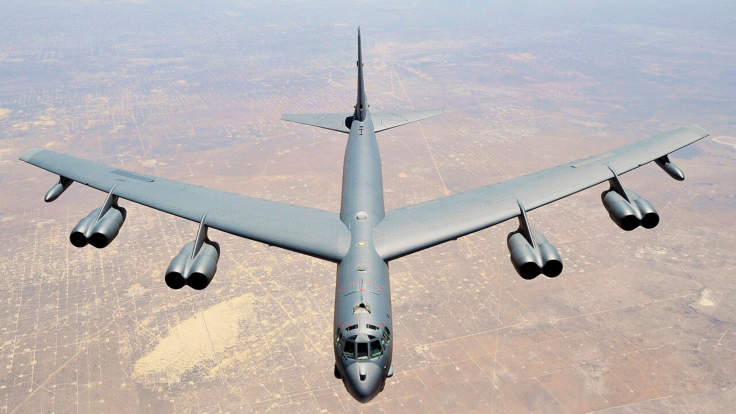
A United States Air Force B-52H Stratofortress, an irreplaceable Cold War-era bomber that cannot be ordered new from any factory on earth, crashed and burned on the airfield at Edwards Air Force Base in California's Mojave Desert on 15 June 2026. With only 76 of these aircraft left in service and no way to build more, the loss represents not just a destroyed airframe but a permanent reduction in a fleet that underpins US long-range strike capability.
The aircraft went down shortly after take-off at approximately 11:20 local time. A tall black plume of smoke rose over the base, and aerial footage showed a large blackened scar on the runway with little of the airframe left intact. As of Monday afternoon, officials had not released information regarding injuries, the status of crew members, or what caused the incident.
A Strategic Loss With No Simple Price Tag
The aircraft is one of 76 B-52s remaining in the Air Force inventory. That number matters enormously, because the Boeing-made bomber has not been in production since 1962. There is no manufacturer to call. There is no production line to restart.
According to the US Air Force, the unit cost of the B-52 is approximately $84 million (£65 million) when adjusted for fiscal year 2012 constant dollars. That figure, however, reflects only the original airframe price, and it is now a number without any practical meaning. A new B-52 simply cannot be purchased.
The fleet is expected to remain in service for decades as the Air Force pursues extensive modernisation upgrades. When each surviving aircraft carries a share of a programme now estimated at £37 billion ($48.6 billion), the true cost of Monday's loss is orders of magnitude greater than any sticker price suggests.
BREAKING: Initial reports indicate a U.S. Air Force B-52 Stratofortress crashed shortly after takeoff from Edwards Air Force Base. Emergency crews are responding to the scene. Details remain limited. pic.twitter.com/3NT4P06Mph
— Breaking911 (@Breaking911) June 15, 2026
Testbed Bomber Lost At A Critical Moment
The B-52 that crashed was not a routine operational bomber. Unconfirmed social media posts circulating before the Edwards statement identified the aircraft as B-52H tail number 60-0061, and in December 2025 Edwards confirmed that B-52H 60-0061 had flown from Boeing's San Antonio facility to the California base after receiving a modernised radar system.
Test pilots from the USAF's 419th Flight Test Squadron and system test engineers specialising in the B-52H were to carry out ground and aerial trials with the aircraft throughout 2026, with the test campaign set to drive a production decision on a fleet-wide B-52H radar modernisation later in the year. That production decision, covering the entire 76-aircraft fleet, is now in question.
The new radar, Raytheon's AN/APQ-188, also referred to as the Bomber Modernized Radar System, was designed to replace the obsolete, mechanically scanned AN/APQ-166 that has been in use since the Cold War. The Pentagon's Defence Department inspector general estimated that a dozen B-52 modernisation programmes combined would run $48.6 billion (£37 billion).
The engine replacement programme alone is expected to cost about $15 billion (£11.5 billion), up from an earlier estimate of $12.5 billion, with the upgrade's targeted initial operational capability having already slipped about three years to 2033. The B-52's mission capable rate fell from 59 per cent in 2021 to 54 per cent in fiscal 2024. Monday's crash reduces the operational pool further still.
What 'Replacing' A B-52 Really Means
The Air Force has faced this problem before. At approximately 08:30 local time on 19 May 2016, a B-52H Stratofortress belonging to the 69th Expeditionary Bomb Squadron crashed during takeoff from Andersen Air Force Base in Guam. Although the seven people on board escaped safely, the Air Force Life Cycle Management Centre was subsequently asked to regenerate an aircraft from storage to restore the fleet to the Congressional-mandated 76 aircraft.
The replacement aircraft, nicknamed 'Wise Guy', required 550 personnel across multiple maintenance disciplines to restore it, costing approximately $30 million (£23 million). That process took years. Typically, aircraft stored at the Boneyard are cannibalised for parts, and the vast majority of B-52s there never fly again.
The B-52 has crew positions that eject downward, meaning the bomber's ejection seat configuration could have presented complications for escape depending on how soon after take-off the incident occurred. The B-52 typically operates with a crew of five, including two pilots, a radar navigator, navigator, and electronic warfare officer. Their status remains unknown.
Please join me in praying for the B-52 crew at Edwards Air Force Base and the entire Edwards community. https://t.co/nE42kAxNgw
— Rep. Vince Fong (@RepVinceFong) June 15, 2026
Investigation Will Weigh Cost, Cause And Consequences
The crash of an Air Force aircraft is typically handled internally by the military rather than through civilian agencies like the National Transportation Safety Board. A military Safety Investigation Board will focus on mishap prevention by determining what went wrong, after which an Accident Investigation Board will determine legal accountability and public disclosure.
Representative Vince Fong addressed the crash on X, writing: 'Please join me in praying for the B-52 crew at Edwards Air Force Base and the entire Edwards community.' Little remained of the aircraft at the crash site, and a major plume of black smoke was reportedly visible for miles.
Edwards Air Force Base closed its airfield and diverted all inbound aircraft following the crash. With a £37 billion modernisation at a critical juncture, a finite inventory of 76 aircraft that cannot be replaced off an assembly line, and each B-52 carrying a substantial share of that investment, the loss at Edwards represents a taxpayer-funded asset gone for good.
© Copyright IBTimes 2026. All rights reserved.
- Recommended For You


