Jon Bon Jovi Says He'll Quit Before Becoming 'Fat Elvis', Details Terrifying Moment Career Almost Ended
Jon Bon Jovi reveals he has fully recovered from vocal surgery after years of rehab, insisting he would rather walk away than tour with a diminished voice.
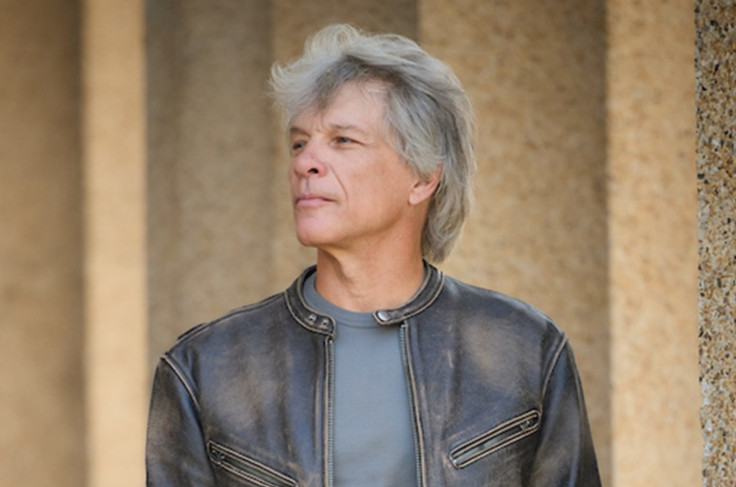
Jon Bon Jovi says he is now 'fully recovered' after vocal cord surgery that threatened to end his touring days, telling People in a new interview that four years of painstaking rehabilitation have restored the voice that made him a global rock fixture.
The news came after a long and unsettling period in which the Bon Jovi frontman openly questioned whether he would ever be able to perform live again. In 2020, doctors told the singer one of his vocal cords was atrophying, an alarming diagnosis for a performer who has built a four-decade career on high-register anthems such as Livin' on a Prayer.
Faced with the choice between surgery and a steady decline, he opted for the operating table and then disappeared, for the most part, into the quiet grind of vocal therapy.
Jon Bon Jovi On His Voice 'Dying'
For context, Jon Bon Jovi had repeatedly stressed that he had never abused his voice in the stereotypical rock-star fashion. He told People: 'I'd often joked and said the only thing that's ever been up my nose was my finger. I never did anything to hurt the cords; I didn't have any excesses. I'm a trained vocalist. I've practised the craft.'
So when specialists explained that one of his cords was, in his words, 'literally atrophying,' the singer admits it was 'confusing.' It was also, by any reasonable reading, terrifying.
A singer can accept the normal wear and tear of age; a body part quietly shutting down is another matter entirely. Bon Jovi has said before that if he could no longer deliver vocally, he would not limp on for nostalgia's sake.

In early 2024, he put it starkly: 'If the singing is not great, if I can't be the guy I was, I'm done. And I'm good with that.' That line was more than bravado. It sounded like someone preparing his fans, and perhaps himself, for the possibility that the stadium tours, at least, might be over.
Behind those public comments sat the reality of what he was trying to get back to. 'There is a big difference between being in a studio and going out on the road,' he said, noting that he still wants to perform 'for 2½ hours a night, four nights a week.'
Then came the wry warning shot at rock's most infamous cautionary tale: 'Put it this way, I don't ever need to be the fat Elvis.'
Band Loyalty And The Long Climb Back
Jon Bon Jovi's recovery has not happened in isolation. Throughout his treatment and rehabilitation, he credits his longstanding bandmates with refusing to drift away while their leader's career hung in the balance.
He singled out keyboardist David Bryan, percussionist Everett Bradley, bassist Hugh McDonald, guitarist John Shanks, drummer Tico Torres and guitarist Phil X for what he frames as a quiet but significant act of loyalty.
'They never doubted [me] and never looked for work or decided to retire,' he said, describing the group's stance as something beyond routine professionalism.
'The sacrifices that each one of them have made to be there for me is on a whole another level.' It is a slightly awkward phrase, but the sentiment is clear enough. When your singer's instrument is failing, the economic logic is to hedge your bets. They chose not to.

That decision may have been helped by the sense that Bon Jovi himself was not treating this as a dalliance. He talks about four years of vocal coaching and daily exercises, a regime that sounds closer to an athlete rehabbing a knee than a rock veteran coasting on catalogue hits. 'It was longer than I'd ever expected, but it had to be right. We never lost faith,' he said of the drawn-out process.
The claim that he is now 'fully recovered' comes with a note of caution, even from him. He is careful to distinguish between being able to sing in the studio and being able to withstand the physical and emotional load of touring.
'We have just recorded a new album. I sing in vocal therapy every day,' he explained. The studio offers the safety net of retakes. A 150-minute live set, four nights a week, offers nothing of the sort.
Nothing in his recent comments amounts to a formal tour announcement, and there is no independent medical verification in the public domain of the precise state of his voice, so all talk of a full-scale return to the road still has to be taken with a grain of salt.
What is clear, though, is that Jon Bon Jovi is laying out the conditions. If he cannot do it to his own standard, he will not do it at all.
For a singer who has watched peers carry on with diminished range, backed by choirs, click tracks and generous key changes, that is a quietly pointed stance.
Whether it proves sustainable when promoters and fans are clamouring for one more run is another question entirely. For now, Jon Bon Jovi sounds like a man who has been given his instrument back and is still deciding exactly how hard, and how long, to use it.
© Copyright IBTimes 2026. All rights reserved.
- Recommended For You