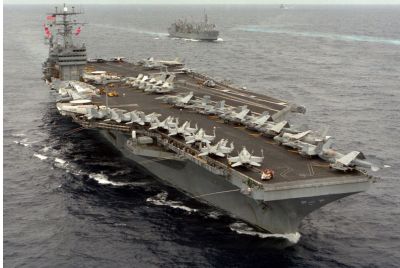
Retired Navy Chief Warns Endless Deployments Like USS Abraham Lincoln's Lead to 'Deterioration'
Navy veteran highlights challenges of prolonged sea deployments
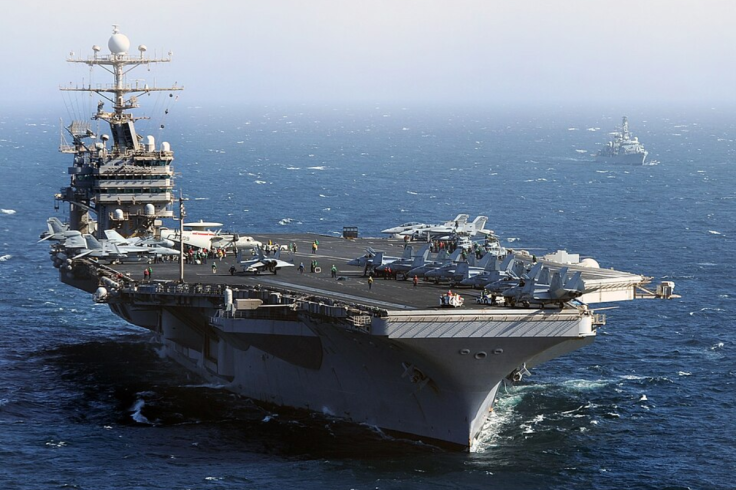
A retired US Navy chief petty officer has warned that open-ended deployments like the one gripping the USS Abraham Lincoln wear sailors down until morale collapses.
Thomas Nutzmann, who served 20 years in the Navy and deployed four times, said the uncertainty of not knowing when a deployment will end is one of the hardest parts of life at sea. 'There's no Monday, Tuesday, Wednesday, it's just a day,' he said, describing the experience of being underway for months on end.
The Abraham Lincoln has now logged 250 consecutive days at sea, the longest stretch of the carrier's deployment. It left San Diego in November for what was meant to be a routine Pacific deployment before being redirected to the Middle East, where it has supported 40 days of continuous combat operations.
Nutzmann said that trying to stay positive during such stretches has a limit. 'You try to maintain optimism to the best of your ability. The problem is when you're out to sea for so long, you can only do so much to keep morale up before you hit a stalemate, and that's where the deterioration is,' he said.
Inside USS Abraham Lincoln's 250-Day Deployment
That warning echoes what sailors aboard Lincoln have described directly. According to a sailor aboard the Lincoln, who spoke on condition of anonymity, morale remained high at the start of the deployment, when port visits were still expected. 'Nothing to really look forward to at this point,' the sailor said, adding that the crew would now forgo any remaining port stops in favour of simply going home. 'All we want is a date home.'
Standard US Navy carrier deployments are meant to last around six to seven months. Lincoln has already passed eight months deployed. Another carrier that supported the same Operation Epic Fury campaign against Iran, the USS Gerald R. Ford, returned home in May after 326 days at sea, breaking the previous post-Vietnam record. Lincoln itself had set that record in 2020. Analysts have warned that longer deployments, driven by too few carriers and too many active hotspots, could become the new normal rather than the exception.
1,000 Sailors Surveyed and What Actually Wears Them Down at Sea
Nutzmann's account is backed up by research into what actually wears sailors down at sea. A 2025 study published in the journal Military Medicine, which surveyed 956 sailors aboard carriers, destroyers and amphibious ships, found that being unable to rest when needed and having limited access to quality mental and physical healthcare ranked among the most distressing parts of deployment.
The same study found that difficulty communicating with family and a lack of opportunities to relieve stress were also significant concerns, mirroring complaints raised by Lincoln's crew and their families over disrupted mail service and limited contact home.
Nutzmann's comments add outside, expert context to a crisis that has already reached Navy leadership. Family members who attended the meeting with Navy leadership this week brought concerns about sailors' mental health and the risk of self-harm directly to Acting Secretary of the Navy Hung Cao and senior officials. The Navy has said it is working to send more mental health professionals to the ship.
If deployments of Lincoln's length become standard practice across the carrier fleet, as analysts have warned, the conditions Nutzmann describes, isolation, exhaustion and no clear end date, could stop being an exception and start becoming routine for thousands of sailors at a time.
© Copyright IBTimes 2026. All rights reserved.
- Recommended For You