New EU Packaging Law Enters Force Today, Setting up Ban on Mini Shampoo Bottles and Ketchup Packets by 2030
EU implements groundbreaking packaging regulations to enhance sustainability
A sweeping new EU law governing how products are packaged took effect on Wednesday, requiring manufacturers, hotels and food outlets across all 27 member states to overhaul packaging that has been standard for decades. The European Commission announced the Packaging and Packaging Waste Regulation now applies directly in every member state without the need for individual countries to write it into their own national law.
The regulation targets everyday items rarely thought of as environmental hazards, from the miniature shampoo bottles left in hotel bathrooms to the plastic sachets of ketchup handed out with takeaway orders. The Council of the EU, which along with the European Parliament adopted the law, sets out the full scope on its website.
The rules cover packaging design, composition, reuse and recycling with obligations phased in through to 2030 and beyond.
What Changes Today: PFAS Banned, Recycled Content Targets Take Effect
Under the rules, all packaging placed on the EU market must now meet new requirements covering its manufacturing and composition. Plastic packaging will also need to contain a growing share of recycled material, with targets rising in both 2030 and 2040.
Food-contact packaging is affected immediately. From today, the regulation restricts 'forever chemicals' known as PFAS in food packaging linked to cancer and other long-term health risks.
Why Miniature Shampoo Bottles and Ketchup Sachets Are Banned From 2030
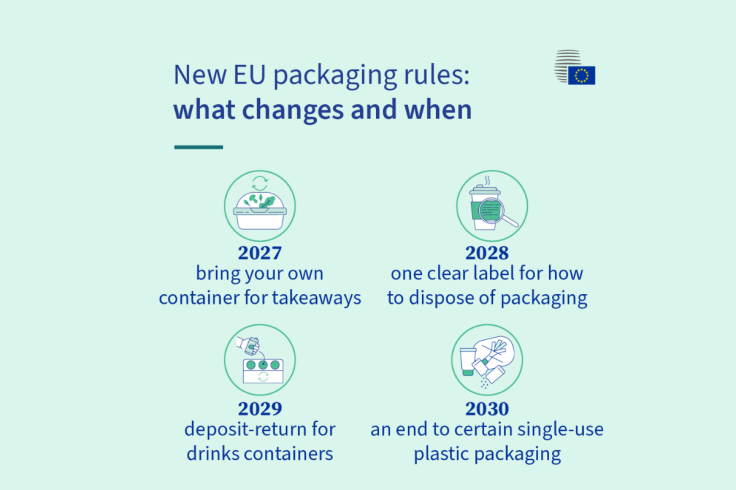
The most visible change for consumers will not land for another four years. The Commission has confirmed that from 2030, single-use packaging such as small ketchup packets or mini shampoo bottles in hotels will be banned wherever reusable or bulk alternatives are available.
Hotel groups have already been moving in this direction. Large chains, such as IHG Hotels & Resorts, had begun phasing out individually wrapped amenity bottles in favour of wall-mounted refill dispensers ahead of the deadline, a shift the hospitality trade press has linked directly to the incoming EU rules.
For hospitality operators still relying on disposable amenities, the transition will reshape procurement across bathrooms, breakfast services and room deliveries. Suppliers of individually wrapped jam, butter and condiment portions face the same 2030 cut-off unless bulk or refillable formats are adopted first.
From today, new EU rules apply to all packaging placed on the EU market.
— EU Council (@EUCouncil) August 12, 2026
They cover design, composition, reuse and recycling — with obligations phased in through to 2030 and beyond.
What changes, and when ⬇️https://t.co/XbL7xVJ58m pic.twitter.com/j87I6bdZf0
Takeaway Cups and Hotel Reuse Rules
Beyond the 2030 ban, food service businesses face two earlier deadlines. From February 2027, cafés, restaurants and takeaway outlets across the EU must allow customers to bring their own cup or container to be filled, at no extra charge.
A second obligation follows a year later. From February 2028, the same hospitality businesses must also actively offer their own reusable packaging within a functioning reuse system, giving customers who did not bring a container a non-disposable option instead.
Labelling changes will follow on a similar timeline. A harmonised, pictogram-based label system is due to apply across the bloc from 12 August 2028, replacing the patchwork of national labelling schemes and intended to make sorting packaging for recycling clearer for both consumers and waste operators.
UK Exporters Face Compliance Obligations
The regulation applies to any business placing packaging on the EU market, which includes UK companies exporting food, drink or retail goods into the bloc, not just firms based within the 27 member states. That means British manufacturers, hoteliers with EU operations and exporters supplying EU retailers now face compliance obligations that took effect from today, with no separate implementation period for businesses outside the bloc.
For UK holidaymakers, the most noticeable change will likely come at hotel check-in and café counters from 2027 onwards, as bring-your-own-container systems and refillable dispensers replace items long taken for granted. The rules do not apply within the UK itself, but any British business trading into the EU, or any traveller staying in EU hotels, will feel the effects of a law that Brussels has spent eighteen months preparing to enforce.
© Copyright IBTimes 2026. All rights reserved.
- Recommended For You