

Nancy Guthrie Update: Legal Expert Claims FBI May Have Identified Suspect Weeks Ago
Behind the silence of the Nancy Guthrie investigation lies a clash between official secrecy, public anxiety and one legal expert's deeply uneasy suspicions.
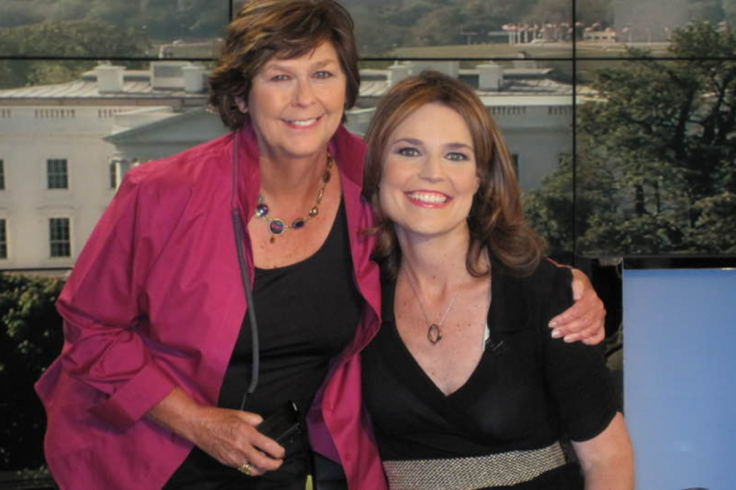
The FBI may have quietly identified a suspect in the abduction of 84-year-old Nancy Guthrie weeks ago, a US legal analyst has claimed, even as investigators continue to insist no one has yet been named in connection with her disappearance from her Arizona home in early February. Nancy Guthrie, mother of 'Today' show anchor Savannah Guthrie, was reported missing on 1 February after she was last seen the previous evening at her property in Arizona. Her case has attracted significant public attention because of her daughter's profile, and has become a test of public trust in federal law enforcement as weeks pass with no arrest and no named suspect.
Shortly after Guthrie vanished, doorbell footage emerged showing a masked, armed figure outside her front door on the day she disappeared. The FBI later retrieved additional surveillance video from cameras around her home, reportedly capturing several people near the property in the days leading up to the abduction. A pair of gloves found near the house was subsequently ruled out as being connected to the case. Despite the volume of material in federal hands, officials have released very little — and it is that information gap that legal analyst Chad D Cummings says is not accidental but strategic.
Legal Expert's Claims About the Investigation
Speaking to a US publication, Cummings argued that the public handling of the case has resembled what he called 'theatre and optics management' rather than a straightforward investigation. 'This case, to date, has been theater and optics management: The gloves. The thumbnails. The doorbell footage held for a week. The cameras captured people on the property in the days before the abduction,' he said.
According to Cummings, each disclosure followed a similar pattern. Authorities faced mounting criticism over the lack of visible progress, then released what sounded like a significant development that, in practice, led nowhere. 'Each release followed the same pattern: wait for public criticism to crest, then feed the press a development that sounds significant but leads nowhere. The question is why. At least three possibilities exist, in my opinion, and none of them are comforting,' he said.
Scenario One: A Suspect Already Identified
Cummings's first and, in his view, most likely scenario is that the FBI already knows who it is looking for. He suggested that 'the FBI identified the suspect weeks ago and is building a federal case that requires time, grand jury proceedings, and sealed indictments.' If that is the case, he argued, then Pima County Sheriff Chris Nanos may not be presenting the full picture when he insists no suspect has been identified.
'If so, Nanos is prevaricating when he says no suspect has been identified — though perhaps he is being kept in the dark — and the drip feed of dead-end evidence exists to buy the bureau time without alerting the target. I believe this is the most likely scenario,' Cummings said. Neither the FBI nor the sheriff's office has publicly addressed his claims, and there is no official confirmation that any suspect has been identified.
Scenario Two: Institutional Protection
Cummings's second theory is that whoever abducted Guthrie may be connected to powerful institutions. He suggested the suspect could be 'connected to someone with institutional protection, whether in law enforcement, local government, or an intelligence' agency, and that the inquiry could be affected by 'internal institutional pressure or "national security" reasons.' He added that 'there is historical precedent for this, particularly when the FBI is involved', though he did not cite specific examples.
Scenario Three: A Stalled Investigation
The third scenario Cummings raised is, in his assessment, the most troubling. He posited that investigators may simply have made little progress and are reluctant to acknowledge it publicly. 'The third is that Nanos and the FBI have nothing, know they have nothing, and are feeding the press a rotation of non-developments to avoid the political consequences of admitting that an 84-year-old woman was taken from a wealthy enclave and they cannot explain how or by whom after several weeks of intensive effort,' he said. He added that such a failure would be 'particularly embarrassing given the prevalence of public and private CCTV cameras and ubiquitous geolocation data available to law enforcement in 2026.'
There is no independent evidence that the investigation has stalled for political or institutional reasons, and nothing in the public record confirms the existence of a suspect. All three scenarios represent Cummings's analysis rather than established fact, and should be treated accordingly until authorities release further information.
© Copyright IBTimes 2026. All rights reserved.
- MOST POPULAR IN Crime


