Donald Trump's Co-Author Says He Is 'Demented', 'Self-Destructive' And Will Go Down As Worst Ever
Tony Schwartz said Donald Trump is headed for political and personal decline, warning that his own habits are now his biggest weakness.

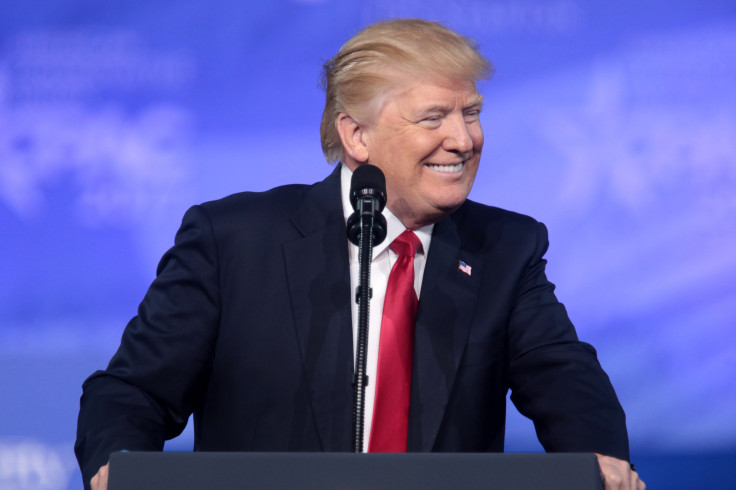
Donald Trump's former co-author of The Art of the Deal, Tony Schwartz, has said the President is 'demented' and 'self-destructive' in a blunt interview on MS NOW on 11 June 2026, predicting that Trump will eventually be remembered as 'the worst President in the history of this country.'
Speaking to host Ari Melber, Schwartz framed Trump's latest political and personal manoeuvres as the behaviour of a man driven less by strategy than by compulsion.
Schwartz has spent years warning that the version of Trump he helped package for public consumption was built on appetite rather than discipline. That background gives his latest comments a particular sting. He was not speaking as a partisan rival, but as one of the people who helped shape the image that first made Trump a national political brand.
Donald Trump and Tony Schwartz's Long, Bitter Divide
Schwartz's remarks came in response to Melber's discussion of Trump's recent gaffes, including the president's remark that he 'loves' inflation, a line Melber described as politically damaging at a moment when rising prices are already rattling voters and worrying Republicans ahead of the November midterms. Schwartz did not soften his language. He described Trump as an addict-like figure, a man who operates like a 'black hole' into which attention and praise are endlessly poured, only for the appetite to return almost immediately.
'It's demented. I mean, it's so self-destructive,' Schwartz said.
He went on to argue that Trump's political rise created a high that could not be sustained. In Schwartz's telling, Trump's return to the White House may have looked triumphant at first, but the momentum has not lasted. 'He poured it in and maxed out when he was reelected president,' Schwartz said. 'And it looked fantastic. But it seeped out incredibly quickly.'
That, he suggested, is the central problem now. Trump has built a political identity around escalation, provocation and constant reinforcement, but the same habits that delivered power are now, in Schwartz's view, undermining it. 'And then he has to keep upping the ante and chasing the high,' Schwartz said. 'And so now where he's at is there's no high to chase.'
Schwartz said Trump's current course could end with a public repudiation at the ballot box, especially if Democrats regain control of Congress in the next election cycle. He predicted what he sees as a looming blue wave, arguing that the scale of the backlash is being underestimated.
Donald Trump's Midterm Warning Has Turned Personal
Melber linked Schwartz's criticism to wider Republican unease, including comments from Senator John Cornyn of Texas, who has warned that Trump's insistence on loyalty and self-interested decision-making could drag the party into a damaging midterm result. Cornyn said a loss of power would leave Trump facing 'the most miserable two years of his life,' a line that underlined the extent to which even some Republicans appear to be bracing for turbulence.

Schwartz took that idea further and made it personal. He suggested Trump may already be dealing with physical problems, citing what he described as the number of visits to the hospital. There was no medical evidence provided during the interview, and nothing Schwartz said constituted a confirmed diagnosis. Still, he clearly believes the pressure of office, age and a possible post-midterm decline could combine into something far more serious for Trump than a simple political setback.
'He would not step down or bow out,' Schwartz said, predicting that if Republicans lose the House, Trump's second term could become 'a torturous time' for him. Then came the sharpest line of the segment. 'I think he's going to quit in his own mind,' he said, comparing Trump to a basketball player who decides he has had enough when his side is already far behind.
That may sound like a metaphor, but Schwartz was using it to make a real point about power. In his view, Trump is unlikely to leave office in any formal sense, but he may emotionally disengage if he loses the political cover he needs. The image is almost cruel in its simplicity. A president still in place, still noisy, still difficult, but no longer truly driving the game.
Schwartz said his expectation is that Trump's worst period is still ahead, not behind him. 'I think people really, maybe this is my hope, are underestimating how big this blue wave is going to be,' he said. 'I think it's going to be bigger.'
© Copyright IBTimes 2026. All rights reserved.
- Recommended For You