

How Many Died in the Philippines Earthquake: Police Confirm 19 Fatalities
In a country accustomed to living on the fault line, the latest Philippines earthquake turned an ordinary school morning into a frantic search for survivors.

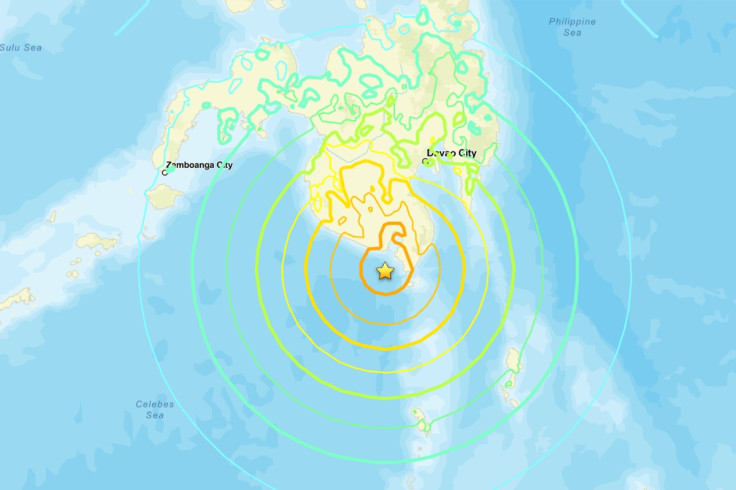
At least 19 people were confirmed dead and more than 130 injured on Monday after a powerful earthquake struck the southern Philippine island of Mindanao at 7.37am local time, collapsing buildings in General Santos City and triggering tsunami alerts across the region, police and disaster officials said.
The magnitude‑7.8 quake hit as millions of pupils were returning to public schools for the new academic year, adding a sharp edge of panic to what should have been a routine Monday morning. The Philippine Institute of Volcanology and Seismology said the epicentre was about 13km south‑west of General Santos City, at a shallow depth of 10km in its initial bulletin, while the US Geological Survey put the depth at 55km. Those discrepancies are typical in the early hours of a major quake, when agencies are still refining their readings and racing to get basic information out.
Rising Death Toll
The local police in General Santos City reported extensive damage in the urban centre nearest the epicentre. 'Many buildings were affected, but I cannot enumerate them now because we are busy with ongoing rescues,' Robert Dagon of the city police told Agence France‑Presse, sketching only the barest outline of what emergency teams were facing on the ground.
A spokesperson for the national civil defence agency, Junie Castillo, told local media that 19 people were feared dead, 134 were injured and 12 were missing, although he stressed that these figures were still being verified as reports filtered in from scattered communities. Officials warned residents to treat early casualty numbers as provisional and to expect revisions as search teams moved through damaged neighbourhoods.
The office of civil defence urged people not to re‑enter cracked homes, shops or offices because of the threat of strong aftershocks. That kind of warning is standard, but in Mindanao's crowded low‑rise districts it effectively means thousands of families spending the night outside or in temporary shelters, with authorities still assessing which structures are safe.
Another video captures the Jollibee building collapse in General Santos, Philippines following powerful earthquake. No word on casualties. https://t.co/LJEVl0qTjC pic.twitter.com/DgixNijwoY
— AZ Intel (@AZ_Intel_) June 8, 2026
Verified video from General Santos City shows how sudden the destruction was. The upper floor of a Jollibee restaurant, one of the Philippines' most recognisable fast-food chains, collapsed in seconds, while the outer concrete walls of a nearby commercial complex sheared off, exposing its interior. Images from a convenience store in the same city showed its front entrance reduced to twisted metal, with smashed glass and overturned benches spilling into the street.
In Davao del Sur, a province north of the epicentre, part of a high school gave way as students gathered outside. Footage shared by Bombo Radyo, a local radio network, captured the moment walls crumbled while pupils, who had already evacuated, could only watch. At Mahayhay elementary school in Davao, children were sent scrambling during the morning flag ceremony as the ground shook beneath them.
The Philippines Red Cross later reported that its teams had attended three high schools to support students who were traumatised by the quake. That detail, tucked into an otherwise technical disaster update, hints at the longer emotional and psychological tail of an event that lasted less than a minute.
Tsunami Fears and Government Response
The Pacific Tsunami Warning Center said waves of up to 3 metres were possible along some Philippine coasts, and up to 1 metre in parts of Indonesia and Malaysia. Those alerts prompted power outages in affected areas and urgent calls for coastal residents to move to higher ground while the extent of sea level change was still unclear. In a later advisory, the centre said the tsunami threat had largely passed, easing one of the most immediate fears, although detailed coastal assessments were still under way.
President Ferdinand Marcos Jr. said evacuation centres were 'ready and operational' as government agencies worked to clear roads and check bridges for damage. He ordered the suspension of schools in affected areas until further notice, saying, 'The safety of our children comes first.' There was no immediate estimate from his office of how many pupils would be affected or how long the closures might last.
Across Mindanao, residents reported feeling the shaking intensely, and tremors were also felt in Indonesia's North Sulawesi and North Maluku provinces. So far there have been no official tallies from those areas of structural damage or injuries linked directly to Monday's quake.
Infrastructure durability in Philippines is a joke.
— Simpu Singh (@Simpu_SinghIND) June 8, 2026
A very powerful magnitude 7.8 earthquake hit Philipines so badly that its buildings collapsed within seconds. pic.twitter.com/3TJjMT6cY1
The Philippines sits on the Pacific 'Ring of Fire,' a band of seismic faults that makes the archipelago one of the world's most disaster‑prone countries. Earthquakes and volcanic eruptions are a grimly familiar part of life, layered on top of an annual cycle of about 20 typhoons and tropical storms. Yet each new shock still exposes the gaps between building codes on paper and how structures are actually put up in fast‑growing cities such as General Santos.
Officials have not released a comprehensive list of damaged buildings or a full accounting of the dead, injured and missing. With communications patchy and rescue operations continuing, nothing is fully confirmed yet, so all provisional figures should be taken with a grain of salt while teams work through damaged streets and rural communities.
© Copyright IBTimes 2026. All rights reserved.