

'Courageous Iranian Women' Offered Double $30,000 Bounty to Kill or Capture Invading US Personnel
Tehran's new incentive scheme targets American military personnel
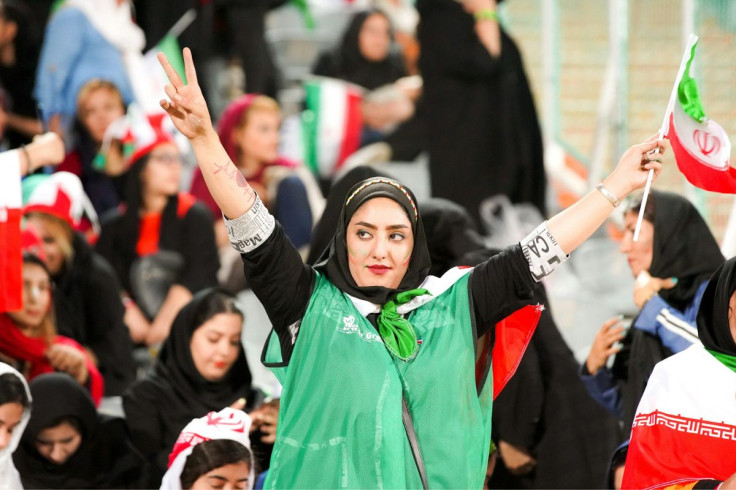
Iran's military announced on Sunday that it is offering a reward equivalent to $30,000 (£22,200) to anyone who kills or captures a US service member, with the bounty doubled to $60,000 (£44,300) if the act is carried out by an Iranian woman.
For context, the offer comes amid a protracted and unpredictable conflict between Washington and Tehran in the Middle East. Both sides have traded intermittent strikes, while diplomatic efforts have largely stalled. Disagreements over the Strait of Hormuz and other provisions of an interim agreement have repeatedly complicated attempts to secure a lasting peace since full-scale hostilities first erupted on 28 February.
Double Rewards Target US Service Members
According to Iranian state media, Iranian Army Commander-in-Chief Amir Hatami confirmed the new financial incentive scheme. Hatami explained that the military command established the reward structure after receiving numerous requests from members of the public seeking to contribute financially to the war effort.
'Anyone who kills or captures and hands over an invading American military personnel will receive a reward equivalent to $30,000 (£22,200), or 5 billion tomans, from the Islamic Republic of Iran's Army,' Hatami said. The toman is an informal Iranian currency unit equivalent to 10 rials.
Hatami went on to specify that Iranian women would receive twice the baseline payout if they managed to capture or kill US personnel. 'Courageous Iranian women who carry out such an action will receive double the reward,' Hatami added.
Bounty Offered for Capturing US Personnel
It remains unclear how the programme would operate in practice. Hatami provided no operational details regarding exactly where or when such killings or captures were anticipated to take place. Reporting on the announcement similarly noted that he did not specify where such encounters might occur.
There has been no large-scale publicly confirmed deployment of American ground troops inside Iranian territory during the current conflict. Much of the US campaign has instead involved air and naval operations, including an American blockade of Iranian shipping.
The financial incentive highlights how Tehran is attempting to project domestic resistance against US forces. The military leadership is publicising the cash rewards even though opportunities for Iranian civilians to encounter American personnel directly appear limited.
Tensions Rise Over Blockaded Strait of Hormuz
The broader conflict started on 28 February when the United States and Israel launched coordinated strikes against Iran, targeting its nuclear and ballistic missile programmes and seeking regime change, according to US and Israeli statements.
Iran's Supreme Leader Ayatollah Ali Khamenei was killed during the opening strikes. Tehran responded with attacks against Israel, US military bases in the region and sites in neighbouring Middle Eastern states.
Tehran subsequently closed the Strait of Hormuz, while Washington imposed a naval blockade on Iranian shipping. Because roughly one-fifth of global oil consumption passes through the waterway, the disruption put significant pressure on global energy markets and the wider economy. Commercial traffic through the strait remains sharply reduced amid renewed tensions.
Sporadic Fighting Continues Around Iran and the Gulf
An April ceasefire temporarily reduced hostilities, although intermittent fighting resumed in May. Iran and the United States later signed a separate Islamabad Memorandum of Understanding in June aimed at ending hostilities and reopening the Strait of Hormuz.
That agreement subsequently unravelled. Trump declared it 'over' on 7 July, while Iran later suspended the deal and halted direct military and diplomatic engagement with Washington. Efforts by mediators including Pakistan and Qatar to revive it have so far made little progress.
Since then, Iran and the United States have continued periods of confrontation punctuated by pauses in military activity. The Strait of Hormuz and surrounding waters remain a central flashpoint, with shipping traffic disrupted and both sides accusing the other of violating previous agreements.
Meanwhile, Yemen's Iran-aligned Houthi rebels have carried out attacks on commercial shipping and other regional targets. Recent attacks around the Bab el-Mandeb Strait have added another layer of instability to maritime routes already affected by the US-Iran conflict.
© Copyright IBTimes 2026. All rights reserved.