Iran Reportedly Restored Most of Its Military Firepower After Using the Eight-Week Truce To Buy From Russia
Western intelligence assessments suggest Iran has rebuilt much of its missile arsenal during an eight-week ceasefire, potentially restoring its firepower to near pre-war levels.
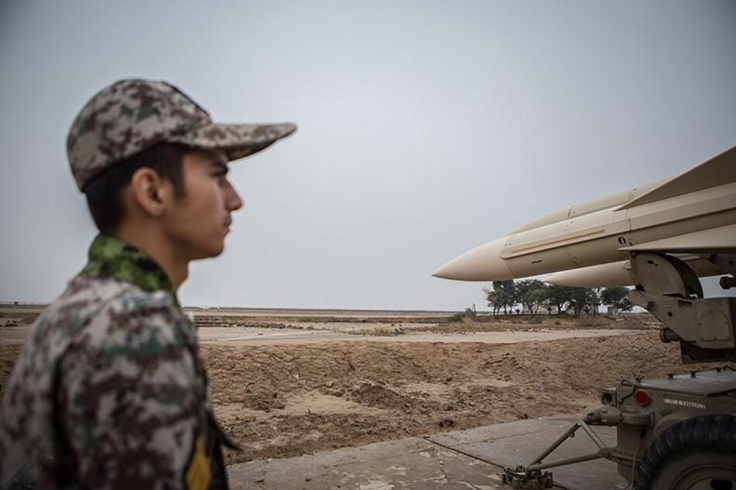
Iran has rebuilt a large share of its missile arsenal during an eight-week ceasefire, with Western intelligence assessments suggesting that Tehran restored most of its missile firepower after using the pause in fighting to replenish supplies, including new Russian-made weapons.
However, the replenishment of its resources is now being closely watched amid concerns the country could return to near pre-war strike capability if hostilities resume. Sustained military exchanges between Iran, Israel, and US-backed forces significantly depleted Tehran's long-range missile stockpiles.
Intelligence estimates earlier in the year had already pointed to heavy losses during repeated air campaigns, with launch sites and storage facilities repeatedly targeted across Iranian territory.
Iran's missile capacity has been a central factor in the regional balance of power, particularly during periods of heightened escalation when long-range strikes and drone attacks have been deployed across multiple fronts.
Iran's Replenishment Efforts During Ceasefire
Western allies now assess that Iran holds roughly three-quarters of the munitions it possessed before the latest conflict cycle, marking a substantial recovery from earlier estimates that suggested its stockpile had fallen to near 60 per cent during peak hostilities.
According to intelligence assessments cited by SCMP, Tehran is believed to have taken advantage of the eight-week truce to rebuild its missile capabilities, including acquiring unspecified Russian-made weapons that may have been recently produced. Russia's Ministry of Defence did not respond to requests for comment.
The scale of Iran's missile usage during the conflict was significant.
Between 28 February and 8 April, before the ceasefire took effect, Iran reportedly launched more than 1,850 missiles across the region, alongside at least twice as many Shahed-type cruise missiles. These low-cost, propeller-driven systems, with ranges exceeding 1,000 kilometres, have become a key feature of Iran's strike strategy.
At the height of the conflict, US and Israeli assessments suggested that roughly two-thirds of Iran's launchers had been destroyed.
US Defence Secretary Pete Hegseth said in March that Iran's offensive capability had been reduced by up to 90 per cent, though subsequent intelligence now suggests that degradation was less decisive than initially believed.
One of the more persistent challenges for analysts has been Iran's ability to recover equipment described as 'entombed,' where missile systems buried in underground facilities became temporarily inaccessible due to debris blocking entry points.
Officials believe that during the ceasefire, Iran focused heavily on reopening these sites and redistributing stored munitions.
Russia's Role In Iran's Missile Firepower Restoration
Intelligence reports said the restoration was made possible by a transfer of Russian-made missiles to Iran during the truce period. While details remain limited, assessments suggest these systems may have been part of recent production runs.
Iran's domestic production capacity has also drawn attention. Shahed drones and similar systems, which rely on commercially available components such as fibreglass, guidance electronics, and small engines, can be manufactured at relatively low cost. Some estimates place production costs at under $50,000 (£37,400) per unit, making them difficult to fully eliminate through targeted strikes alone.
Experts cited in the assessments argue that Iran's dispersed industrial structure complicates efforts to dismantle its missile programme entirely.
Becca Wasser of Bloomberg Economics also said Iran's resilience has altered the strategic calculation for its adversaries, noting that despite extensive military operations, Tehran has managed to preserve and rebuild much of its missile capability.
'Iran has shown remarkable resilience and ability to reconstitute its missile arsenal,' she said.
US President Donald Trump, however, has claimed Iran's remaining missile capacity stands at around 21 to 22 per cent.
US-Iran Ceasefire: Is It Happening Soon?
The emerging intelligence picture suggests that Iran's missile programme has not only survived sustained military pressure but may now be approaching pre-conflict levels of readiness.
Analysts say this raises the likelihood that any renewed escalation could begin from a far more evenly matched position than earlier in the year.
While the ceasefire provided a temporary pause in active hostilities, it appears to have also created space for rapid rearmament.
The ceasefire is still technically in place but very fragile, with no full peace deal agreed yet. Fighting has slowed compared to earlier months, but tensions remain high, and there are still occasional clashes in the wider region.
Talks between the US and Iran are ongoing, with discussions about a possible agreement that could include easing sanctions and nuclear limits, but both sides are still disagreeing on key details.
© Copyright IBTimes 2026. All rights reserved.
- Recommended For You