Donald Trump Tariff Manufacturing Job Loss: Lincoln Project Exposes 75,000 Lost US Factory Jobs
The administration promised a historic factory boom, but protectionist trade policies have quietly gutted the manufacturing sector instead.

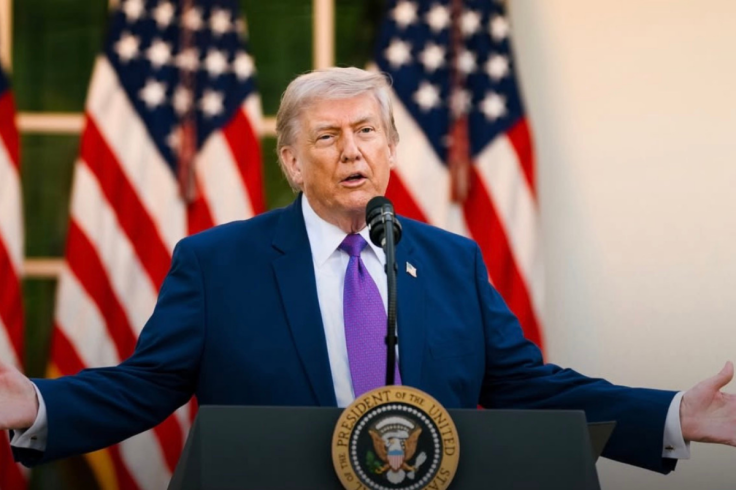
Anti-Trump Republican group The Lincoln Project exposed a staggering Donald Trump tariff manufacturing job loss on Wednesday, citing Department of Labor data showing 75,000 American factory roles have disappeared since his second inauguration.
The news came after the Republican leader recently branded himself 'The Jobfather' in a Department of Labor promotional poster parodying the 1972 Francis Ford Coppola film The Godfather. He promised a historic manufacturing boom driven by his aggressive protectionist trade policies, even as 63 percent of the American public voiced opposition to the sweeping new tariffs.
The Stark Reality Behind the Tariff Manufacturing Job Loss
Taking to X to dismantle the glowing economic narrative pushed by the White House, The Lincoln Project pointed out that the rhetoric simply does not match the reality on the factory floor. The group revealed that alongside the 75,000 lost factory jobs, the United States has also seen $60 billion (£44.72 billion) in annual factory construction evaporate since his re-election. They contrasted this sharp industrial decline with the 625,000 manufacturing jobs created during Joe Biden's term.
You have to wonder what the factory workers who bought into the 'roaring back' promises make of this stuff now. The administration sold a vision of smokestacks rising and assembly lines humming, but the actual data paints a picture of a sector quietly suffocating under restrictive trade barriers.
Earlier in July, Dr Robert Shapiro offered a sobering explanation for the downturn. The former undersecretary of commerce for economic affairs under President Bill Clinton noted that the tariffs have injected toxic volatility into the market. Every corporate investment relies on predicting future demand and production costs.
Since his re-election, we've lost 75,000 manufacturing jobs and $60 Billion in annual factory construction. Over the same period, Biden had created 625,000. https://t.co/Y90CTVGIzi
— The Lincoln Project (@ProjectLincoln) July 30, 2026
When a government abruptly alters the cost of materials coming from Mexico or Canada, that predictability vanishes. Business leaders cannot plan a factory expansion when the fundamental rules of international trade change on a whim.
'It is about uncertainty,' Shapiro said. He explained that executives must make assumptions about labour costs and material inputs before committing capital. Trade agreements that stabilise prices with neighbouring nations help reduce that uncertainty. Without them, corporate boards simply freeze their spending and wait to see what happens next.
The damage extends far beyond future investments to impact everyday operations. Thousands of American companies sell goods into Canada daily. A looming threat of retaliation or diplomatic conflict instantly hurts Canadian demand for US products.
If Canada slaps a retaliatory tariff on American exports, those goods become less competitive overnight. As Shapiro bluntly concluded, the situation is thoroughly bad for both American workers and American investment. The volatility is not protecting jobs, rather it is actively destroying the economic conditions required to create them in the first place.
Think Tank Warns the Tariff Manufacturing Job Loss Could Deepen
The progressive think tank Center for American Progress sounded the alarm on this precise issue back in February. Their researchers estimated that the administration's trade penalties had already cost American manufacturing jobs in the six digits.
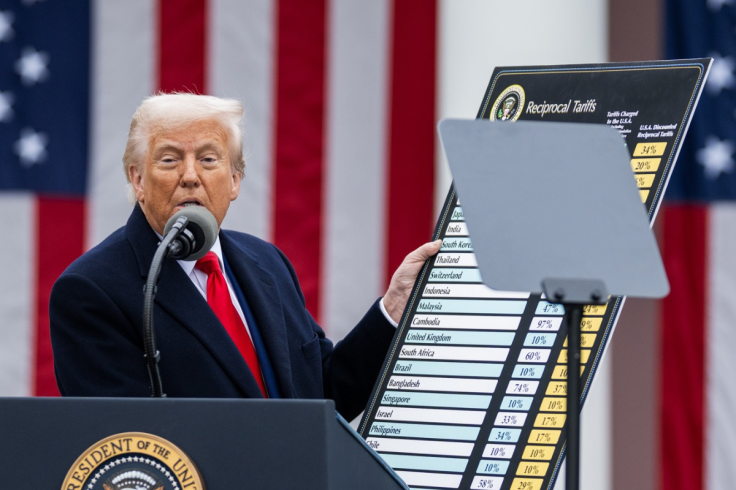
The think tank provided a grim forecast of what happens when a global superpower decides to wall off its domestic market from its closest international allies.
Analysts Allison McManus and Dawn Le wrote that the manufacturing sector is far from roaring back as the president promised. They reported a loss of more than 100,000 jobs over the past year.
Crucially, they noted that these aggressive trade actions have alienated the most reliable trading partners of the United States. Nations are not waiting around to be penalised and have actively sought new trade agreements elsewhere.
According to the think tank, Canada, India, Japan, South Korea and the European Union have all recently pursued new economic pacts without the United States. By pushing these massive markets away, the administration is effectively forcing them to pivot towards China. It is a mad strategy when you map it out on paper.
Once foreign supply chains solidify without American involvement, US factories are permanently locked out of those newly formed networks.
© Copyright IBTimes 2026. All rights reserved.
- Recommended For You