'I'm Saving Your Ass... Everybody Hates You Now': Trump's Confirmed Outburst at Netanyahu Laid Bare
US-Israel relations strained as Trump confronts Netanyahu on military actions
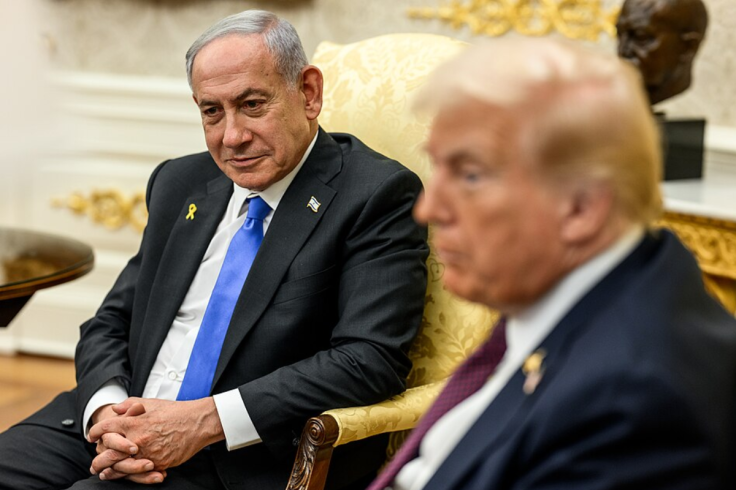
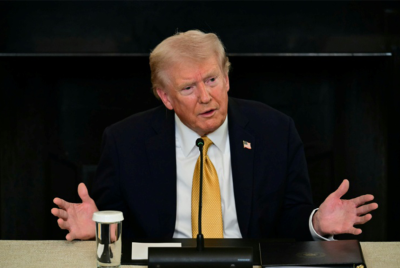
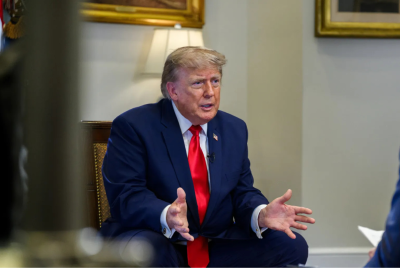
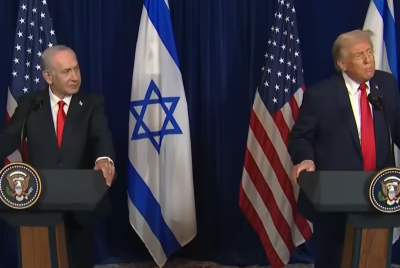
It was, by most accounts, not a friendly conversation. On Monday evening, US President Donald Trump got on the phone with Israeli Prime Minister Benjamin Netanyahu — and by the time it was over, the Israeli leader had been told, in no uncertain terms, to stand down. The call, first reported by Axios and attributed to two US officials and a third source briefed on the exchange, centred on Israel's escalating military campaign in Lebanon and Netanyahu's reported plans to strike Hezbollah targets in Beirut. What unfolded was one of the most heated exchanges between the two leaders since Trump returned to office.
A US official's summary of Trump's remarks to Netanyahu read: 'You're fking crazy. You'd be in prison if it weren't for me. I'm saving your ass. Everybody hates you now. Everybody hates Israel because of this.' A second source said Trump was 'pissed' and at one point yelled: 'What the fk are you doing?'
JUST IN: AXIOS REPORTS TRUMP REPORTEDLY BECAME FURIOUS & EXPLODED AT NETANYAHU DURING LATEST CALL
— Sulaiman Ahmed (@ShaykhSulaiman) June 2, 2026
Trump reportedly became FURIOUS and told Netanyahu:
“You’re fucking crazy.”
“You’d be in prison if it weren’t for me.”
“I’m saving your ass.”
“Everybody hates you now.… pic.twitter.com/leiHwvcP8Z
Lebanon Was Not the Only Issue on the Table
The timing of the call was not coincidental. Earlier that same Monday, Iran had warned it could resume direct confrontation if Israel continued its military campaign in Lebanon — a signal that Netanyahu's moves were putting more than just the ceasefire at risk. The US-Iran negotiations, which Trump had been carefully shepherding, were now in danger of collapsing entirely.
One official said this was one of Trump's worst calls with Netanyahu since he returned to office, and that Trump's anger was driven by the fact that Netanyahu's decision to escalate in Lebanon was threatening to implode his negotiations with Iran.
Before the call, a senior US official had already told Axios that Trump felt Netanyahu's threats to strike Beirut were going too far. After it ended, Trump posted on Truth Social that he had spoken with Netanyahu and that 'there will be no Troops going to Beirut, and any Troops that are on their way, have already been turned back.'
A Debt Trump Says He Is Owed
The reference to prison was not throwaway. Sources told Axios that Trump invoked his public backing of Netanyahu during the Israeli leader's ongoing corruption trial — framing his support as a personal favour now being squandered. That context matters.
Over the past year, Trump had gone to considerable lengths to defend Netanyahu publicly. In posts on his Truth Social platform, Trump called Netanyahu's corruption trial a 'TRAVESTY OF JUSTICE' and wrote: 'It was the United States of America that saved Israel, and now it is going to be the United States of America that saves Bibi Netanyahu.'
Netanyahu has consistently denied the allegations against him, branding them a 'witch hunt.' The charges include bribery, fraud and breach of trust across three separate cases.
Netanyahu's Office Tells a Different Story
By Tuesday, pushback had arrived from Jerusalem. A member of Netanyahu's staff admitted to Channel 12 that the call had been 'tense,' but denied core elements of the Axios report, including the claim that Trump had cursed at Netanyahu personally or accused him of being hated around the world.
The Tuesday report also clarified that two calls had taken place on Monday night — one at 7 pm Israel time and one close to midnight — and that it was the latter call that was the tense exchange.
Netanyahu released a statement of his own saying he had told Trump that Israel would strike Beirut if Hezbollah did not stop attacking Israel, and that southern Lebanon operations would continue. But the US account was sharply different. The second US official claimed Trump had 'steamrolled' Netanyahu, with Netanyahu ultimately saying: 'OK, OK, just make sure everything is taken care of.'
🚨 "IF IT WEREN'T FOR ME, YOU'D BE IN PRISON."
— Brian Allen (@allenanalysis) June 2, 2026
According to Axios' reporting, Trump reminded Netanyahu of his corruption trial during a heated call over Israel's escalation in Lebanon.
Trump reportedly told Netanyahu he was being ungrateful after all the help he'd received,… pic.twitter.com/JGxuoZ5Vot
A Ceasefire Announced, Immediately Complicated
After Trump announced the ceasefire, Hezbollah agreed to a US proposal to stop firing at Israel, according to a statement from the Lebanese Embassy in Washington. Netanyahu, however, said the Israeli military would keep striking southern Lebanon 'as planned,' while Defence Minister Israel Katz denied there was any ceasefire in Lebanon at all.
The disconnect between the American and Israeli readouts of both the call and the ceasefire announcement illustrated just how strained the relationship had become in the space of a single day.
The reported exchange is significant not just for its language but for what it reveals about the limits of the Trump-Netanyahu alliance at a critical diplomatic moment. With American-brokered Iran negotiations still fragile and a nominal ceasefire being tested daily in southern Lebanon, Washington's ability to restrain its closest Middle East partner is now an open question. Whether the call achieves what Trump intended — or simply hardens positions on both sides — remains to be seen.
© Copyright IBTimes 2026. All rights reserved.
- Recommended For You