Jeremy Clarkson Cancer Update: TV Legend Declares 'I Am World's Luckiest Man' After Testing Saves Life From Tumour
Broadcaster urges men to get tested after surviving aggressive prostate cancer
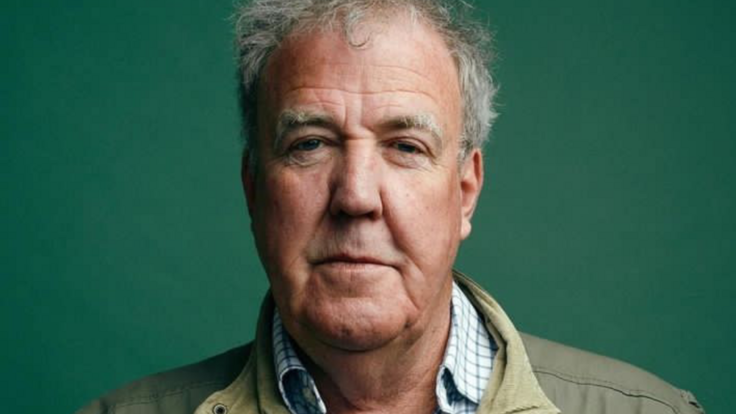
Jeremy Clarkson has confirmed he is officially in remission from prostate cancer, crediting a routine blood test with saving his life.
The 65-year-old broadcaster and Clarkson's Farm star told the Sunday Times that a follow-up Prostate-Specific Antigen test carried out two months ago showed no indication of cancer, two years on from an 'aggressive' diagnosis. 'I am without a doubt, officially, the world's luckiest man,' Clarkson said. The announcement came days after the final episode of 'Clarkson's Farm' series five, in which he revealed the diagnosis on camera for the first time and signed off from a hospital bed.
From Hospital Bed to Remission
Clarkson's prostate cancer was diagnosed in May 2025 following a routine medical check-up, he told the Sunday Times. He described the disease as an 'aggressive type of cancer' that 'could have spread, it could have gone into the pancreas, it could have gone anywhere, and that would have been trouble.'
Treatment required the partial removal of his prostate, alongside a catheter, and Clarkson admitted his recovery was complicated by his own decision to keep taking blood-thinning medication prescribed after an October 2024 heart procedure. 'It was quite spectacularly painful,' he told the paper. 'It was beyond DEFCON 1 on the pain scale,' adding that the complication was 'horrific and it was all my own fault.'
The final episodes of 'Clarkson's Farm' series five tracked the diagnosis in real time, ending with Clarkson telling viewers from his hospital bed, 'If this is all successful, I'll see you for season six, and if it isn't, I won't. Take care, everyone.' He has since confirmed that series six is already in production, alongside Kaleb Cooper and the rest of the Diddly Squat Farm team.
'Just Lie' If You Have To, Says Clarkson
In a video posted to his Instagram account on Saturday, Clarkson addressed fans directly, joking that his eyebrows in particular were 'looking very lustrous' before turning serious about the reason he survived. 'The reason why I'm fine is because the doctors caught the prostate cancer early, and they caught it early because I got tested,' he said.
Clarkson used the platform to issue a blunt public health message aimed squarely at men reluctant to be screened. Anticipating objections about invasive examinations, he told followers the process today is simply a blood test, adding that men who are refused testing by a GP because they lack symptoms or risk factors should not be deterred. 'Just lie, say you have got symptoms, say that you have to get up 32 times in the night for a wee, and that there's some dribbling,' he said, before citing the scale of the disease in Britain. 'Because, look, 12,000 people, men to be honest, die every year in the UK from prostate cancer. Don't be one of them. Get tested.'
The NHS advises men over 50 who are concerned about prostate cancer to speak to their GP, who can discuss the benefits and risks of a PSA test before any decision is made.
That figure aligns closely with data published by the charity Prostate Cancer UK, which states that more than 12,000 men die from the disease in the UK every year and that more than 64,000 are diagnosed annually, making it the most commonly diagnosed cancer in the country. The charity also notes that one in eight men will be diagnosed with prostate cancer in their lifetime, a risk that rises to one in four for Black men.
Cheating Death Twice
Clarkson told the Sunday Times the cancer scare came on the heels of a separate health crisis, an October 2024 procedure in which he was fitted with two stents to reduce the risk of a fatal heart attack. Taken together, he said, the two episodes meant he had 'cheated death twice' within roughly eighteen months.
He is not alone in going public about the disease recently. Clarkson said he had spoken with former prime minister Lord Cameron and restaurant critic Giles Coren, both of whom have also been diagnosed with prostate cancer, comparing notes on treatment and recovery. He told the paper he now undergoes regular blood tests to monitor for recurrence, acknowledging a roughly 40 per cent chance that prostate cancer returns in men who have had it. 'I try to be positive,' he said. 'I've decided to be one of the 60% who doesn't have a recurrence.'
The NHS does not currently operate a national screening programme for prostate cancer, with the UK National Screening Committee citing concerns that blanket PSA testing can lead to overdiagnosis and unnecessary treatment in men whose cancer would never have caused them harm. Men over 50, and those in higher-risk groups, can request a PSA test from their GP regardless of symptoms.
Clarkson's remission marks a rare moment of unambiguous good news for the broadcaster's millions of fans, after two years dominated by hospital visits, stents and surgery.
© Copyright IBTimes 2026. All rights reserved.
- Recommended For You