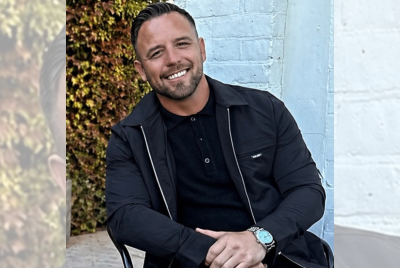
Johnny Somali Found Guilty amid His Mother's Pleas for Leniency — Latest Nuisance YouTuber Punished in Asia
Somali faces six months behind bars as South Korean judges crack down on disruptive foreign influencers following a string of provocative stunts

A Seoul court has sentenced controversial American livestreamer Johnny Somali to six months in prison following a string of disruptive stunts that triggered national outrage in South Korea.
The 25-year-old creator, whose real name is Ramsey Khalid Ismael, was ordered into immediate detention in April 2026 after being found guilty of multiple charges, including obstruction of business and public nuisance.
Judges described Ismael's behaviour as a calculated, profit-driven attempt to exploit local culture for online engagement. Johnny Somali's sentencing marks the most significant legal blow to the 'nuisance streamer' subculture that has plagued major Asian cities over the last year.
The court's decision was influenced heavily by evidence that Ismael's actions were not accidental but part of a deliberate business model. Prosecutors revealed that Ismael's prison term was necessary because the streamer repeatedly ignored police warnings and continued to harass members of the public for 'donations' from his global viewers.
The Johnny Somali court verdict 2026 has been hailed by local residents who had grown increasingly frustrated with the perceived leniency shown to foreign digital nomads who flout local laws.
What Did He Do In South Korea?
Born in 2000 in Phoenix, Arizona, Ismael built notoriety through disruptive 'IRL' streaming, often involving confrontational or offensive behaviour in public spaces. Authorities described his behaviour as deliberate and profit-driven, aimed at generating online engagement regardless of local laws or cultural sensitivities.
Ismael's legal troubles stem largely from a series of livestreamed incidents in South Korea that authorities said disrupted businesses and offended public order. These included harassment in public venues, disorderly conduct in shops and transport systems, and the distribution of manipulated explicit content.
One of the most controversial moments involved a video in which he filmed himself behaving inappropriately at a memorial known as the Statue of Peace, which honours victims of wartime sexual slavery. The act sparked national outrage, with critics describing it as deeply disrespectful.
Prosecutors argued that his actions were not isolated mistakes but part of a pattern of behaviour intended to provoke reactions for online monetisation. The court later echoed this view, noting his repeated disregard for local laws and norms.
What Charges Did He Face?
South Korean authorities brought multiple charges against Ismael, including obstruction of business and violations linked to public nuisance laws. He was also accused of distributing fabricated explicit content without consent, which significantly complicated his legal case.
Reports indicated that he faced several counts under different statutes, with potential penalties that could have extended to years in prison if convicted on all counts.
During proceedings, prosecutors initially sought a sentence of up to three years, citing the seriousness and repeated nature of his actions.
What Sentence Did The Court Deliver?
A Seoul court sentenced Ismael to six months in prison and ordered his immediate detention. The court concluded that his conduct had caused significant disruption and offence, stating that he had committed the acts 'for profit' while ignoring legal boundaries.
Although the sentence was shorter than prosecutors had requested, it still marked a decisive response from South Korean authorities, reflecting growing concern over so-called 'nuisance influencers' operating abroad.
Has This Happened To Other 'Troll' Influencers In Asia?
Johnny Somali's case is not an isolated one, and that's what makes it more significant.
A similar backlash surrounded Fidias Panayiotou, a YouTuber who faced public outrage in Japan after filming himself evading train fares and creating disruptive content for views. While his case did not result in the same level of legal punishment, it triggered intense criticism and raised questions about foreign influencers exploiting local systems for content.
Several foreign streamers in countries like Thailand and Japan have faced fines, deportation threats, or police intervention for disruptive livestreaming, highlighting a growing intolerance for nuisance content.
The pattern is clear: governments are increasingly willing to act when online stunts cross legal or cultural boundaries.
How Did He Respond To The Backlash?
Throughout the legal process, Ismael's tone shifted from open defiance to pleas for leniency, with his mother reportedly making emotional appeals to the court.
At one point, the streamer even compared himself to a 'political prisoner,' a claim Yonhap News reported drew public derision.
Despite his apologies, the court remained firm, stating that the profit motive behind his streams outweighed any claims of cultural ignorance.
Observers noted that his shifting stance from provocation to apology did little to mitigate the damage already caused to his reputation.
What Does This Case Mean For Influencers?
The case has reignited debate over the responsibilities of international online creators. While livestreaming and viral content can generate significant income, authorities in multiple countries have increasingly signalled that disruptive behaviour will not be tolerated.
South Korea's response, in particular, highlights a stricter stance towards foreign influencers who violate public order laws. Legal experts say the case could serve as a warning that cultural insensitivity and provocative content may carry serious consequences beyond online backlash.
As Ismael begins his six-month sentence, the digital world debates the future of provocative content. For many, the Johnny Somali Seoul sentencing is a necessary correction for an industry that has rewarded bad behaviour with clicks and cash. For the streamer, the 'villain arc' has led him to a very real cell, proving that in the battle between viral engagement and the rule of law, the court still has the final word.
© Copyright IBTimes 2026. All rights reserved.
- Recommended For You