MP Lauren Edwards Deploys Rare Parliament Act to Bypass Lords and Pass Historic Assisted Dying Bill
Labour MP reintroduces the Terminally Ill Adults Bill, aiming to legalise assisted dying in England and Wales, using a rare parliamentary mechanism to potentially bypass the House of Lords.

A new bill to legalise assisted dying in England and Wales has been introduced by Labour MP Lauren Edwards, who says she wants to 'finish the job' after the previous effort fell short in the House of Lords.
Edwards, the MP for Rochester and Strood, has announced plans to reintroduce exactly the same legislation that was narrowly approved by MPs last year. The proposal, known as the Terminally Ill Adults (End of Life) Bill, would allow terminally ill adults over the age of 18 who are expected to die within six months to receive assistance to end their own life, subject to safeguards.
By bringing back an identical version of the bill, Edwards is opening the door to a rarely used parliamentary mechanism that could allow the legislation to become law even if peers refuse to approve it.
The move has reignited a divisive debate that has already occupied Parliament for more than a year, drawing support from campaigners while continuing to face strong opposition from critics who argue the bill contains serious flaws.
Rare Parliamentary Route Could Override Lords
The significance of Edwards' decision lies not only in the contents of the bill but also in the procedure she is seeking to use. Under normal circumstances, legislation must be approved by both the House of Commons and the House of Lords before becoming law. However, the Parliament Act provides a route for MPs to override opposition from peers under certain conditions.
The powers have only been used seven times in the last century. If MPs pass an identical bill in two consecutive parliamentary sessions, the House of Lords loses the ability to block it for a second time. While peers can still propose amendments and scrutinise the legislation, failure to approve the bill before the end of the next parliamentary session could result in the Commons version becoming law without the Lords' consent.
Edwards defended the approach, insisting she was acting within established parliamentary rules. As per reports, she said: 'Laws passed in the House of Commons are then refined by the House of Lords, but they don't have the opportunity to block them.'
She added: 'It's perfectly reasonable for us to ask the House of Lords to finish the job.'
The Labour MP also indicated she was not opposed to changes being proposed during scrutiny. Speaking on BBC Radio 4's Today programme, Edwards said many peers had suggested 'sensible amendments' and encouraged them to focus on improving the legislation.
'I would ask them to do the really important job that they are there to do and that they do admirably, and that is to refine the legislation the House of Commons has introduced,' she said.
The previous version of the bill failed to complete its journey through the House of Lords in April after an unusually large number of proposed amendments delayed proceedings until parliamentary time ran out.
Supporters And Critics Remain Deeply Divided
The renewed push has drawn both cautious support and strong criticism from figures involved in the debate. Opponents argue that triggering the Parliament Act could result in a law being passed despite unresolved concerns raised by medical professionals, disability organisations, and hospices.
Among those expressing reservations is Lord Carlile of Berriew, who said the bill in its current form was not 'robust'. However, he also signalled a willingness to engage withEdwards on possible improvements.
Lord Carlile said he and other peers were prepared to work with the MP 'in a constructive spirit'.
Labour MP Ashley Dalton was far more critical of the move. She said she was 'deeply concerned' about the decision to bring the legislation back in its existing form.
'Voters put us in power to reduce the cost of living and fix the NHS. We have debated this deeply divisive and flawed assisted dying bill for over a year, and supporters have refused to listen or to make the necessary changes,' Dalton said.
She also warned that the proposal would 'hand sweeping unchecked powers over life and death and our NHS to future governments'.
The previous assisted dying bill passed the House of Commons by a narrow margin in June 2025. Although the government remained officially neutral, several senior figures expressed opposition, including then health secretary Wes Streeting. Prime Minister Sir Keir Starmer voted in favour and had previously promised broadcaster Dame Esther Rantzen that parliamentary time would be made available for debate and a vote on the issue.
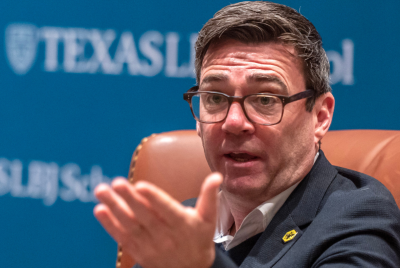
Questions have also been raised about how future political leadership could affect the legislation. Andy Burnham, who abstained on an assisted dying vote in 2015, said in 2024 that personal family experiences had changed his view and that he would 'probably vote in favour' of the principle.
However, Burnham stressed that any change in the law should be accompanied by stronger support for end-of-life care services.
'In terms of the implementation of it, I would say there should be a requirement that the hospices of this country get properly funded and sorted out before that law change comes in,' he said.
He added that palliative care was 'not in the strong position it should be' and warned: 'Consequently, you can't have this law change with an underfunded hospice movement.'
© Copyright IBTimes 2026. All rights reserved.
- Recommended For You