Why Iranian-Americans Staged A Protest Against Their Own National Team At World Cup Opener
Iran's first World Cup match turned into a platform for Iranian-Americans to protest FIFA's flag ban and express political dissent, highlighting deep divisions among Iranians globally.
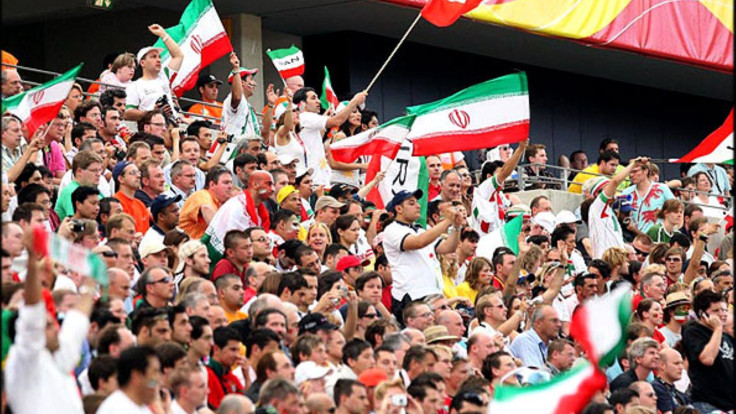
What was supposed to be a straightforward World Cup group-stage match between Iran and New Zealand quickly became far more complicated. While the fixture was officially listed as Iran v New Zealand, much of the attention surrounding the opening game centred on divisions among Iranians themselves.
Outside the Los Angeles Stadium, hundreds of Iranian-Americans gathered to protest both FIFA's decision to ban the pre-revolutionary Lion and Sun flag inside stadiums and what they viewed as a national team representing the Islamic Republic rather than the Iranian people.
Chants calling for regime change echoed through the crowds, while demonstrators sang the pre-revolutionary national anthem. Yet inside the stadium, thousands of supporters cheered for the Iranian players as they fought back twice to earn a 2-2 draw. The contrast highlighted the divisions that persist among Iranians at home and abroad, with football becoming another arena where those disagreements are being publicly expressed.
Protesters Used The Match To Voice Opposition
The atmosphere outside the stadium was dominated by politics long before kick-off. Hundreds of Iranian flags were visible, with many supporters carrying the Lion and Sun emblem associated with Iran before the 1979 revolution. Although FIFA has classified the symbol as political and banned it from stadiums, the flag remained highly visible among supporters and protesters alike.
Hundreds of demonstrators gathered outside the venue, directing their anger at both FIFA and the Iranian national team. Many argued that the players represented the government in Tehran rather than ordinary Iranians. Chants of 'Mullahs' team is not my team' and 'Regime change in Iran' rang out among the crowds before protesters began singing Iran's former national anthem.
One young attendee described the song as representing 'freedom and pride'. For many of those gathered, the protest was about much more than football. It was an opportunity to draw attention to their opposition to the Iranian government and to challenge what they saw as efforts to move beyond recent events through sport.
Nini, one of the protesters, criticised the latest agreement between Washington and Tehran, saying, 'We don't want a deal. The people of Iran deserve regime change. People were slaughtered on the streets of Tehran.'
Another demonstrator, Farimah, argued that football should not be used to move past political grievances. 'We can't normalise what happened in January through a sporting event,' she said. 'This team doesn't represent the people of Iran.'
Nearby, Kourosh stood wearing a makeshift noose around his neck, explaining that it symbolised opposition to executions in Iran. Like many others at the protest, he insisted the players represented the government rather than the population.
Supporters Remained Determined To Back The Team
While the demonstrations outside attracted attention, the atmosphere inside the stadium told a different story. Supporters loudly backed Iran throughout the match, celebrating each goal as the team came from behind twice to secure a draw against New Zealand.
Although many fans carried different versions of the Iranian flag, they were united in supporting the players on the pitch. For some, supporting the team did not mean supporting the government.
Samaneh, an Iranian-American who has lived in the United States for ten years, described the emotional conflict she feels. 'I'm here to support Iran, not the regime. I miss my country,' she said.
She became emotional when Iran's national anthem was played before the match. Her mother remains in Iran, while her father was able to attend the game with her in the United States. Samaneh said she worries constantly about her mother and feels unable to return to Iran herself.
The divisions among supporters were visible throughout the game. Some anti-regime spectators celebrated when New Zealand scored, while others focused entirely on backing Iran regardless of political disagreements.
The players themselves have rejected claims that they represent a political cause. Before the match, striker Mehdi Taremi said the team plays for all Iranians, both inside and abroad, and does not engage in politics.
Many supporters agreed with that view. Iranian-American Mostafa argued that football should bring people together rather than deepen political disagreements. 'Soccer is about friendship, cultural connections and putting politics aside,' he said while heading into the stadium.
Others echoed similar feelings. Pourmand, who travelled from San Diego to watch the team and has attended previous World Cups, insisted the players should not be viewed through a political lens. 'The people of Iran are represented by these players,' he said. 'They're here to show we're worthy of being here, a message of friendship and human values.'
Elika also admitted feeling conflicted but said she tries to separate the team from the government. Watching Iran at the World Cup had been a tradition she shared with her father before his death in 2020.
'I felt compelled to come in honour of my dad, and in honour of Iranians who just want peace and the chance to enjoy a game like this,' she said. 'I try to separate the regime from the team.'
The opening match demonstrated just how difficult that separation remains for many people. Iran's players arrived hoping football could unite supporters. Instead, the scenes around the stadium revealed a community deeply divided over politics, identity, and representation, with those disagreements impossible to ignore even on football's biggest stage.
© Copyright IBTimes 2026. All rights reserved.
- Recommended For You