

Sentebale Scandal: Why Prince Harry Is Facing Fresh Legal Action Over Charity 'Harm'
Prince Harry's team 'categorically' denies the claims and questions why the organisation is fighting its own founders in court.
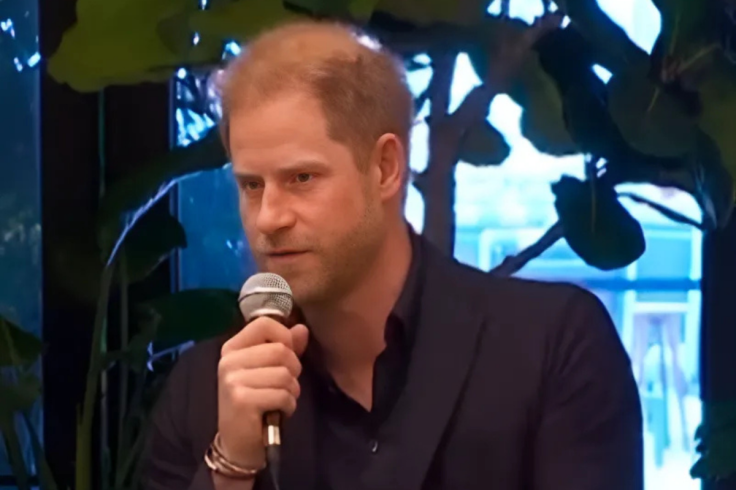
Sentebale is suing Prince Harry for defamation in London's High Court, accusing its own co‑founder of causing 'operational disruption' and 'reputational harm' to the charity through an alleged media campaign that began in March 2025.
The news came after a long and increasingly acrimonious internal dispute at Sentebale, the organisation Harry helped set up almost 20 years ago to support vulnerable young people in Lesotho and Botswana, particularly those living with HIV and Aids.
That row led to the Duke of Sussex and his fellow founder, Prince Seeiso of Lesotho, resigning as patrons in March 2025, alongside a group of trustees, after relations with the charity's chair, Sophie Chandauka, were described as 'beyond repair'.
Why Sentebale Says Prince Harry Has 'Harmed' The Charity
According to court records made public in London, the Sentebale case against Prince Harry and former trustee Mark Dyer was filed in March as a claim for 'defamation – libel and slander'.
Sentebale says it is seeking the court's 'intervention, protection, and restitution' in response to what it calls a 'coordinated adverse media campaign conducted since 25 March 2025'. That campaign, the charity alleges, has caused 'operational disruption and reputational harm to the charity, its leadership, and its strategic partners'.

In the same statement, Sentebale claims that Harry and Dyer have been 'identified through evidence as the architects of that adverse media campaign, which has had significant viral impact and triggered an onslaught of cyber-bullying directed at the charity and its leadership'.
The charity insists that no programme money is being diverted into the legal fight. Its trustees say the costs 'are met entirely by external funding and no charitable funds have been used'.
It also added that Sentebale 'should not continue to use its resources to manage and address the damage this adverse media campaign has caused to its operations and partnerships'.
Prince Harry's Team 'Categorically Reject' Sentebale Lawsuit
A spokesperson for Prince Harry and Mark Dyer said they 'categorically reject these offensive and damaging claims'.
'As Sentebale's co‑founder and a founding trustee, they categorically reject these offensive and damaging claims,' the statement to ABC News read. 'It is extraordinary that charitable funds are now being used to pursue legal action against the very people who built and supported the organisation for nearly two decades, rather than being directed to the communities the charity was created to serve.'
The charity says an orchestrated media offensive has undermined its ability to operate. Harry's camp says it is the legal action itself that is dragging energy and attention away from the children and young people the organisation was set up to help.
From Diana's Legacy To A Public Row
Prince Harry co‑founded Sentebale in 2006 with Prince Seeiso after spending his gap year in Lesotho in 2004. 'Sentebale' means 'forget me not' in Sesotho, a nod both to the local language and to Diana, Princess of Wales, whose favourite flower was the forget‑me‑not and who was widely praised for her early work destigmatising HIV/Aids.
For nearly two decades, Harry treated the charity as one of his signature causes. He has made multiple private and public visits to Lesotho, helped open the Mamohato Children's Centre in 2015 and named its dining room the 'Princess of Wales Hall' in Diana's honour.
More recently, he donated £1.2 million from the profits of his memoir Spare to Sentebale, and later described leaving the charity as 'devastating'.

Behind the scenes, however, tensions appear to have been building for some time. There were reports of disagreements over fundraising and wider financial pressures. In March 2025, Harry and Seeiso announced that they and several trustees were resigning their roles 'with heavy hearts', saying the relationship between the charity's trustees and its chair had become 'untenable'.
'It is devastating that the relationship between the charity's trustees and the chair of the board broke down beyond repair, creating an untenable situation,' their statement, shared with ABC News, said. The co‑founders claimed trustees had acted 'in the best interest of the charity' in asking the chair to step down and said they were 'truly heartbroken' to have to walk away.
More Details on Sentebale Disputes
At the same time, chair Sophie Chandauka accused the board of 'poor governance' and 'bullying', and a restructuring of the board was confirmed. The dispute eventually triggered a formal inquiry by the Charity Commission, the regulator for charities in England and Wales.
In its report, published in August 2025, the Commission said it found no evidence of 'widespread or systemic bullying or harassment' at Sentebale, but did criticise the organisation's 'lack of clarity' in its internal structure and the way the row had been allowed to spill into public view.
'Sentebale's problems played out in the public eye, enabling a damaging dispute to harm the charity's reputation, risk overshadowing its many achievements, and jeopardising the charity's ability to deliver for the very beneficiaries it was created to serve,' chief executive David Holdsworth said.
The lawsuit follows a bitter rupture inside Sentebale that burst into public view in March 2025, when Harry and fellow founder Prince Seeiso stepped away from the charity alongside a group of trustees.
What had once been a deeply personal project for the Duke of Sussex had, by then, become a full scale governance row involving accusations over conduct, fundraising and leadership.
© Copyright IBTimes 2026. All rights reserved.