Tucker Carlson Declares the American Empire Over After Iran War
Carlson says the unipolar world is finished

It was not a Democrat, nor a foreign adversary, who said it. It was Tucker Carlson — the same man who spent years as one of the most recognisable faces of Trump's political movement — who sat in front of a camera and told his audience that the United States' reign as the world's dominant power is finished. Not fading. Finished.
'You're watching the end of the global American empire,' Carlson said on his podcast earlier this month. 'The unipolar world is over. Something once great has become unrecognisable.' The clip spread quickly, drawing nearly 560,000 views on X alone, with supporters and critics alike struggling to reconcile the statement with the man who made it.
🚨Tucker Carlson:
— Brian Allen (@allenanalysis) April 5, 2026
“This is the end of something. You’re watching the end of the global American empire. The unipolar world is over. Something once great has become unrecognizable.”
Tucker Carlson.
Who has been one of Trump’s most loyal defenders?
Just said the American empire… pic.twitter.com/gPzyum8fQL
Not Exactly a Victory Speech
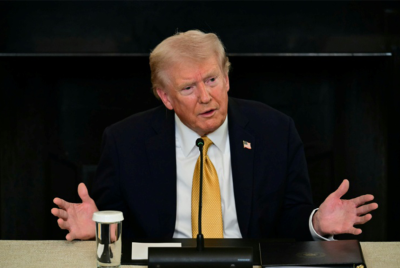
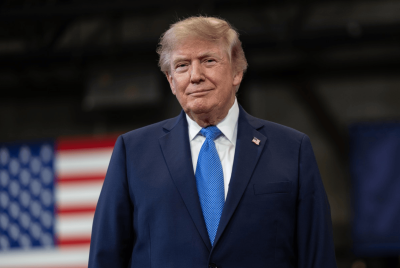
The context matters. Carlson made these remarks in direct response to Trump's 1 April address on Operation Epic Fury, the month-long US military campaign against Iran. Trump told the nation that military objectives were nearly achieved. Carlson heard something else entirely in that speech.
What stood out to him was not the claim of success, but Trump's appeal for other nations to step in and secure the Strait of Hormuz — a waterway through which roughly 20 per cent of the world's oil supply passes. To Carlson, asking allies to take the lead was not a strategic handoff. It was a concession. 'We can't open the Strait of Hormuz,' he said on his show. 'The president said that — someone else has to do it. So we're done.'
He did not frame this as a catastrophe without end. There would be 'a lot of suffering and sadness,' he acknowledged, but also an opportunity — a chance for the US to redirect its attention to the Western hemisphere rather than, as he put it, occupying 'countries you've never been to.' Still, the underlying message was unambiguous. An era had closed.
Trump Pushes Back
The remarks have not gone down well in the White House. Carlson has been openly critical of the US-Israeli strikes on Iran, and Trump has responded in kind, saying that Carlson 'has lost his way' and is 'not really part of the MAGA movement.' It is a remarkable exchange between two figures whose worldviews had, for years, appeared closely aligned.
Carlson did not stop at geopolitics. In the same monologue, he turned to what he described as a parallel collapse — that of American Protestant Christianity. 'You're watching the end of whatever American Protestant Christianity, one of the greatest and most positive forces in the history of this world, whatever it became after the Second World War,' he said, 'which is something unrecognizable.' He pointed to the National Cathedral in Washington, DC — built by Episcopalians as a tribute to God — as a symbol of that loss, now populated, in his words, by people who 'share almost nothing in common with the people who built it.' For Carlson, the end of the empire and the end of the faith that once undergirded it are part of the same story.
Broader Alarm Bells
Carlson is not alone in reading the moment this way, even if his delivery is his own. Some analysts have noted that the United States' share of global GDP has dropped from around 40 per cent in the 1960s to approximately 24 per cent in 2025 — a shift that lends statistical weight to arguments about diminished American influence. The Carnegie Endowment for International Peace has argued that while the era of US-led global order is effectively over, what is replacing it is not a clean withdrawal from power but rather a narrower, more self-interested form of American unilateralism, one defined by what it calls a 'hyper-sovereigntist mindset' that views multilateral commitments as constraints rather than responsibilities.
Whether that amounts to the end of the empire or simply its reinvention is a question analysts will be debating long after the guns over Iran go quiet.
When someone like Carlson — with his audience, his history, and his proximity to the Trump political project — uses language like 'the end of the global American empire' on camera, it does not stay contained to a podcast. It moves. It shapes how millions of people understand what their country is and what it is becoming. That, more than any geopolitical data point, is why this moment is worth paying attention to.
© Copyright IBTimes 2026. All rights reserved.
- Recommended For You