Wall Street Shuts Down for Juneteenth: What It Means for Your Portfolio and the 2026 Market Holiday Calendar
Wall Street pauses for Juneteenth as investors brace for trading disruption.
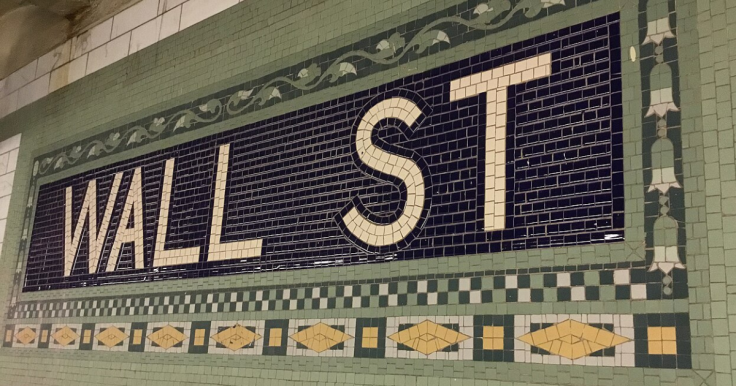
Wall Street will be shut for Juneteenth on Friday 19 June 2026, with both the New York Stock Exchange and Nasdaq closing in New York for the federal holiday, leaving investors unable to trade US shares during normal hours and forcing some awkward decisions about portfolio management heading into the long weekend.
US markets routinely pause for major national holidays, and Juneteenth National Independence Day was added to that calendar only in recent years. In 2026, the stock market will observe 10 full holiday closures and two early shutdowns, broadly tracking the US federal calendar and the main banking holidays.
The pattern matters less to short-term traders glued to screens than to ordinary savers who might suddenly discover their broker's 'buy' button is just for show.
Juneteenth Closure And The 2026 Wall Street Calendar
The Juneteenth closure in 2026 means US stock and bond markets will reopen on Monday 22 June, according to the published schedules for the NYSE and Nasdaq. Regular trading hours for US shares remain 9:30 a.m. to 4 p.m. Eastern time, Monday to Friday, with both major exchanges closed at weekends.
Investors are still able to place trades in so‑called extended hours outside that window, but the fine print is not trivial.
After‑hours and pre‑market sessions tend to have lighter trading volume, which can translate into wild price swings and only partially filled orders. The functionality may be there in your app; the liquidity often is not.
Looking out across 2026, NYSE and Nasdaq have said they will close for New Year's Day on Thursday 1 January, Dr Martin Luther King Jr Day on Monday 19 January, Washington's Birthday (Presidents' Day) on Monday 16 February, Good Friday on 3 April, Memorial Day on 25 May, Juneteenth on 19 June, Independence Day (observed) on Friday 3 July, Labor Day on Monday 7 September, Thanksgiving Day on Thursday 26 November and Christmas Day on Friday 25 December.
In addition, both exchanges plan to shut early at 1 p.m. Eastern on Black Friday, 27 November, and on Christmas Eve, 24 December, trimming the trading session for what are historically thin, slightly sleepy markets.
Corporate news, economic data and even geopolitical shocks do not respectfully wait for Wall Street to reopen. If something big breaks while markets are shut for Juneteenth or another holiday, investors could face a jumpy open the next trading day with little chance to adjust in real time.
What The 2026 Holiday Schedule Means For Your Portfolio
The obvious question for retail investors is how much this really matters. On one level, not much. A diversified long‑term portfolio is not going to live or die on whether you could trade US equities on 19 June. Most exchange‑traded funds and blue‑chip stocks will be exactly where you left them on the Monday.
If you are planning to rebalance, harvest tax losses, or move money between funds, having a realistic view of when Wall Street is shut for Juneteenth or any other holiday can stop you from cutting it too fine. It is particularly relevant for anyone juggling cross‑border transfers or waiting on settlement before making a second trade.

Spreads can widen on the last session before a holiday, and liquidity can be patchy on the early‑close days. You do not want to be the one forced to sell into that.
The holiday pattern also affects strategies that lean heavily on short‑term catalysts. A trader betting on a company's announcement, for instance, needs to know whether it falls into a quiet market window or straight after a long shutdown. That stuff can move prices for a day or two, even if the bigger picture rarely changes.
Bond investors face a slightly different landscape. The Securities Industry and Financial Markets Association sets the standard bond trading hours from 8 a.m. to 5 p.m. Eastern, Monday to Friday, and the bond market will close for the same 10 stock market holidays in 2026 and 2027. On top of that, bond trading will also pause for Indigenous Peoples' Day in October and Veterans Day in November.
Bond dealers are used to even more chopped‑up days. The market will close early at 2 p.m. on the Thursday before Good Friday, the Friday before Memorial Day, 2 July before Independence Day, the Friday after Thanksgiving, Christmas Eve on 24 December and New Year's Eve on 31 December. In other words, fixed‑income investors get an extra layer of calendar homework.
Looking Ahead To 2027's Wall Street Holiday Pattern
The news came after exchanges also released their 2027 schedules, which follow a similar structure but shift specific dates.
In 2027, New Year's Day will be observed on Friday 1 January, followed by Dr Martin Luther King Jr Day on Monday 18 January, Washington's Birthday on Monday 15 February, Good Friday on 26 March, Memorial Day on 31 May, Juneteenth (observed) on Friday 18 June, Independence Day (observed) on Monday 5 July, Labor Day on Monday 6 September, Thanksgiving Day on Thursday 25 November and Christmas Day (observed) on Friday 24 December.
There is one early‑closing day listed for 2027: Black Friday on 26 November, where the NYSE and Nasdaq will again shut at 1 p.m. Eastern. That half‑day often feels more like a symbolic nod to tradition than a full‑blooded trading session.
There are some quirks built into the rules. For holidays that always fall on the same date, like 4 July and Christmas Day, the exchanges move the closure to the Friday if the holiday lands on a Saturday, or the Monday if it lands on a Sunday.
One notable exception is New Year's Day. If 1 January falls on a Saturday, stock exchanges stay open on the preceding Friday and simply do not observe the holiday. Most American financial markets will also shut for a National Day of Mourning following the death of a past or sitting president, usually timed with the state funeral.
It is worth underlining what does not stop Wall Street. The month of Ramadan, religious observances such as Rosh Hashanah, Yom Kippur and Passover, and cultural dates like Valentine's Day, St Patrick's Day, Halloween, Boxing Day, Chanukah, Kwanzaa and New Year's Eve generally see markets operate as usual, unless they collide with a weekend.
And then there is crypto, which sits in its own world. Digital assets trade on a decentralised network of computers rather than a single central exchange, which means there is no holiday schedule to speak of. According to the guidance, cryptocurrency trading runs 24 hours a day, 7 days a week, 365 days a year. For better or worse, there is no Juneteenth break on the blockchain.
Nothing is confirmed yet so everything should be taken with a grain of salt.
© Copyright IBTimes 2026. All rights reserved.
- Recommended For You