

What Is Sepsis? Kyle Busch Cause of Death Confirmed as Severe Pneumonia Complications
A sport built on managing risk is mourning a champion whose final battle was with an infection that no amount of racecraft could outrun.
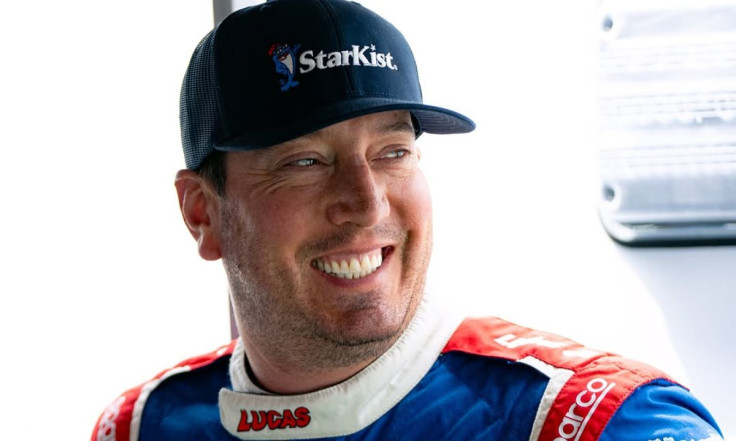
Kyle Busch's family confirmed on Saturday that the two-time NASCAR Cup Series champion died in North Carolina on Thursday after severe pneumonia progressed to sepsis, with doctors attributing his death at the age of 41 to 'rapid and overwhelming' complications.
After two days of shock and speculation across the motorsport world, Friday brought confirmation that Busch had died suddenly, with few details made public. Busch, one of the most accomplished and divisive drivers of his generation, had competed at the top level of stock car racing for two decades and was midway through the 2026 NASCAR season when his condition deteriorated.
In their carefully worded statement, the Busch family said medical specialists who reviewed his case had concluded that what began as a severe pneumonia escalated into sepsis. That is the point at which the body's response to infection spirals out of control, damaging organs and, in some cases, proving fatal within hours. Their choice of phrase 'rapid and overwhelming associated complications' gives a stark sense of how quickly events unfolded.
Sepsis is often described by clinicians as a medical emergency hiding in plain sight. It arises when an infection, such as pneumonia, triggers a chain reaction in the body. Blood pressure can collapse, organs begin to fail and, without urgent treatment, patients can slip away even in advanced hospital settings. Nothing in the family's statement suggested any delay in Busch receiving care, but it underlined the brutality of a condition that can overpower even an otherwise strong, high-performance athlete.
There is, inevitably, much that remains unclear. The family did not disclose when Busch first became unwell, whether he was being treated at home before being admitted, or precisely how long he spent under medical care before he died. They have asked for privacy, and at this point nothing beyond their published statement has been independently confirmed, so any further assumptions about his final days should be treated with caution.
What is not in dispute is the impact of his loss. Kyle Busch was a central figure in NASCAR's modern era, a driver whose statistics were matched only by the arguments he provoked in pit lanes and grandstands. Within 24 hours of his death, Richard Childress Racing, the team he had been driving for, announced that his No. 8 car would be retired for the rest of the 2026 season in his honour. It was a swift, almost instinctive move, unusual in the middle of a campaign and a measure of how deeply his absence is being felt inside the garage.
Kyle Busch died of pneumonia leading to sepsis, according to a statement provided by the Busch family on Saturday morning.
— Yahoo Sports (@YahooSports) May 23, 2026
"The medical evaluation provided to the Busch Family concluded that severe pneumonia progressed into sepsis, resulting in rapid and overwhelming associated… pic.twitter.com/z9wJZmdXp9
Richard Childress Racing Responds to Busch's Death
On Friday, Richard Childress Racing confirmed that the No. 8 would not return to the grid this year, a rare decision in a sport that tends to keep numbers in circulation. By Saturday morning at Charlotte Motor Speedway, the organisation had rolled out a different entry, with the No. 33 Chevrolet driven by Austin Hill taking Busch's place in the field.
In its own public messages, the team framed the change not as a fresh start, but as a tribute. The retirement of Busch's number locks in its association with him at a specific moment in time, rather than allowing it to be reattached, anonymously, to some future rookie. Around the paddock, that symbolism was widely understood. Teams, officials and fans turned up at Charlotte talking not about qualifying trim or tyre strategies but about a driver whose name had been on their lips, one way or another, for years.
The atmosphere at the track, usually noisy and relentlessly practical, carried an unfamiliar edge. Mechanics worked, engines ran and schedules rolled on, yet there was a persistent sense that events were moving around a noticeable gap in the centre.
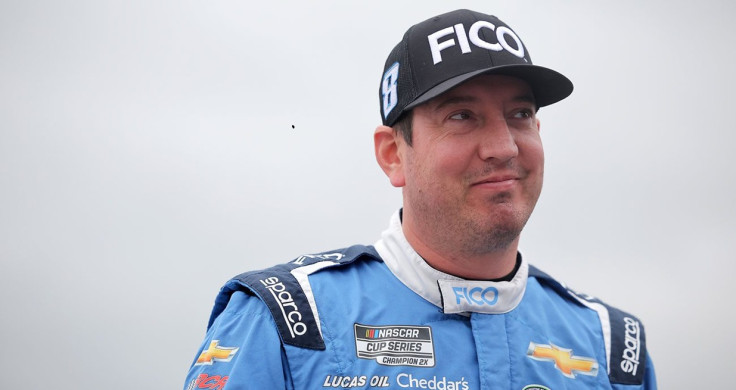
Busch's Death Puts Sepsis Under Harsh Spotlight
The confirmation that Busch died after pneumonia led to sepsis has also nudged an uncomfortable medical term into mainstream conversation. Sepsis rarely gets the public attention of cancer or heart disease, but the mechanics are grimly simple and, according to health authorities, more common than many people realise. It starts with an infection, like the pneumonia identified in Busch's case, and then something in the body's defence system misfires.
Doctors often say the warning signs can be subtle at first, which is precisely what makes sepsis so dangerous. High fever or very low temperature, confusion, extreme breathlessness and a racing pulse are none of these, taken alone, unique to sepsis. When they cluster and escalate, however, emergency intervention is needed. In Busch's case, according to his family's statement, that cascade of events occurred with devastating speed.

There is a grim irony in the word 'overwhelming' being used about the death of a driver like Kyle Busch. On track, his career was built on managing extremes, speed, risk and pressure and making them look almost routine. Off track, it now appears that an invisible infection, the kind anyone might pick up in an ordinary week, outran even those finely tuned instincts.
Fans and colleagues will spend a long time debating where he sits in the sport's hierarchy. That is how racing works. For the moment, however, his name is tied to something more basic and more fragile: the hard-to-accept fact that a 41-year-old athlete, still competing at the top of his profession, can be undone by an infection that moved faster than anyone could get ahead of it.
© Copyright IBTimes 2026. All rights reserved.