The 39-Second Disaster: Why Venezuela's Rare Twin Earthquakes Triggered Caribbean Tsunami Alerts
Two powerful earthquakes strike Venezuela within seconds, causing widespread disruption and triggering tsunami alerts.

A rare sequence of two powerful earthquakes struck Venezuela just 39 seconds apart on Wednesday, triggering tsunami alerts across parts of the Caribbean and causing widespread disruption. Search-and-rescue operations carried on through the night as emergency crews worked through damaged buildings, while authorities assessed the scale of the destruction.
The first earthquake measured magnitude 7.2. A stronger magnitude 7.5 quake followed less than a minute later. Both struck near Venezuela's Caribbean coast, according to the US Geological Survey (USGS).
The agency said the earthquakes had the potential to cause significant structural damage because of their magnitude and shallow depth.
What Happened in the 39 Seconds?
The first earthquake struck shortly after 6 p.m. local time. Before residents had time to react, a second and stronger earthquake hit 39 seconds later.
Strong shaking was reported across northern Venezuela. Residents in Caracas described buildings swaying as people rushed out of homes, offices and businesses.
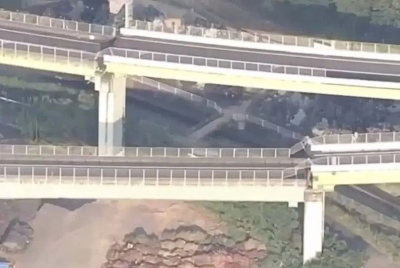
Witness footage showed office workers evacuating buildings while pieces of concrete and broken glass fell into nearby streets. Emergency crews were deployed as officials began assessing damage across affected areas.
Why Tsunami Alerts Spread Across the Caribbean
The earthquakes struck close to the Caribbean coastline, prompting tsunami monitoring centres to assess whether dangerous waves could develop.
Precautionary tsunami alerts were issued for Puerto Rico, the US Virgin Islands and several nearby coastal areas. Residents were advised to stay away from beaches and low-lying coastal communities while sea levels were monitored.
The alerts were later lifted after monitoring stations detected no destructive tsunami.
Emergency agencies said precautionary alerts were necessary because earthquakes above magnitude 7 near the coast can generate tsunami waves with little warning.
Although the threat passed quickly, the warnings highlighted how a powerful earthquake in one part of the Caribbean can affect neighbouring islands within a short period.
A Rare Earthquake Doublet
Seismologists classified the event as an earthquake doublet, a rare phenomenon where two major quakes occur in rapid succession. Typically, a large tremor is followed by smaller aftershocks. In this case, the second quake was stronger than the first, compounding stress on buildings that had already been weakened moments earlier.
Such doublets are uncommon and can complicate emergency response as people may still be evacuating when another major earthquake strikes.
Rescue Teams Race Against Time
Emergency crews worked through the night, searching damaged buildings and inspecting homes, hospitals and public infrastructure. The full extent of the damage was not immediately clear as assessments continued across affected communities.
Residents gathered in open areas after the earthquakes, fearing additional collapses. Some remained outdoors, wary of returning indoors until emergency officials confirmed structural safety.
Rescue operations have now shifted from the initial emergency response to detailed damage assessments and the search for anyone who may still be trapped beneath collapsed structures.
What's Next?
Seismologists expect aftershocks following earthquakes of this size, and emergency officials are continuing to monitor seismic activity.
Emergency crews remain focused on locating survivors, while engineers determine whether damaged buildings can be safely reoccupied. Residents have been advised to avoid unstable structures until inspections are complete. Venezuela now faces the difficult task of recovering from one of its most unusual seismic events in recent history.
© Copyright IBTimes 2026. All rights reserved.
- Recommended For You