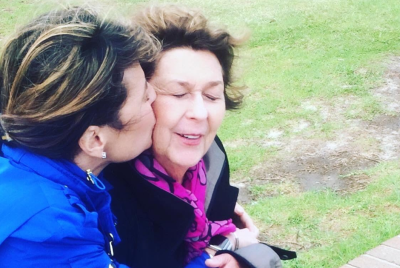
Inside the Deep Web Hunt: How FBI Tech Experts Are Trying to Solved the Nancy Guthrie Case
Four months after the 84‑year‑old vanished from her Tucson home, he explains why AI cannot simply 'demask' the suspect and what kind of task force might finally crack the mystery.
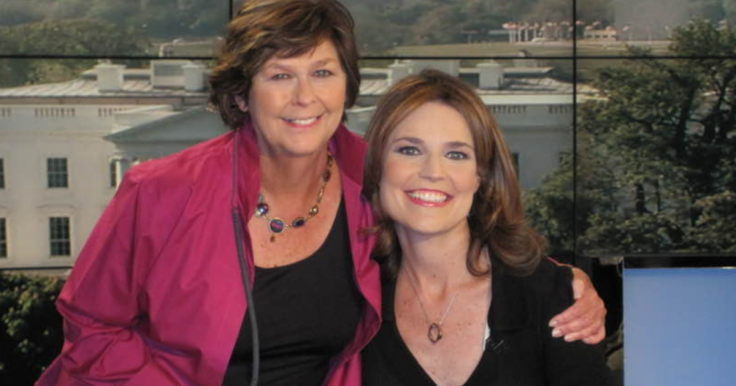
Four months after Nancy Guthrie vanished from her Tucson home, the Nancy Guthrie case is being pushed into a more technical phase as FBI-linked investigators examine whether video forensics, cell data and other digital traces could finally expose the masked suspect seen at her door.
The latest discussion, driven by cybercrime expert Morgan Wright, is less about internet chatter and more about whether the bureau can turn compressed camera footage, mobile signals and a trail of data into something usable in court.
Nancy Guthrie Case 'Far More Than A Missing Person'
The latest, and perhaps clearest, picture of how investigators might now be thinking about the Nancy Guthrie case comes from Morgan Wright, a nationally recognised cybercrime and intelligence specialist who has worked closely with the FBI on major investigations.
In a recent episode of the Criminally Obsessed podcast, hosted by Anne Emerson, Wright said bluntly that he does not see the incident as a simple disappearance.
He told listeners he believes it is 'a targeted attack' and went further, describing it as a 'nobody homicide' that should no longer be treated as a conventional missing persons file. According to Wright, that shift in mindset matters because it changes both the investigative tactics and the public messaging around the search.
Wright argued that early theories, including the suggestion of a burglary gone wrong, simply do not stack up when you study the behaviour of the masked man on the porch.
'Either it's a burglary gone wrong or it was never a burglary,' he said, questioning why a thief intending to steal 'stuff from inside the house' would suddenly decide it was less risky to abduct an 84‑year‑old woman and flee the scene than to run away empty‑handed.
He pointed to the Nest footage, which shows the intruder standing on the front step, moving plant material and appearing relatively at ease.
'He is comfortable being on that porch,' Wright said, drawing on serial crime profiling ideas. 'He's not worried about being identified.'
In his analysis, the key was not the suspect's face, which was covered, but the vehicle that brought him there.
Why 'Demasking' The Doorbell Intruder Is Not So Simple
Much of the online conversation around the Nancy Guthrie case has fixated on that same video. TikTok creators and Reddit threads have pushed the idea that advanced artificial intelligence could simply 'demask' the intruder and spit out a usable face. Wright was having none of it.
'If that was the case, I would have done it,' he told Emerson. 'I would have done it on that first day when the video came out. The FBI would have done it.'
He offered a quick, almost nerdy lesson in what he called 'information theory.' AI cannot analyse what was never captured in the first place. If a suspect wears a mask that genuinely covers their features, there are no hidden facial pixels for an algorithm to recover.
He contrasted the Guthrie footage with a notable German case in which Interpol helped identify a child abuse suspect who had merely 'swirled' his face using a digital effect. In that scenario, none of the pixels were destroyed, only rearranged, so investigators could reverse the process and reveal his true image.
Nest and Ring doorbell cameras create a further headache. To save bandwidth and storage, they heavily compress video, stripping out detail that a high‑end iPhone camera would retain. The idea that a sci‑fi style tool can conjure a sharp, court‑ready face from a grainy, compressed clip is, in Wright's assessment, fantasy.
Inside The Deep Web Hunt For Nancy Guthrie
Where Wright does see hope is in what he calls 'new ways of analysing data.' Speaking separately to Fox News Digital, the CEO and founder of the National Center for Open and Unsolved Cases said he believes any breakthrough in the Nancy Guthrie case is likely to come from one of three technical fronts: video forensics, signals analysis or blockchain‑based financial tracing.
'The solution to this case is going to be, I think, something technical, something that they come up with, new ways of analysing data,' he said. 'I'm looking at the video, the video forensics, signals analysis, blockchain kind of stuff.'
Video forensics, in his telling, is not about magic enhancement but careful work: measuring fixed features on Guthrie's porch to calculate the suspect's height and build, studying how he moves for gait analysis, and trying to pull out background details that may point to a specific vehicle.
Signals analysis involves a different layer of the deep web hunt. Investigators can examine cell‑site data, trying to spot devices that were in the neighbourhood at 2am and then left along likely escape routes.
They can also look at so‑called ad‑tech data, the location trails generated by apps on smartphones which are sold on to commercial aggregators.
Then there is the blockchain angle. Wright said communications purporting to be ransom or extortion attempts tied to the Guthrie case struck him as 'parasitic communications' rather than credible kidnappers seeking payment.
He noted that genuine ransom demands tend not to be 'blasted out' to outlets such as TMZ, because that all but guarantees full law‑enforcement involvement.
One Attacker, A Missing Body And A Task Force Question
When Wright is asked how many people he believes were involved in the attack, he goes back to basics. Only one person appears on video. No second attacker has been identified by witnesses. And a combined reward of more than $1.2 million (£910,000) remains unclaimed.
'I don't know that there's anything else to indicate a second person,' he told Fox News Digital, echoing an earlier former FBI profiler who said front‑door blood evidence pointed to a 'single abductor.'
That reading feeds into his darker hypothesis: that Guthrie likely died as a result of the attack and her abduction should now be worked as a 'nobody homicide'. He cites her age, her cardiac issues and what he describes as a 'violent encounter at 2 in the morning' as factors that make survival unlikely.
On Criminally Obsessed, he described walking the terrain around Guthrie's home himself, considering whether her body could have been left in an open location, a shallow clandestine grave or concealed in a structure.
He dismissed the idea that someone would casually stop to dig a deep grave in the hard Tucson ground, and suggested searchers should instead think in terms of 'egress routes' and how far a lone offender would risk driving with a body in the vehicle before dumping it.
His thinking echoes techniques used in other high‑profile investigations, including the Gilgo Beach serial killer case and the hunt for Rex Heuermann. In those cases, a fresh task force went back to square one, re‑examined old leads and eventually pulled a forgotten tip about a Chevrolet Avalanche back into focus, which then helped identify Heuermann.
Wright believes the Nancy Guthrie case may eventually need a similar task force approach, with new investigators taking a clean run at all the data and physical evidence without being constrained by older theories.
Nancy Guthrie, the mother of Today host Savannah Guthrie, was reported missing on 1 February after a violent confrontation at her front door in the early hours of the morning. A Nest doorbell camera captured a masked intruder on the porch, and a blood trail reportedly led to the edge of the driveway, where investigators believe she was forced into a waiting vehicle.
The FBI joined local detectives within days, and the search has since involved helicopters fitted with Bluetooth scanners and intensive ground searches around her Tucson neighbourhood.
© Copyright IBTimes 2026. All rights reserved.
- Recommended For You