

3 Grim Details Leading Experts To Believe Nancy Guthrie Is 'No Longer Alive'
As experts dissect blood evidence, DNA delays and limited searches, investigators warn that crucial tips and digital trails may yet hold the answer.
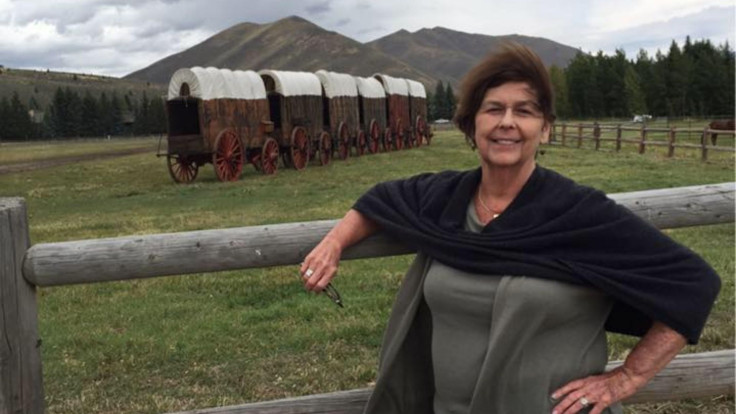
Nancy Guthrie's disappearance is still missing a clean explanation, and a retired detective's latest reading of the evidence has only pushed the case in a grimmer direction.
Speaking on NewsNation, Jon Buehler said the 84-year-old mother of TODAY co-host Savannah Guthrie may not have survived what investigators believe was an abduction from her Tucson home on 1 February.
The case has now been active for more than four months with no publicly named suspect, no arrest and no confirmed breakthrough. The Pima County Sheriff's Department says the investigation remains open, that the FBI is involved daily, and that DNA and video analysis are still continuing.
Why Experts Now Fear Nancy Guthrie Is Dead
Buehler, a retired detective speaking to NewsNation's Brian Entin, has become one of the most forthright outside voices on the case. He told the network his fear that Nancy Guthrie 'didn't survive the abduction' rests on three core elements: the blood found at the scene, the complete lack of meaningful contact from any kidnapper despite ransom notes, and Nancy's fragile health.
He started with the near‑silence from whoever took her. Buehler noted the absence of what investigators often look for in abduction cases: a rapid demand for money, along with proof the victim is alive.
In his words, the lack of 'instantaneous demand for a reward with indication that she's fine' makes it 'a pretty big stretch' to believe she survived.
Layered over that are reports of blood discovered outside the front of the house. Buehler described the amount as consistent with 'a wound that was bleeding a lot, probably not arterial, but bleeding a lot' – enough, in his view, to raise serious concerns about the level of force used.
Then there is Nancy Guthrie's medical profile. At 84, with a heart condition, a pacemaker and a need for daily medication, she was physically vulnerable even before any confrontation.
Buehler suggested that a mix of fear, stress and the abductor's attempts to force her to comply could have been catastrophic. 'With poor health and age on a pacemaker in fear, and him trying to get her to comply, that's why I just don't think she survived it,' he said.
The Abduction That Shook Tucson
Doorbell‑camera footage released by the FBI in February showed a masked, armed individual at Guthrie's home, undercutting any early hope she had wandered off or suffered a medical episode unnoticed.
Former federal prosecutor Joseph McNally told Newsweek that the video 'supports that she was likely the victim of a crime of violence, and given the passage of time, is likely deceased', adding that the investigation has effectively become 'an identity case' focused on unmasking the figure in that footage.
FBI releases video from doorbell camera showing a masked person at Nancy Guthrie's front door.
— FOX SA (@KABBFOX29) February 11, 2026
MORE INFO: https://t.co/6urtkOM3uq pic.twitter.com/cyP94iXhiA
'We know because of the video that she did not wander from her house,' he said. 'This is not a case of an accidental disappearance.'
McNally also highlighted a roughly 10‑hour window between the suspected abduction and the 911 call, a gap he believes would have given an abductor enough time to take Guthrie 'far from her home.' In southern Arizona's desert terrain, he argued, even large‑scale searches 'can only do so much.'
Inside The Evidence — And What Might Have Been Missed
Investigators have repeatedly emphasised that the case remains active. The Pima County Sheriff's Department has confirmed that DNA work, including analysis of a rootless hair recovered from the home, is under way across multiple forensic labs.
Rootless hair is notoriously difficult to process; it demands specialist facilities and long turnaround times, and the case now also involves investigative genetic genealogy.
Sheriff Chris Nanos has argued that this slow pace reflects caution rather than drift, pointing out that DNA testing can both identify a suspect and clear innocent people. Two early raids, one in the town of Rio Rico and another near Guthrie's home, ended with individuals detained then released without charge. Both later hired lawyers and complained about being swept into the investigation.
Former federal prosecutor Tad DiBiase, who focuses on so‑called no‑body homicide cases, has warned that the relatively sparse physical searches for remains could cause headaches if prosecutors ever take a suspect to trial.
In his view, combing likely dump sites is not just about finding a body; it also lets investigators rule out alternative explanations such as suicide, wandering off or a voluntary disappearance. Without that groundwork, he said, any defence team can stand up in court and argue that Nancy Guthrie might not be dead at all.
Civil litigation specialist Brian C Stewart, speaking to Newsweek, went further, calling the pattern of confirmed blood, limited searches and fruitless early raids 'troubling' for any future wrongful‑death claim. Civil suits require a defendant with money, he noted bluntly, and possible evidence loss only makes that kind of case harder to win.
The Suspect, The Tips And The Digital Trail
Meanwhile, Buehler has also been looking at what might still crack the case open. One strand, he suggested, lies in tracking anyone who searched for Nancy Guthrie's address, or vehicles caught near her home around the time of the abduction.
He pointed out that newer cars often carry location data that can be retrieved, while search records held by tech companies could flag up people who plugged her address into map services without an obvious reason.
'If somebody ever plugged her address into a Google search for a Google Maps or whatever, if they did a reverse keyword search on that... to see any random person that would have typed in her address,' he said, you could then go back and ask why.
He added that tradespeople or delivery drivers who legitimately visited the house could either be ruled out or, in a smaller number of cases, treated as potential leads.
In his view, Nancy Guthrie was a 'low‑risk' victim in most respects, but he floated the idea that Savannah Guthrie's fame and perceived finances could have made her mother look like a viable target for ransom. 'Any tradespeople' doing work at the home, he said, might have seen Nancy as 'a source of ransom because of the connection with Savannah.'
Answer Could Be Already in System?
Buehler also thinks the answer may already be sitting in the system. Detectives have received thousands of tips; he fears a crucial one could be buried in the pile or waiting on someone's conscience.
He cited a previous case in which a random killing went unsolved for 11 years because a key witness was too afraid to come forward.
Here, he believes loyalty to the abductor is likely thin. With a hefty reward on offer, he argued, keeping quiet for a single suspect is 'expensive loyalty.'
Nancy Guthrie, the mother of Today show host Savannah Guthrie, vanished from her Tucson home in the early hours of 1 February. Authorities say she was abducted after being dropped off at the property following a family dinner.
More than four months on, there have been no arrests, no named suspects and, crucially, no clear breakthrough in a case that has drawn thousands of tips and intense media attention across the US.
© Copyright IBTimes 2026. All rights reserved.