

ICC Chief Karim Khan Suspended Over S**ual Abuse Accusations from One of His Staff in the Hague
The ICC's governing body reportedly confirmed that its executive committee had voted to refer the proceedings involving Khan to a special session of the court's 125-member states.
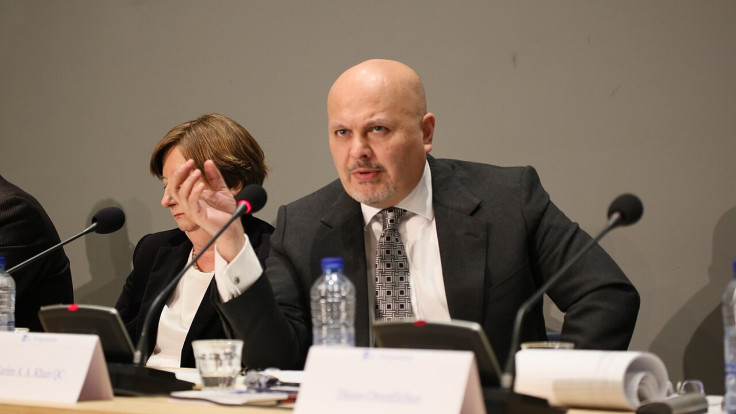
The chief prosecutor of the International Criminal Court, Karim Khan, has been suspended after a disciplinary process linked to s**ual abuse allegations against him reached a major milestone.
The decision was announced on Monday evening by the court's governing body after its executive committee voted to refer proceedings against Khan to a special session of the ICC's member states.
The move follows the conclusion of an internal process that examined allegations made by a woman who worked under Khan at the court's headquarters in The Hague.
While the suspension does not determine the final outcome of the case, it marks a dramatic development for one of the most senior figures in international law. Khan, a prominent British lawyer, has consistently denied all allegations. However, referring the matter to the court's member states could eventually lead to a vote on whether he should remain in office, placing the future of the ICC's chief prosecutor under intense scrutiny.
Executive Committee Refers Case To Member States
The ICC's governing body reportedly confirmed that its executive committee had voted to refer the proceedings involving Khan to a special session of the court's 125-member states.
According to The Guardian, the committee, which is made up of representatives from 21 member states, determined by a qualified majority that Khan had committed serious misconduct in relation to the allegations.
The decision represents an unprecedented step for the court and raises the possibility that member states could eventually be asked to decide whether Khan should be removed from his position.
Despite the suspension, the governing body stressed that the measure should not be viewed as a final judgment on the case. In a statement, it said the decision was 'not an indication of the final outcome'.
The committee's decision was reportedly based on several sources, including a report prepared by a United Nations watchdog and advice provided by a panel of judicial experts. It also considered written submissions understood to have been provided by both Khan and the woman who made the allegations.
Khan had already temporarily stepped aside from leading the division of the ICC responsible for investigating and prosecuting individuals accused of atrocities. Monday's announcement, however, takes the matter a step further by formally placing his future before the court's member states.
The latest development comes after nearly two years of controversy surrounding the allegations, which have created uncertainty within the ICC and generated considerable attention across the international legal community.
Allegations And Khan's Response
The allegations against Khan were first reported in 2024 and relate to his conduct between 2023 and 2024. The claims were brought by a woman who worked for him at the ICC's headquarters in The Hague.
According to the allegations, Khan engaged in coercive and non-consensual s**ual behaviour over an extended period. The alleged incidents are said to have taken place in multiple locations, including hotel rooms during work trips, Khan's office, and his home.
The accusations have had a major impact on Khan's tenure as chief prosecutor, with the proceedings drawing attention to both his leadership and the court's handling of complaints involving senior officials.
Throughout the process, Khan has firmly rejected the claims made against him. His legal representatives have repeatedly stated that he denies any wrongdoing.
In a previous response, Khan's lawyers said he 'categorically denies' having 'harassed or mistreated any individual, or having misused his position or authority, or engaged in any conduct that could be interpreted as coercive, exploitative, or professionally inappropriate'.
That denial remains central to Khan's defence as the disciplinary process moves into its next phase. While the executive committee has concluded that serious misconduct occurred, the referral to member states means the matter is not yet resolved.
The special session of the ICC's member states is now expected to consider the findings and determine what action, if any, should follow. The outcome could have significant consequences for Khan's future at the court and for the institution itself as it confronts one of the most serious internal controversies in its history.
For now, Khan remains suspended, and the final decision on his position rests with the member states of the International Criminal Court.
© Copyright IBTimes 2026. All rights reserved.