Lewis Hamilton Heartbreak: Kim Kardashian's Boyfriend 'Left In Tears', Exposed Brutal Cultural Friction Inside Ferrari
Hamilton's outspoken style and resilience mark a new era at Ferrari

Lewis Hamilton won the Barcelona Grand Prix at Circuit de Barcelona-Catalunya on 14 June, his first victory for Ferrari, before the result was adjusted by stewards following post-race yellow-flag penalties affecting Franco Colapinto.
Hamilton then said his arrival at Ferrari had been a 'big shock to the system' because of his outspoken style, while team principal Frederic Vasseur credited the driver's own resilience and refusal to ease off.
Hamilton And The Ferrari Shock
Hamilton's first Ferrari win was the kind of result Maranello has been waiting for, and the timing could hardly have been tidier. He took the chequered flag in Barcelona, a British one-two-three emerged from the race, and the seven-time champion rose to second in the drivers' standings, even though Kimi Antonelli still leads the title fight.
🚨| Piero Ferrari: "I don't think it's a coincidence that Hamilton won his first race with our car precisely in Barcelona, where, 30 years ago, Schumi kicked off his extraordinary series of successes with the Rossa. I see it as a sign of destiny, even a portent for the future… pic.twitter.com/6fmXJkDOC4
— sim 🇧🇷🇲🇽🇸🇳🇫🇷🇭🇹 (@simscircuit) June 15, 2026
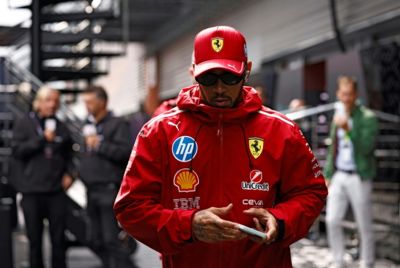
The more interesting story, though, is what Hamilton said about the team rather than what the scoreboard showed. 'Me coming was a big shock to the system because I am very, very vocal,' he said, adding that when he sees something he does not think is right, he pushes hard and 'that's at the core of who I am.'
That is not a throwaway line. It is the sound of a driver who knows he has not arrived in Italy to keep everyone comfortable and, 'frankly, why would he?'
For Ferrari, the awkward part is that Hamilton's bluntness appears to be part of the appeal and the problem at once. He said his style is hard to absorb when a whole organisation is also trying to manage its own culture, which he described as already set in a certain way.
The Result Change
The Barcelona race did not stay fixed once the cars rolled into parc fermé. Hamilton faced a post-race investigation over a possible yellow-flag infringement but was cleared, while Colapinto was judged not to have slowed sufficiently in the relevant sector and picked up a 10-second penalty.
That changed his finishing position from eighth to tenth, which meant he scored one point rather than four.
The stewards' explanation was plain enough. They said Colapinto 'slightly reduced speed before entering the single yellow flag zone, but did not discernibly reduce speed in the relevant yellow flag sector' and therefore did not comply with the regulations.
It is the kind of bureaucratic post-race correction that F1 still manages to make feel weirdly dramatic, because one decision can reshuffle the points and change the mood of a whole weekend.
Charles Leclerc has adopted Lewis Hamilton's brake setup philosophy after Monaco — effectively acknowledging that Hamilton's approach was better. It's a quiet but significant admission inside Ferrari. https://t.co/jj51EB3s1g #F1 #Ferrari
— F1-Fansite.com (@F1Fansite) June 12, 2026
That is also why Hamilton's win matters beyond the obvious headline. He did not just win for Ferrari. He won at a race where the finishing order remained live after the chequered flag, and where the stewards' verdict underlined how thin the margins are when the race itself is over but the result is not.
What Vasseur Said About Lewis Hamilton
Frederic Vasseur's response was notably warm, if measured. He declined to take credit for Hamilton's improved form and instead said the progress belonged to the driver, who had reset after some tough weekends and kept coming back to the factory on Tuesday mornings to push the project forward. That, Vasseur said, was a major support and a huge motivation for everyone inside the team.
Lewis Hamilton is now ‘starting to make the difference’ at Ferrari https://t.co/ksO4B663Wp
— F1 Oversteer (@F1Oversteer) June 16, 2026
There is something almost old-fashioned about that reading of the situation. No grand speeches, no synthetic hype, just a world champion turning up and doing the grind properly. That can still be enough to shift a team, even one as notoriously exacting as Ferrari.
At the same time, Hamilton's own comments suggest the adjustment is not complete. He has made clear that he is still forcing standards, still pressing hard, and still prepared to upset the furniture if that is what the job requires.
It is a useful kind of friction, but friction all the same. The question now is whether Ferrari can live with it long enough to make the s**t work when the championship pressure climbs.
© Copyright IBTimes 2026. All rights reserved.
- Recommended For You