Michael Schumacher Friend Explains 'Degree of Risk' and Fear of 'Aftermath' If Family Breaks 12-Year Photo Blackout
Behind closed doors, the battle over Michael Schumacher's image is really a fight over who gets to define the rest of his life.
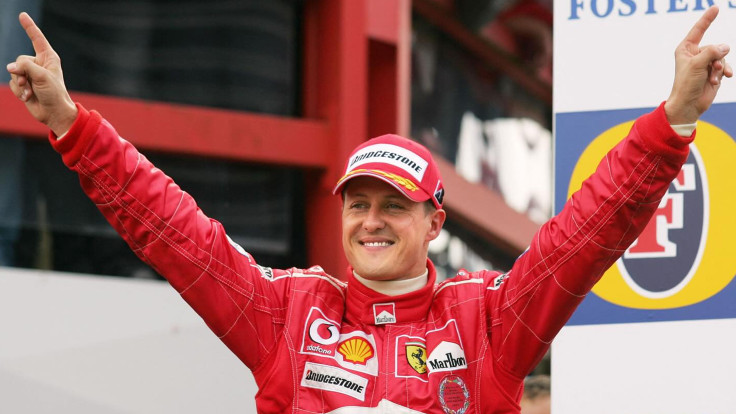
Michael Schumacher's close family friend and Formula 1 insider Richard Hopkins has outlined why the seven-time world champion's relatives have kept a strict 12-year blackout on new photos since his 2013 skiing accident, warning of the 'degree of risk' and potential 'aftermath' if images of the stricken star were suddenly made public.
Schumacher suffered catastrophic head injuries when he hit a rock while skiing in the French Alps in December 2013. Since then, speculation about his physical and cognitive state has never really stopped, even as his wife Corinna and the Schumacher family have refused to share pictures or detailed medical updates, insisting that preserving his dignity and privacy outweighs satisfying global curiosity about one of motorsport's most famous figures.
Speaking to betting site OLBG, Hopkins, who is described as a friend of the Schumacher family and an F1 expert, tried to explain the thinking behind that silence rather than challenge it. He painted a picture of a family weighing up not just public appetite for information, but the long tail of consequences that a single image or short video clip might unleash.
"Schumacher est mort", la terrible annonce 🥀 https://t.co/zuNjFEUILP
— Sports.fr (@sports_fr) June 13, 2026
'Taking myself personally out of the situation and looking at it holistically as a scenario, I think there are so many unknowns about the situation and so many people, from friends to race fans, who just don't know what situation he's currently in,' he said.
Hopkins acknowledged a point many fans quietly make. If the world could see Schumacher as he is now, perhaps that would finally end the endless guessing games that have filled the vacuum of official detail.
'If we were given access to seeing his situation, would that, in some ways, put things to rest for all those people who are wondering? Probably,' he said. In the next breath, though, he framed the dilemma facing Corinna and the couple's two children, Mick and Gina. 'You do wonder whether the decision that's being made by the Schumacher family is the right one, but I'm sure they're probably thinking, would it be better for everybody to know, or is it better for people not to know?'

Why The Schumacher Family Sees Photos As A Risk
Schumacher's case is almost uniquely intense. He is not simply a retired sportsman laid low by injury, but a global icon whose prime years coincided with the explosion of 24-hour sports media and, later, social platforms. Any glimpse of his condition now would not stay neatly within sympathetic F1 circles.
Hopkins argued that the current wall of privacy is less about secrecy for its own sake and more about control. Once broken, he suggested, that control may never be fully regained.
'I think the decision of people not knowing protects their privacy,' he said. 'If they showed some photographs or some video, yes, it might put people's curiosity to rest.'
He then made clear his own stance as someone who knew Schumacher in healthier times. 'Personally, I'm not curious. I would much rather keep in my mind a positive feeling that he's comfortable, hopefully that he's happy, he's being cared for correctly, and I think all those things are true.'
The choice of that word 'curious' matters. Hopkins was effectively questioning whether public curiosity is a good enough reason to expose a severely injured man to the harshness of modern attention.
'What Then? What's Next?' The Fear Of The Aftermath
Hopkins's most striking comments focused on what he called the 'aftermath' if even a single photo of Schumacher emerged with his family's consent. For him, the real problem is not day one, but day two and beyond.
'I think for the family, if they blinked or pulled that trigger, it would create a lot of unknowns,' he said. 'What would the future then look like? What's the aftermath of that? If we show some photographs or a video of Michael, what then? What's next? What would the questions and the demands be on the family? What would people want to see next?'
Those questions are not abstract. Other high-profile families have discovered that once an image of a vulnerable loved one is released, its circulation can quickly spin free of context or consent. There is no guarantee it will remain respectful. Tabloids, social media accounts and even AI image tools would all have something new to seize on.
Hopkins suggested that by refusing to participate at all, the Schumachers have kept the situation just about within their grasp. 'The current situation is manageable by Corinna and the family,' he said.
He added that changing course now, after more than a decade, could bring fresh instability rather than comfort.
'If you now change [the situation], it could open up a degree of risk. How would you then mitigate that risk? It's another thing,' he said. 'It might not be the right answer for everybody else, and it might not be the right answer for the family, but it is an answer, it is a strategy, it is an approach that they clearly have been able to manage for a while now.'
The Schumacher family has not issued any new public response to Hopkins's comments. No recent photographs or verified medical bulletins about Schumacher have been released, and nothing in Hopkins's interview suggests that is about to change. In the absence of official updates, his remarks underline how tightly the family is clinging to the privacy strategy they set in motion in the immediate aftermath of that accident in the Alps, and why they show no sign of relaxing it, no matter how loudly the outside world asks to look in.
© Copyright IBTimes 2026. All rights reserved.
- Recommended For You