Quiet Quitting Jesus: Why Millions of Trump-Supporting Christians Allegedly Reject Biblical Morality
Examining the Intersection of Religion and Politics in Modern America
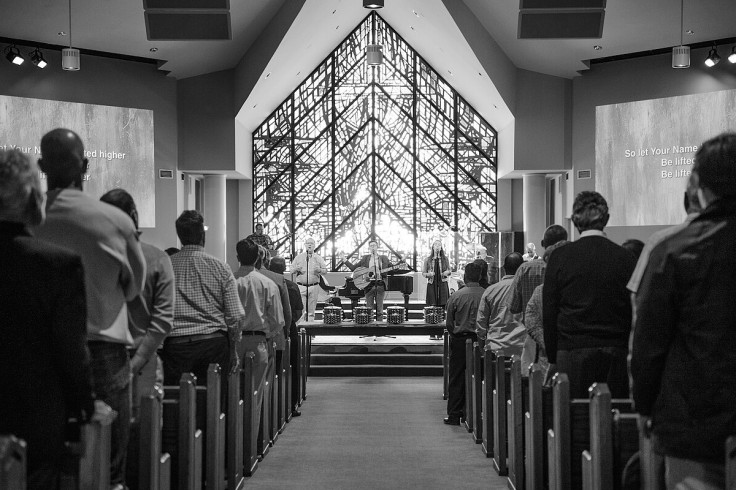
An essay arguing that many Americans have become increasingly disconnected from the core teachings of Christianity has reignited debate over the relationship between faith, politics and public identity in the United States.
The phrase 'quiet quitting Jesus' has emerged in commentary discussing what some academics, clergy and political observers describe as a growing gap between identifying as Christian and consistently following biblical teachings, particularly within modern political discourse.
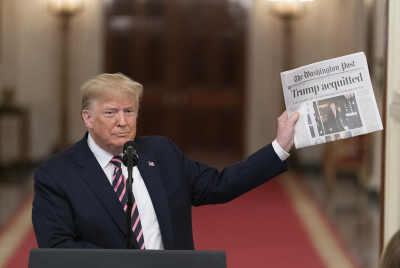
The discussion has gained renewed attention as Donald Trump continues to command strong support among white evangelical voters ahead of the 2028 election cycle, prompting renewed questions about how religious belief intersects with political loyalty.
Essay Questions Religious Literacy in America
Much of the current debate stems from an essay by Hannibal Hamlin, professor of English at Ohio State University, published in the Pittsburgh Review of Books.
Hamlin argues that while the United States remains one of the world's most religious countries by self-identification, many Americans possess only a limited understanding of the Bible and Christian doctrine.
Rather than suggesting that people have abandoned religion altogether, Hamlin contends that, for some believers, religious identity has become more culturally significant than theological knowledge or practice.
His essay has since circulated widely across religious and political discussions, prompting both agreement and criticism.
Surveys Highlight Gaps in Biblical Knowledge
Several surveys have documented limited biblical literacy among Americans, although researchers caution that religious knowledge varies significantly across denominations and levels of religious participation.
A 2010 Gallup poll found that just over half of respondents incorrectly believed the Golden Rule forms part of the Ten Commandments.
The same survey found that fewer than half could name all four Gospels, while only 16% correctly identified salvation by faith alone as a doctrine associated with Protestant Christianity.
Supporters of Hamlin's argument point to findings such as these as evidence that many Americans identify with Christianity while possessing only a partial understanding of its central teachings.
Critics, however, argue that quiz-style knowledge does not necessarily measure personal faith or religious commitment.
Debate Extends Into Politics
The discussion has become increasingly political because of Donald Trump's continued support among white evangelical Christians.
According to data published by the Public Religion Research Institute (PRRI), evangelical Protestants and Americans who identify with Christian nationalism have remained among Trump's strongest voting blocs.
Critics argue that some aspects of Trump's rhetoric and public behaviour appear difficult to reconcile with biblical teachings emphasising humility, forgiveness and compassion.
Supporters respond that their political support is driven primarily by policy priorities, including abortion, religious liberty, judicial appointments and parental rights, rather than personal admiration for Trump's character.
For many evangelical voters, they argue, elections involve choosing between competing policy agendas rather than selecting a spiritual leader.
Religious Leaders Offer Differing Views
Some pastors and theologians have also contributed to the discussion. According to commentary referenced by Hamlin, some ministers report resistance when sermons focus on teachings such as loving one's enemies, turning the other cheek or caring for outsiders.
Others dispute that characterisation, arguing that congregations continue to engage seriously with those teachings and that isolated examples should not be viewed as representative of American Christianity as a whole.
The differing perspectives illustrate that the debate extends well beyond electoral politics and reflects broader questions about how faith is practised in contemporary society.
Who Defines Christian Practice?
The discussion has also spread across social media, where users have debated whether Christianity should be measured primarily by doctrine, church attendance, personal behaviour or political priorities.
On platforms including X and Reddit, some users argue that the criticism unfairly stereotypes conservative Christians.
Others contend that political identity has increasingly overshadowed religious principles across multiple parts of American public life.
While the phrase 'quiet quitting Jesus' has attracted attention because of its provocative wording, it remains an opinion rather than an established description of American Christianity.
There is no consensus among scholars, religious leaders or believers themselves that the phrase accurately captures the state of Christian practice in the United States.
As religion continues to influence American politics, discussions about the relationship between faith and public life are unlikely to fade.
Hamlin's essay has become one contribution to a broader conversation about religious literacy, political identity and what it means to practise Christianity in modern America.
Whether one accepts the idea of "quiet quitting Jesus" or views it as an unfair generalisation, the debate highlights enduring questions about how religious belief is expressed. and interpreted, in an increasingly polarised political landscape.
© Copyright IBTimes 2026. All rights reserved.
- Recommended For You