Harry Potter's Ron Weasley is Turning His £6M Estate Into an Eco-Village: Take a Final Look Inside
Harry Potter star Rupert Grint finally receives approval to redevelop his Hertfordshire estate

Rupert Grint spent the better part of a decade unable to sell Kimpton Grange. The Harry Potter actor bought the Hertfordshire estate for £5.4 million ($7.1 million) in 2009, put it on the market for around £6 million ($7.9 million) in 2018, and found no buyer. He has now been cleared to redevelop it instead.
North Hertfordshire District Council has granted planning permission to turn the 22-acre site into 15 homes, an eco-village built around the listed manor house he once hoped to sell.
The consent, issued on 12 June, lets Grint convert the Grade II-listed house into six apartments and build nine further homes across the grounds. The authority's planning committee voted to approve the scheme in November 2024, but the final permission was held up until a legal agreement over local contributions was signed.
That agreement carries a bill. Under the Section 106 deal, Grint must pay almost £200,000 towards local services, at least £187,000 ($247,000). The named allocations include £100,000 ($132,000) to Kimpton Parish Council, £70,000 ($92,400) towards the expansion of Katherine Warington School, and £11,400 ($15,000) for school places for children with special educational needs.
What Rupert Grint's £6M Estate Eco-Village Includes
Kimpton Grange was last marketed as a luxury country estate. The 2018 sale particulars from Strutt & Parker described an early 18th-century house of mellow red brick, set in about 22.6 acres of landscaped gardens, parkland and paddocks, with a lake at the foot of the lawns.
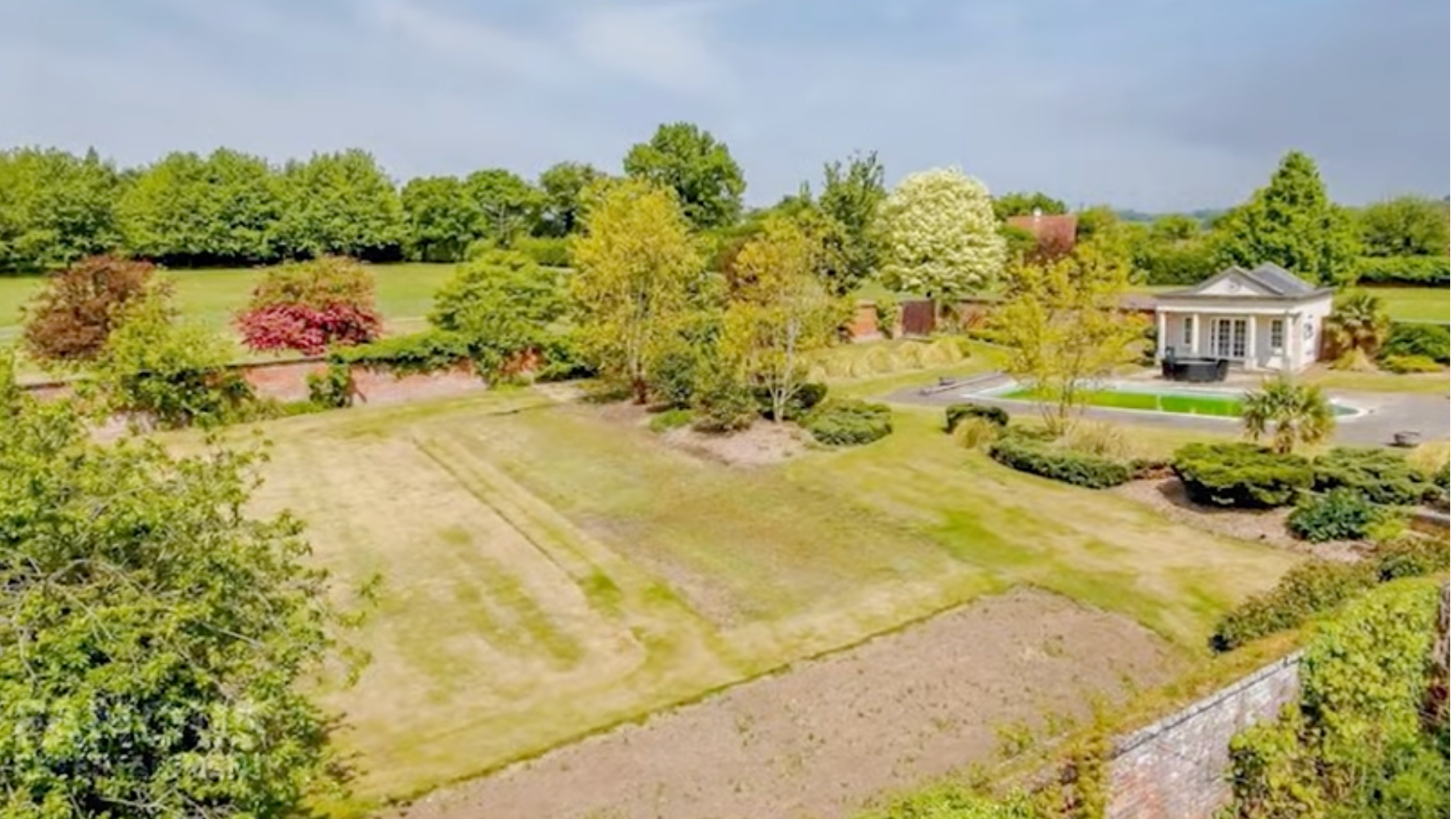
The main house runs to roughly 13,000 square feet. At its centre is a drawing room with an open fireplace and views across the gardens to the water. There are six bedroom suites and an indoor leisure wing with a swimming pool, jacuzzi, gym, games room, bar, and cinema. The grounds hold two period cottages, a staff flat, a walled garden, a floodlit tennis court, a second outdoor pool, and a barn measuring 100ft by 47ft. The property sits in council tax band H, the highest. The listing flagged the catch too. The house needed extensive modernisation.
It did not sell. Grint, who grew up nearby in Watton-at-Stone, lodged plans in 2022 to carve the estate into a small residential community. The grounds had already been cleared in 2021 to convert a barn into three homes.
The approved scheme keeps the manor and splits it into six apartments, five two-bedroom and one three-bedroom. Around it will rise nine new homes, four of them affordable two-bedroom terraced houses and five larger detached properties. A parcel of land will be gifted to the parish council for a public park and circular walk. Clear Architects, the practice behind the design, told the council the plans were 'truly outstanding and innovative' and would deliver a 'carbon neutral' development.
How the Harry Potter Fortune Funds the Property Play
The actor, who played Ron Weasley across all eight Harry Potter films, is estimated to be worth around £38 million ($50 million), according to Celebrity Net Worth. The media has put his earnings from the franchise at roughly £24 million ($31.7 million).
Much of that wealth sits inside Clay 10, the company he wholly owns and his father manages. It holds his property interests, and Grint has bought UK homes, land, and commercial buildings over the years rather than spending on luxury goods.
Grint has also been through a tax dispute. In late 2024, a tribunal ruled against him in a case brought by HM Revenue and Customs, ordering him to pay £1.8 million ($2.4 million) after £4.5 million ($5.9 million) in Harry Potter residuals was reclassified as income rather than a lower-taxed capital asset.
The Kimpton project drew sustained opposition. Residents and councillors argued the development would damage woodland, sit on green belt land within a conservation area, and add to flood risk, with ecologists flagging bats in the manor. The committee approved it regardless, subject to conditions on drainage, archaeology, and transport. When construction begins has not been confirmed.
© Copyright IBTimes 2025. All rights reserved.
- Recommended For You