World Cup 2026: Inside Ronaldo's 665 Million Follower Lead Over Football's Elite
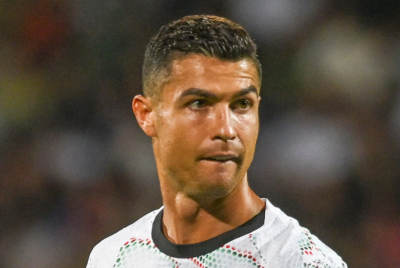
Cristiano Ronaldo enters the 2026 World Cup as its most followed player off it, holding a massive 665.6 million Instagram followers.

Cristiano Ronaldo enters the 2026 World Cup not only as one of football's biggest stars on the pitch, but as its most followed player off it, holding a massive 665.6 million Instagram followers — a lead of more than 150 million over Lionel Messi and hundreds of millions ahead of every other player in the tournament.
Across the 48 participating nations, players collectively have an estimated 3.39 billion Instagram followers. This shows how deeply social media has become part of modern football's global economy. But that influence is not spread evenly. It is heavily concentrated among a small group of global stars, while many squad players remain almost invisible online.
At the very top is Portugal's Cristiano Ronaldo, who leads all World Cup players with 665.6 million followers. Argentina's Lionel Messi follows with 506.5 million, putting both far ahead of the rest of the game.
The Global Superstars Driving Football's Commercial Economy
Ronaldo and Messi remain the main figures of football's social media era. Between them, they have more than one billion followers, putting them in a class of their own in world sport.
Ronaldo's reach also brings huge commercial value. According to estimates from MyBettingSite, he earns around £5.2 million per sponsored Instagram post. Messi is close behind at about £4 million per post, based on MyBettingSite valuation models. This shows how their influence goes far beyond football, with both acting as global media platforms as much as athletes.
Behind them, Neymar (234.3 million followers) and Kylian Mbappé (130.5 million) make up the next level. Both are among the most marketable athletes in the world, with MyBettingSite estimates placing their earnings at over £1 million per post, depending on brand deals and campaign scale.
Further down, players such as Mohamed Salah, Vinícius Júnior, and James Rodríguez still have large global audiences. This brings in six-figure earnings per post and strong influence in their regions, again based on MyBettingSite's influencer valuation data.
Together, this small group of top players takes a large share of attention at the tournament. It shows how modern football is increasingly shaped by a few global names at the top.
Split Between Global Stars and Squad-Level Reality
Beyond the biggest names, most World Cup squads sit in a very different digital space.
Players such as Jude Bellingham, Erling Haaland, Lamine Yamal, and Luka Modrić sit in a middle group. They are well known for their football ability, but their social media reach does not always match their status on the pitch.
In this group, estimated earnings per sponsored post range from tens of thousands to several hundred thousand pounds. This depends on their audience size, brand appeal, and commercial deals. While still high, it is far below the top tier.
The gap becomes even clearer further down the squad lists. Most international players have fewer than one million followers. Their visibility is mostly shaped by club football and domestic leagues rather than global fame.
At the lower end, some players have only a few thousand followers. For them, social media brings very little income, and their reputation comes almost entirely from what they do on the pitch.
This creates a clear split within the same tournament. Some players are global brands worth millions per post, while others are known almost only within football circles.
Football's New Attention Economy and the National Divide
At a national level, the imbalance is just as clear. Portugal leads all 48 countries in total Instagram reach, mainly because of Ronaldo's huge following. Argentina, Brazil, and France follow, driven by their own global stars.
England, Spain, and Egypt sit in the next group. Most other nations rely on one or two standout players rather than having large global audiences across the whole squad.
This shows how football has changed. Success on the pitch does not always mean equal attention off it. In some cases, one player alone can shape how the world sees an entire country.
The result is a World Cup that runs on two levels. One is the football competition itself. The other is about attention, reach, and money made from influence.
As social media becomes more important in sport, the gap between football's biggest stars and the rest of the players is growing. And at the centre of it all is a tournament where they share the same stage, but not the same level of attention.
© Copyright IBTimes 2026. All rights reserved.
- Recommended For You