Hidden 2011 Japan Earthquake Wave Threatens to Wake Up Sleeping Fault Lines and Spark Unexpected Disasters
New analysis of seismic data from the 2011 Tōhoku earthquake suggests lingering stress may be reactivating dormant fault systems, raising concerns about future earthquakes and tsunami risk.
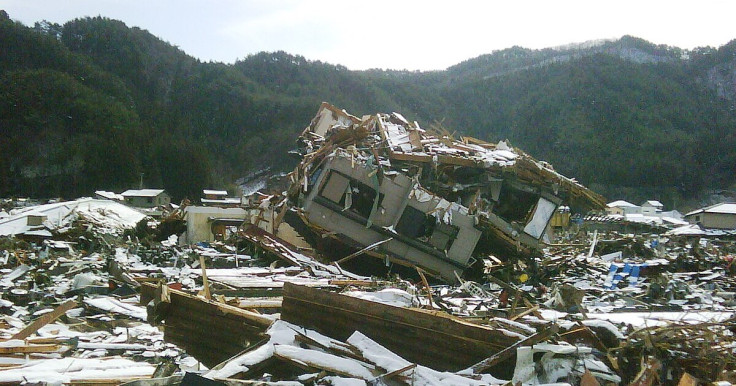
Fifteen years after the magnitude 9.0 Tohoku-Oki earthquake tore through Japan's northeastern coast, scientists say they have uncovered a hidden seismic event buried in the disaster's immediate aftermath, one that exposes a hazard nobody had previously identified.
According to a new study published in the journal Science, the whole of Japan shifted around five or six millimetres eastward in the minutes after the quake, nudged not by a conventional aftershock at the surface, but by an enormous wave that had travelled to Earth's core and back.
The 2011 disaster, which combined with its tsunami to kill almost 20,000 people, remains one of the most thoroughly studied earthquakes in history. Yet one signal buried in Japan's GPS records went unexplained for more than a decade.
A 6-Millimetre Mystery in the GPS Data
Researchers led by Sunyoung Park, an assistant professor of geophysical sciences at the University of Chicago, spotted a step-like eastward shift of up to 6 millimetres across hundreds of GPS stations spanning Japan. The movement happened all at once, at multiple plate boundaries simultaneously, roughly 13 to 16 minutes after the magnitude 9.0 mainshock.
That timing made no sense at first. Ground shifts of this kind are normally tied to a specific earthquake or aftershock, yet no such event was recorded at the moment Japan moved. As Park put it, 'there was no known earthquake corresponding to this timing.'
The Wave That Travelled to Earth's Core and Back
The team's explanation, set out in their Science paper, points to a type of seismic wave known as an ScS wave - a shear wave that plunges roughly 2,900 kilometres down through Earth's mantle, reflects off the boundary with the molten outer core, and climbs back to the surface.
The Tohoku-Oki quake was so powerful that this returning wave, having completed a round trip of about 5,800 kilometres, still carried enough energy to disturb Japan's tectonic plate boundaries when it arrived back at the surface.
It is, according to the researchers, the first confirmed case of a core-reflected wave triggering a fault to slip. The resulting rupture stretched across roughly 3,000 kilometres, which is more than double the length of the 2004 Sumatra earthquake's rupture and several times longer than the original Tohoku-Oki rupture itself, making it, by area, the broadest single seismic slip event ever documented.
'A Previously Unrecognised Source of Seismic Hazard'
For Park and her co-authors, the scale of the event is what makes it so significant. The discovery points to 'a previously unrecognised source of seismic hazard' that could potentially reactivate the area around a megathrust earthquake's rupture zone long after the initial shaking has stopped, according to the University of Chicago's announcement of the research.
Crucially, this is a different mechanism to a conventional aftershock, which is driven by stress changes near the surface rupture. Here, the trigger arrived from deep within the planet, minutes after the danger seemed to have passed. 'That's a type of seismic hazard that we didn't think about before,' Park told ScienceNews.
Why Nobody Felt Japan Move
Despite the enormous area involved, the slip itself was almost certainly imperceptible. The displacement unfolded slowly, over roughly 3 minutes, and its energy was spread across such a vast stretch of crust that no perceptible shaking accompanied it.
Researchers caution, however, that a similarly triggered slip elsewhere, or on a fault line already close to failure, might not prove so benign.
Could Sleeping Fault Lines Elsewhere Be at Risk?
The bigger question now facing seismologists is whether this kind of delayed, deep-sourced triggering could reactivate fault lines far beyond Japan.
Park and her colleagues say they are curious whether the same process has occurred, or could occur, at other major subduction zones, including the San Andreas Fault system in the western United States, though sparse offshore GPS coverage in many regions could make such events difficult to detect.
Because the Japan analysis relied on onshore stations alone, the researchers say the true extent of the 2011 triggered slip may have reached even further than recorded, extending beyond Japan's coastline into areas without instrumentation.
Speaking to Scientific American, Park said the discovery should prompt seismologists to reconsider how long a megaquake's hazard window really stays open, warning of the 'potential triggering of an event many minutes after [an earthquake's] main shaking has passed.'
It remains unclear whether future ScS-triggered slips would be as harmless as the one recorded in 2011, or whether, on a more vulnerable fault line, the same hidden wave could help unleash an unexpected disaster of its own.
The study, titled 'ScS-Triggered Slip on Megathrust Interfaces After the 2011 MW 9.0 Tohoku-Oki Earthquake,' was published in Science on June 18, 2026, co-authored by Park alongside Hiroo Kanamori and Luis Rivera.
© Copyright IBTimes 2026. All rights reserved.
- Recommended For You