Bruce Willis Dementia Update: Emma Heming Reveals Star Still Recognises Family In Latest Health News
Emma Heming Willis offers a candid update on Bruce Willis's dementia, challenging assumptions about memory loss and defending the realities of caring for him.

Emma Heming Willis has addressed a persistent misunderstanding regarding her husband's health, confirming that Bruce Willis still recognises his family despite his ongoing battle with frontotemporal dementia (FTD).
In a candid appearance on The Bossticks podcast on Monday, the actor's wife sought to dismantle what she described as a 'very common misconception' that dementia is synonymous with total memory loss.
The 69-year-old Die Hard star was diagnosed with FTD in 2023, following an initial 2022 diagnosis of aphasia. While Alzheimer's disease is widely understood to impact memory in its early stages, Heming Willis explained that FTD presents a different clinical reality.
On The Bossticks podcast, Heming said she is frequently confronted with the same anxious question about Bruce Willis: Does he still recognise you? Her answer was blunt. 'When people say, 'Oh, you know, does he remember who you are?' Well, he does because he doesn't have Alzheimer's; he has FTD,' she said. In her view, folding all forms of dementia into one vague idea of total memory loss does patients no favours.
She went on to describe that confusion as almost baked into the word itself. 'I think that's a very common misconception that, when you think of dementia, we think of memory loss,' she added.

Why FTD Is Often Misunderstood
Heming Willis highlighted that lumping all forms of dementia under a single umbrella does a disservice to patients and their families. She noted that while Alzheimer's is the most prevalent form of dementia globally, FTD is statistically the most common form for individuals under the age of 60.
According to medical experts, the distinction lies in which part of the brain is affected. While Alzheimer's targets the hippocampus—the brain's memory centre—FTD primarily impacts the frontal and temporal lobes. This results in significant changes to behaviour, personality, language, and executive function, rather than the immediate forgetfulness that characterises Alzheimer's.
The NHS defines frontotemporal dementia as a condition that primarily affects behaviour and language and worsens over time.
'FTD is the most common form of dementia for people under the age of 60,' she said, underlining why her husband's case has resonated with families who never expected to be dealing with dementia before retirement.
Bruce Willis Dementia Update Shines Light On Ongoing Grief
Heming Willis did not pretend that the clarification makes life easier. She described herself as 'consistently in grief,' a phrase that will ring uncomfortably true for many carers. 'What you experience with any form of dementia is it just takes,' she said. 'You know, these diseases, they take and they take and they take, sometimes very slowly, and you are grieving different losses all the time.'
There was no attempt to sugar-coat the past four years. What has changed, she suggested, is not the situation but her own capacity to live alongside it. She said she has grown more 'used to it,' adding that she is 'just sitting with it and moving alongside of it.' The acceptance she describes sounds less like resignation and more like someone pacing themselves for a marathon they never signed up for.

Her remarks sit against a backdrop of sometimes unforgiving public scrutiny. In September 2025, Heming Willis publicly pushed back at online critics who attacked her decision to move Bruce out of the family home as his dementia progressed and into a one-storey house with a full-time care team.
In an ABC special titled Emma & Bruce Willis: The Unexpected Journey, she framed the decision as one her husband would have endorsed.
'He would want them to be in a home that was more tailored to their needs, not his needs,' she told Diane Sawyer, referring to their daughters, Mabel, now 13, and Evelyn, 11. It was, she said, the 'hardest decision' she has had to make.
Caregivers At The Centre Of Bruce Willis Dementia Update
After the backlash, Heming Willis expanded on Instagram about what that choice had cost, and what she believed critics were missing. 'Too often, caregivers are judged quickly and unfairly by those who haven't lived this journey or stood on the front lines of it,' she wrote. That frustration spills easily into her more recent comments. For her, this is not simply a Hollywood story but a fairly standard example of what happens when private care decisions meet the internet.
She said she had steeled herself for judgement and criticism but posted about Bruce's new living situation because 'it creates connection and validation for those actually navigating the realities of caregiving every day.' The point, in other words, was not to invite sympathy for a famous family, but to say out loud the kind of thing many carers only admit in support groups and hospital corridors.
'That's who I share for and so I can build a deeper connection with a community that understands this journey,' she said. Those who pile in from the sidelines, she argued, often 'don't have the experience to back it up,' which, in her eyes, strips their opinions of any real weight. 'The truth is, the opinions are so loud and they're so noisy, but if they don't have any experience of this, they don't get a say.'
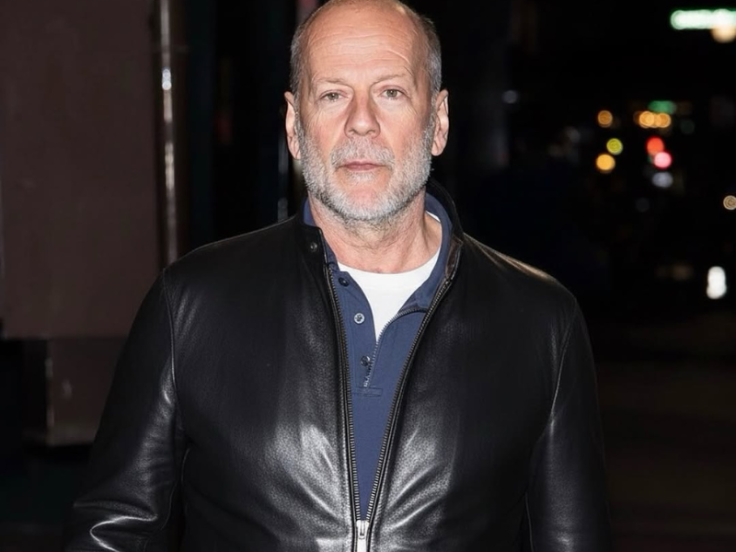
Willis is now cared for in a single-storey property, as his condition becomes more complex and his support needs become more intensive. For now, his wife's message is deliberately narrow. The man who once anchored Die Hard and The Sixth Sense still knows the people closest to him as the actor remains under the care of a dedicated team, with his wife continuing to act as both his primary advocate and a voice for those living in the shadow of FTD.
© Copyright IBTimes 2026. All rights reserved.
- Recommended For You