The Secret Service Vest That Saved Donald Trump: New Details Emerge from the Washington Hilton Chaos
When even a bullet stopped by body armour becomes proof of a plot, the real casualty is any shared sense of what is real.

New details are emerging about the protective vest worn by a Secret Service agent during the shooting at the Washington Hilton on Saturday, 25 April. As investigators piece together what happened, the reaction to the attack has revealed something darker than a single failed attempt on Donald Trump's life: a growing habit in American politics of treating even the clearest evidence as suspicious.
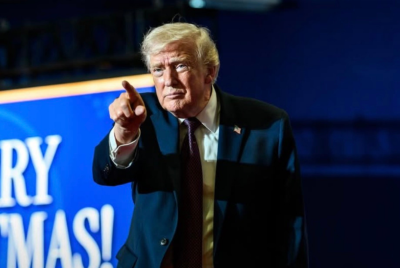
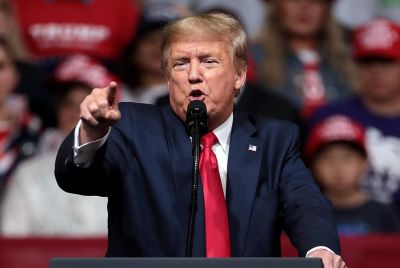
The shooting unfolded at the White House Correspondents' Dinner at the Washington Hilton in Washington DC, where President Donald Trump was in attendance before being swiftly escorted to safety after gunfire erupted. A suspect identified by multiple outlets as Cole Allen was taken into custody, and early reports said a Secret Service agent's body armour prevented a far more serious outcome.
The Vest That Changed The Night
Authorities say the vest absorbed at least one round, sparing the agent from what could have been a much more serious injury. In a packed and heavily guarded room, that piece of armour may have been the difference between a terrifying breach and a national tragedy.
The broad outline of the night is not especially murky. Allen is alleged to have opened fire, the agent survived, and law enforcement officers detained the suspect at the hotel. As Slate writer Molly Olmstead argued in analysis cited by Raw Story, the known details point to what appears to be a politically motivated attempt on Trump and members of his administration.

Olmstead pointed to what she described as the 'signposts' around Allen. Reports have cited political donations to Kamala Harris's 2024 campaign and a manifesto said to be explicitly anti Trump and focused on officials in the administration. Taken together, she argued, those details paint a straightforward picture of motive.
Yet the conspiracy theories began almost immediately. On social media, users on both the left and the right claimed the attack had been staged, poring over slowed down clips and twisting the vest's success into supposed proof that the whole scene had been choreographed. In that version of events, the same security system that stopped a bullet became evidence of a wider deception.
Conspiracy Claims Take Over
Molly Olmstead's analysis, published by Slate and cited in the Raw Story piece, suggests the rush to label the Washington Hilton shooting 'staged' may be the darkest part of the story. Conspiracy theories are nothing new in American politics, but this response points to something more entrenched: a culture in which conspiratorial thinking now operates almost as a movement in its own right..
'We have reached a point at which conspiratorial thinking in itself is its own kind of political movement—one that often exists outside traditional partisan lines,' she writes.On one side are familiar MAGA conspiracy theorists who insist Democrats stage attacks or invent enemies. On the other are the so called 'BlueAnon' accounts, pushing elaborate theories of Republican plots. Beyond both camps sits a wider group that prizes 'question everything' scepticism so highly that it ends up distrusting almost everyone.
In the Washington Hilton case, that has led some people who would normally despise Trump to insist the attack must somehow have been designed to help him. A man was reportedly armed, shots were fired and investigators pointed to anti Trump material, yet some still reached for a deeper plot. In that version of events, the Secret Service vest becomes a prop and the wounded agent little more than a player in an online fantasy.
Olmstead notes that conspiracy theories around the incident have moved beyond the specifics of the case and are becoming part of how some political groups define themselves. In these circles, core facts of the shooting, including that a bullet was stopped by a vest at the Washington Hilton, are frequently questioned or dismissed as 'too convenient'.
Law enforcement has so far described the shooting in conventional terms: a lone alleged gunman, a stated ideological motive, a rapid Secret Service response and a close call for the president that was mitigated by the body armour his team routinely wears. Investigators say there is no verified evidence to support claims of staging or collusion. Those claims have largely circulated online, driven by speculation and political distrust.
According to Olmstead, the reaction to this incident is part of a wider pattern in which routine security outcomes, technical glitches or isolated images are quickly cited as proof of manipulation. In this environment, major events, including shootings, are frequently followed by competing narratives that challenge official accounts.
The established facts to date are that a suspect is in custody, a bullet was stopped by a vest and a Secret Service agent survived. Despite this, a portion of public discussion has focused on questioning the sequence of events and the accuracy of witness and investigator accounts, rather than on policy or security measures intended to prevent future attacks.
© Copyright IBTimes 2026. All rights reserved.
- Recommended For You