'Vet Steps In': 4-Week-Old Coyote Pup Frozen in Fear, Covered in Hundreds of Cholla Spines
Wildlife Rescuers Save Coyote Pup Covered in Cholla Cactus Spines
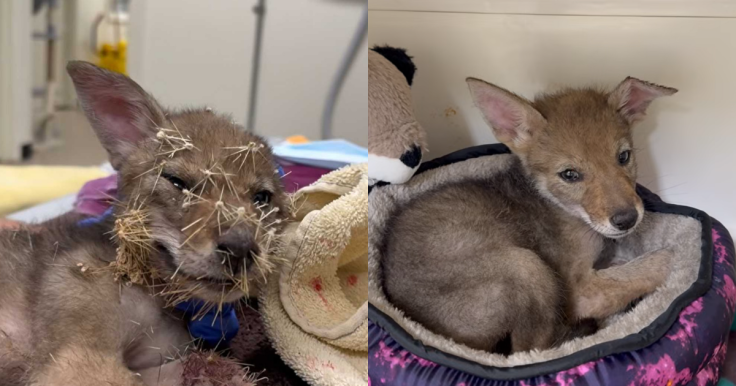
A four-week-old coyote pup discovered motionless in an Arizona garden has survived an ordeal that wildlife rescuers say was among the most severe cases they have encountered. Covered from nose to tail in hundreds of cholla cactus spines, the tiny animal was unable to move and likely would not have survived without intervention.
The three-pound pup was found alone by a homeowner in Surprise, Arizona, who noticed the young coyote stranded in their yard with no sign of its mother. Alarmed by its condition, the resident contacted the Southwest Wildlife Conservation Center, a wildlife rehabilitation facility based in Scottsdale, which dispatched a volunteer to collect the animal.
When the pup arrived at the centre on 19 May, veterinary technician Berk Martineau immediately recognised the seriousness of the situation.
'To that little guy, I'm sure it was a very sharp pain,' Martineau said.
The animal appeared lethargic and unusually subdued. Staff suspected it was suffering from shock after becoming entangled with a cholla cactus, a desert plant notorious for its detached, barbed spines.
A Dangerous Encounter in the Desert
A sheer number of spines embedded throughout the pup's body. Cholla cactus needles are designed to detach easily and cling to passing animals. Unlike ordinary thorns, they are covered with microscopic barbs that make removal difficult once they penetrate the skin.
'This was a pretty extreme case,' Martineau said.
The spines had lodged across the pup's face, stomach, legs and paws, effectively trapping the young animal in place. For a coyote only weeks old, immobility in the Arizona heat presents a serious threat. Exposure, dehydration and an inability to escape predators can quickly become fatal.
The incident also reflects a seasonal challenge faced by wildlife rehabilitators across the American Southwest.
Spring marks what staff refer to as 'baby season', a period when large numbers of young animals begin exploring their surroundings while still lacking the instincts and experience needed to navigate hazards.
'They're learning to become animals, they're exploring, they're running around,' Martineau said. 'And unfortunately, a bunch get injured or separated from their mom.'
Even without the cactus injuries, the pup's chances of surviving alone in the wild were slim.
Hours of Delicate Treatment
Martineau and a colleague sedated the coyote before beginning the painstaking process of extracting each individual spine.
The procedure took approximately two and a half hours.
While cholla spines slide into tissue with relative ease, removing them is considerably more challenging because the barbs resist extraction. Staff used small metal clamps and worked carefully to avoid causing further injury to the pup or becoming injured themselves.
'We wanted to be as delicate as possible but also efficient,' Martineau said.
Once every visible spine had been removed, the coyote was transferred to a heated incubator and given fluids to stabilise its condition. The immediate danger had passed, but staff remained aware of how close the animal had come to dying.
'With the conditions of the summer and it being so hot and that coyote being immobile, there's a bunch of factors that would have ultimately left this coyote to die in the wild,' Martineau said.
Preparing for Life Back in the Wild
Weeks later, the pup has made a full recovery.
'He's acting like a wild coyote should and is just as healthy as the other coyote pups,' Martineau said.
The young coyote has since been introduced to several orphaned pups of a similar age currently being cared for at the centre. Staff encourage social interaction between the animals, allowing them to develop natural behaviours and establish pack dynamics that will be important later in life.
'We're able to create little packs where they can learn from each other,' Martineau explained.
Rehabilitation staff maintain strict protocols designed to prevent the animals from becoming accustomed to humans. Interaction is kept to a minimum and feeding is limited to what is necessary, and workers wear masks while caring for the animals.
'The big goal is that none of these animals are imprinted to us at all,' Martineau said. 'We want these animals to be prepared to go back into the wild without being reliant on people and we don't want them to approach people.'
As the coyotes grow, they will be moved to larger outdoor rehabilitation enclosures where they can continue developing survival skills.
If all goes to plan, the cactus-covered pup that once lay frozen in fear beneath hundreds of spines will return to the wild within the next year.
'Once he's big enough and strong enough,' Martineau said, 'we'll let him go.'
© Copyright IBTimes 2026. All rights reserved.
- Recommended For You