Dead Duckling Found at Lincoln Memorial Reflecting Pool Amid Trump's $14M Renovation Disaster
Renovation efforts at the Lincoln Memorial Reflecting Pool face criticism after a duckling's death highlights environmental concerns
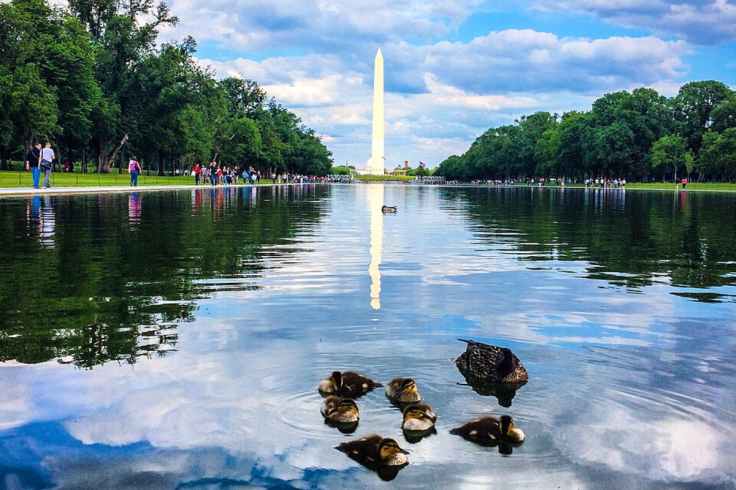
A baby duck has been found dead at the Lincoln Memorial reflecting pool in Washington, DC, as the Trump administration's $14 million (£11.03 million) renovation of the landmark continues to draw scrutiny. Journalist and commentator Aaron Parnas reported the discovery in a Facebook reel that has since drawn widespread attention online, sharing a photo sent to him by a follower who visited the reflecting pool. 'A baby duck has now died at the reflecting pool,' Parnas told his audience in the video.
The death, as reported by Parnas, adds a new dimension to what has already become one of the more visible stumbles of the administration's effort to beautify Washington ahead of the nation's 250th anniversary. Parnas, citing a follower's visit, also claimed the situation was worse than it appeared and that the ducks would not swim in the pool at all.
A Renovation Gone Wrong
The trouble began shortly after the pool was refilled following a costly overhaul. President Trump ordered the pool's stone flooring coated with a sealant he personally selected, telling reporters he chose the colour himself: 'American Flag Blue.' Federal contracts for the project were valued at more than $14 million (£11.03 million), far exceeding initial estimates of $1.8 million (£1.42 million).
Within days of refilling, the pool turned a murky green as algae bloomed across the surface. Tears were then spotted in the newly applied blue liner at the bottom of the pool. National Park Service crews were subsequently seen pouring bottles of hydrogen peroxide into the water in an attempt to combat the algae, a move that itself raised concerns.
Containers of hydrogen peroxide poured into the pool were marked at a 12 per cent solution. The US Centers for Disease Control and Prevention warns that hydrogen peroxide 'is a powerful oxidizing agent' and 'can cause systemic toxicity when inhaled or ingested,' with effects becoming 'more severe as the concentration of hydrogen peroxide increases.' Wildlife advocates have raised concerns about the potential vulnerability of young waterfowl to chemical treatments in enclosed water bodies, particularly during the summer nesting season.
Dead Duckling Raises Questions About Chemical Treatment Safety
A NOTUS reporter watching crews battle the bloom described it as a 'bad day to be a duck.' According to Parnas's video, a duckling was found lying motionless at the pool's edge, the green water visible around it. The pool is a well-known nesting ground for mallard ducks, particularly during the summer months when ducklings trail their mothers through the water. Whether the chemical treatment contributed to the duckling's death has not been confirmed by any veterinary or environmental authority.
Washington, DC-based paediatrician Dr Michael O'Brien raised doubts on X about whether the hydrogen peroxide treatment would even work, writing: 'Y'all, not to be a huge nerd but for the reflecting pool you would need a minimum of about 8,000 litres of 12% hydrogen peroxide to reach the 50 parts per million concentration to kill algae.' He added: 'Is this what happens when you have 0 scientists in your administration?'
No-Bid Contracts and Growing Scrutiny
According to the New York Times, the National Park Service awarded a $1.7 million (£1.34 million) no-bid contract to Greenwater Services to install a water-purification system, citing urgency related to the anniversary preparations. The Times reported the company is owned by a trust led by John J Cafaro, described as a longtime Trump donor and neighbour of Mar-a-Lago. The Interior Department stated the company was selected solely on the basis of expertise and denied that Trump had any role in the award.
The Lincoln Memorial reflecting pool is one of the most visited landmarks in the United States, drawing millions of tourists to the National Mall each year. It has also long served as a habitat for waterfowl, including the mallard ducks that nest and breed there each spring and summer. The combination of a failed renovation, chemical treatments of uncertain safety, and now a reported duck death raises questions about the oversight and environmental impact of a project rushed to completion for a symbolic national occasion.
© Copyright IBTimes 2026. All rights reserved.
- Recommended For You