

Private Investigator Weighs Role of Armchair Detectives and True Crime Fans in Nancy Guthrie Case
In a case still shrouded in uncertainty, the next useful clue could come from an ordinary person looking out the window.
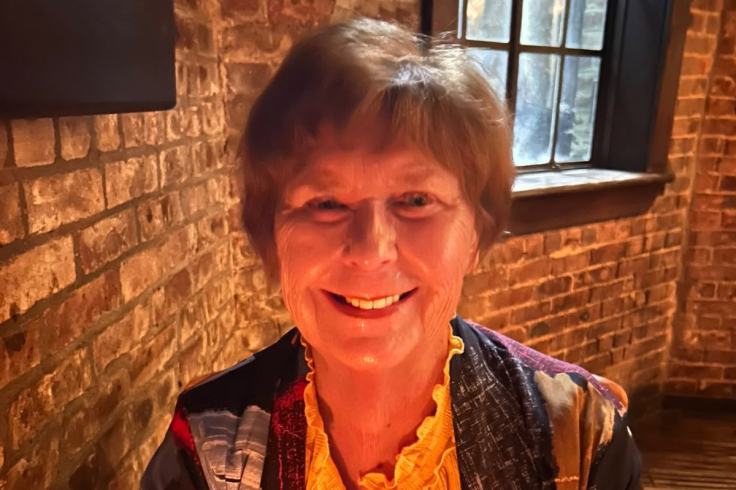
A former New York Police Department detective turned private investigator said on 3 July that true crime fans and armchair sleuths could provide the crucial tip needed to move the Nancy Guthrie case forward, arguing that one small observation from the public may be enough to crack what has so far remained a stubbornly opaque investigation.
For context, Nancy Guthrie, the 84 year old mother of NBC Today co host Savannah Guthrie, disappeared from her Tucson home on 1 February, and investigators later treated the case as a kidnapping for ransom while the FBI and the Pima County Sheriff's Department continued to work it behind the scenes.
Armchair Sleuths in the Nancy Guthrie Case
Herman Weisberg, who previously worked as a detective with the New York Police Department, told Fox News Digital that crowdsourcing can matter in cases like this because a single person may notice the sort of thing investigators cannot be everywhere to see. In his view, it might be as simple as a car sitting too long on a street, or a detail that looks a bit off and then turns out to matter a great deal.
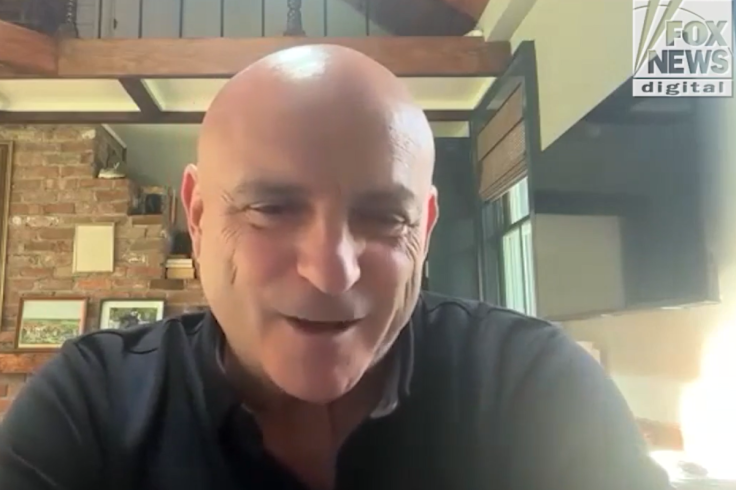
Weisberg said the public should not underestimate the value of patience, either. 'You've got to have a lot of patience when you're dealing with that because you might just be on your 7,000th call and your 15th cup of coffee that day, but the 7,001st call could be the one that's really got a piece of valuable information in this.' He followed it by saying, 'The 7,001st call could be the one.'
That is the nub of his argument, plain and simple, a reminder that investigations often move on the back of repetitive, tedious work before they move on a single sharp insight.
Weisberg's View of the Investigation
Weisberg described the Guthrie disappearance as 'extremely complex and extremely rare', saying that the abduction of an 84 year old grandmother from her bed by non family perpetrators is not the sort of crime that fits an ordinary template. He suggested the offence went badly wrong early on, which in turn may have left behind mistakes that someone outside the investigation could eventually recognise.
That, more or less, is the old detective's theory, and it is not a mad one. Weisberg also said he was surprised that digital forensics had not already produced the breakthrough many people expected, pointing to the Kohberger case in Idaho as an example of technology proving decisive in another major investigation.
He added that if the Guthrie case involved a lone perpetrator, it would naturally be harder to crack because there is no second person to betray the first. If the crime was carried out by more than one person, though, the calculation changes again, and that is the sort of ugly, unfinished stuff investigators have to live with while the public waits for answers.
Authorities Keep the Nancy Guthrie Case Open
The FBI has said some of the ransom related messages that surfaced after Guthrie vanished were fake communications, but the agency has also said the case is still being treated as a kidnapping for ransom investigation. The Bureau did not spell out how many messages it had reviewed, only saying that several were under consideration and that it was still evaluating some that might be legitimate.
The Pima County Sheriff's Department has also said the investigation remains active. In Reuters' reporting, a sheriff's spokesperson said, 'We don't have any updates, other than this is still an active investigation,' adding that DNA samples and video evidence remain under forensic analysis.
Those details matter because they show how little has been made public, even as the case has drawn sustained attention. Savannah Guthrie has continued to press for information, and public tips remain central to the investigation, which is exactly why Weisberg's pitch lands with some force rather than sounding like pure true crime theatre.
Why the Public Still Matters
Weisberg's message is straightforward. If someone notices something unusual, even something small, they should report it, because that could be the clue that gets buried under everything else until the right person sees it.
That idea sits at the centre of the Nancy Guthrie case now, alongside the uncertainty over what really happened in the early hours after she disappeared from her Tucson home. The investigators are still working, the FBI still calls it active, and the public is still being asked to keep looking, which is about as far from closure as a case can get.
© Copyright IBTimes 2026. All rights reserved.