

Sagrada Família Hits Final Height As Tower Of Jesus Christ Nears Completion After 144 Years of Construction
The Sagrada Família reaches its final height after 144 years, but plans for the Glory Facade staircase spark fears among residents over possible demolitions in Barcelona.
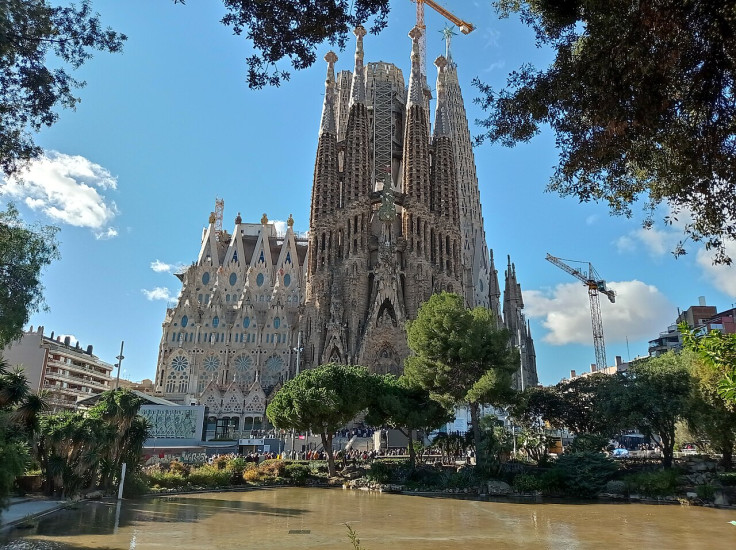
Barcelona's Sagrada Família has finally reached a historic milestone more than a century in the making.
After 144 years of construction, the basilica has hit its final structural height of 566 feet, following the installation of a towering cross atop the central Tower of Jesus Christ. But even as celebrations unfold, a new and far more contentious fight is emerging just outside its walls.
What should be a moment of triumph is now being overshadowed by a growing dispute over what comes next, and who may ultimately pay the price.
Delayed by wars, politics and funding shortfalls, Sagrada Família's imposing but unfinished presence has dominated Barcelona's skyline for decades.
— CNN (@CNN) June 8, 2026
Now, the long-awaited final tower is, at last, ready for its inauguration, marking 100 years since the death of the church's…
Final Height Reached After 144 Years Of Construction
The Sagrada Família, designed by Antoni Gaudí, has long been defined by its unfinished nature.
That changed in February, when the final major structural element was installed, completing the basilica's iconic central tower. The building now dominates Barcelona's skyline, the result of more than a century of interruptions, including wars, political upheaval, and chronic funding shortages.
Yet officials stress the basilica is still not fully complete. Interior work and decorative elements are expected to continue for years, with 2026 long earmarked as a symbolic opening moment.
Papal Ceremony To Mark Historic Milestone
A global spotlight will fall on the basilica as Pope Leo XIV leads a Solemn Mass and ceremonial blessing.
He is the 11th pontiff to oversee the project since construction began. The timing carries deep symbolism, arriving almost exactly 100 years after Gaudí died in 1926.
For many, the ceremony represents not just architectural progress, but the closing of a generational chapter in European history.
Sagrada Família: timeline of a temple under construction for 144 years
— Catalan News (@catalannews) June 7, 2026
When Pope Leo XIV blesses the Tower of Jesus of the Sagrada Família next Wednesday, June 10, it will be exactly 144 years, 2 months, and 22 days since the laying of the first stone of the famous temple.
Back… pic.twitter.com/XxNPAYKAR2
Glory Facade Staircase Sparks Local Backlash
While celebrations unfold above, tension is rising at street level.
At the centre of the Sagrada Família completion controversy is the planned Glory Facade, designed as the basilica's grand main entrance.
A proposed monumental staircase would connect the elevated entrance to street level while still allowing traffic to pass beneath.
What appears to be a technical solution has instead become a flashpoint for local anger.
Fa 144 anys que es va començar la Sagrada Família i en fa més de 100 que és el símbol indiscutible de Barcelona. Si la Torre Eiffel defineix París i l’Empire State defin... https://t.co/J3HCBFa1Es
— diariARA (@diariARA) June 5, 2026
Residents Raise Fears Over Possible Demolitions
For residents living opposite the basilica, uncertainty is the main concern.
Alicia Busquets, who has lived in the area for three decades, voiced her fears plainly, saying: 'Who can guarantee that two years from now my house won't be torn down?'
Her concerns reflect wider anxiety among locals who say they still lack clarity about how the final design will affect their homes and businesses.
The Construction Board of the Expiatory Temple of the Sagrada Família, the non-profit overseeing the project, has proposed the staircase design but says it requires major space and further approval from city authorities.
For residents, the lack of certainty is the issue.
Community Pressure Builds In Barcelona Neighbourhood
The dispute has intensified as speculation grows over the potential impact on nearby housing.
Some proposals linked to the Glory Facade could require demolition of residential buildings directly across from the basilica. That possibility has triggered opposition and concern among locals, who say communication has been inconsistent.
Salvador Barroso, who leads a residents' association, said frustration is mounting.
'We're at a standstill. There are lots of rumours, lots of things being said, but the reality is that there's nothing certain,' he said, adding: 'With the Pope's visit coming up in a few days ... this is like a pressure cooker.'
Gaudí Vision And Civil War Destruction
The broader context is rooted in Gaudí's Sagrada Família, an unfinished church architecture.
Gaudí took over the project after Francesc de Paula Villar resigned early on, and he knew he would not live to see it completed. Much of his original work was destroyed in 1936 during the Spanish Civil War, when anarchists burned the crypt and destroyed models and plans.
What survived, sketches, photographs, and fragments, became the basis for reconstruction by later architects.
Chief architect Jordi Faulí has described Gaudí's method as a system grounded in geometry and structural logic, enabling modern teams to interpret his intent even without complete blueprints.
The newly completed central tower is also an engineering achievement. The result is a structure that now defines Barcelona's skyline more than ever before. Yet even this milestone has not settled the debate over what the basilica's completion truly means.
Completion Or Another Beginning For Barcelona
The Sagrada Família completion controversy shows that even at its highest point, the basilica remains unfinished in more ways than one. It has reached its final height, yet its final form is still unfolding.
And beyond the stone and scaffolding, the future of the surrounding neighbourhood remains uncertain. As Barcelona prepares for a papal ceremony and global attention, one question lingers. How much of the city must change to complete Gaudí's vision, and who gets to decide?
© Copyright IBTimes 2026. All rights reserved.