Supreme Court Delivers Major Second Amendment Win by Limiting Federal Gun Ban on Marijuana Users
Court challenges federal approach to drug-related firearm bans
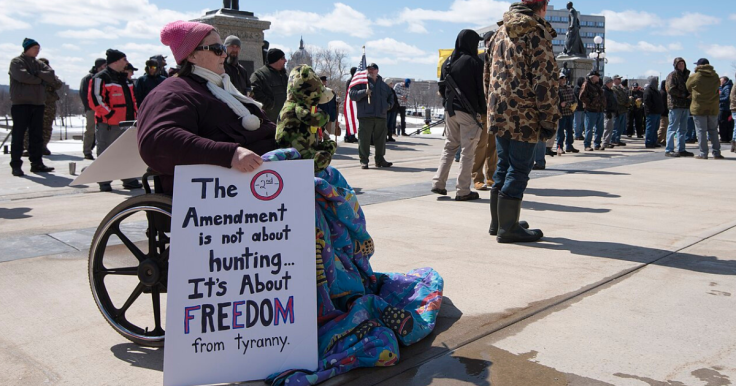
The Supreme Court has dealt a significant Second Amendment ruling limiting how far federal authorities can go in enforcing firearm restrictions against marijuana users, in a unanimous 9–0 decision that challenges the government's approach to drug-related gun bans.
The case centred on Ali Danial Hemani, an American-Pakistani dual citizen, who admitted regular marijuana use but argued this alone should not automatically justify the loss of his constitutional right to bear arms.
What The Latest Ruling Notes
In its ruling, the court found that the government's application of federal firearms law was inconsistent with Second Amendment jurisprudence, effectively narrowing how broadly such restrictions can be imposed on gun owners who use cannabis under federal law.
It was in 2022 when the FBI raided Hemani's home in Denton County and found a Glock 9mm pistol along with marijuana and cocaine.
At the time, the American-Pakistani admitted to taking marijuana every other day, Reuters reported. In that same report, it was added that Hemani was not alleged to have been intoxicated at the time of the search.
That alone does not establish that Hemani was under the influence at the time of the search or in unlawful impairment while in possession of a firearm.
Regardless, this did not stop the enforcement of a federal position that individuals who use marijuana and possess firearms may be considered a danger under existing firearms statutes, which function as part of the federal prohibition framework challenged in this case.
Inconsistencies on Hemani's Case
The Donald Trump administration, which has committed to supporting the Second Amendment, defended the federal law, arguing that guns and drugs are a dangerous combination.
But according to Justice Neil Gorsuch, there were some inconsistencies, particularly in the case of Hemani. He explained that historical analogues to firearm regulation involving intoxication were materially different in scope and context when compared to modern federal gun law, thereby limiting how broadly such restrictions can be applied to marijuana users under the Second Amendment.
'We appreciate drugs and guns can sometimes make for a dangerous mix,' Gorsuch said in a ruling reported by CNBC. 'We appreciate, too, that the government's effort to analogise a modern statute addressing drug use to historical laws must be approached with a sensitivity to the fact that many drugs well known today were unknown in early America,' he added.
Where Does Marijuana Rank? Is It a Danger?
For those who may be unaware, illegal drugs are grouped using tiers, or better known as schedules, under the US Controlled Substances Act.
In the case of marijuana, it is listed under Schedule I alongside heroin, ecstasy and peyote. This means that while it is classified under federal law as having a high potential for abuse, it is also classified as having no recognised medical value under federal law.
Further, the Justice Department in April adjusted enforcement guidance on some marijuana-related offences, reflecting ongoing limitations on how strictly federal restrictions are applied to marijuana users in firearm-related contexts.
Strong Message Sent
The ruling in the Hemani case establishes a precedent for limiting blanket application of federal firearm restrictions on marijuana users under certain constitutional interpretations of the Second Amendment.
American Civil Liberties Union attorney and Hemani's lawyer, Cecillia Wang, said the decision reduces the scope for categorical assumptions about danger based solely on marijuana use.
'With nearly half of Americans reporting marijuana use at some point in their lives, this ruling protects the rights of millions and curbs the government's ability to impose arbitrary and discriminatory penalties,' Wang stated.
However, there were two dissenting justices — Samuel Alito and Elena Kagan. Alito pointed out that marijuana may be legal in some states but remains illegal under federal law.
He went on to add that the comparison of Hemani's case to historical intoxication-related firearm restrictions was inconsistent.
'Marijuana use today is like alcohol use at the founding,' Alito wrote along with Kagan. 'It is widespread and increasingly considered socially acceptable in many quarters. And from a practical standpoint, law enforcement widely tolerates the use of marijuana.'
After the ruling, attention remained on related Second Amendment challenges involving firearm restrictions on private property open to the public, including a separate case in Hawaii concerning a law that requires owner consent for carrying handguns.
© Copyright IBTimes 2026. All rights reserved.
- Recommended For You