

Trump's 'Ingrates' Remark Draws Backlash as He Credits Elites While Dismissing Workers as 'Complainers' Who 'Didn't Build Anything'
The President dismissed Somali migrants as 'complainers' who 'didn't build anything', intensifying his rhetoric against Congresswoman Ilhan Omar during a marine conservation signing.
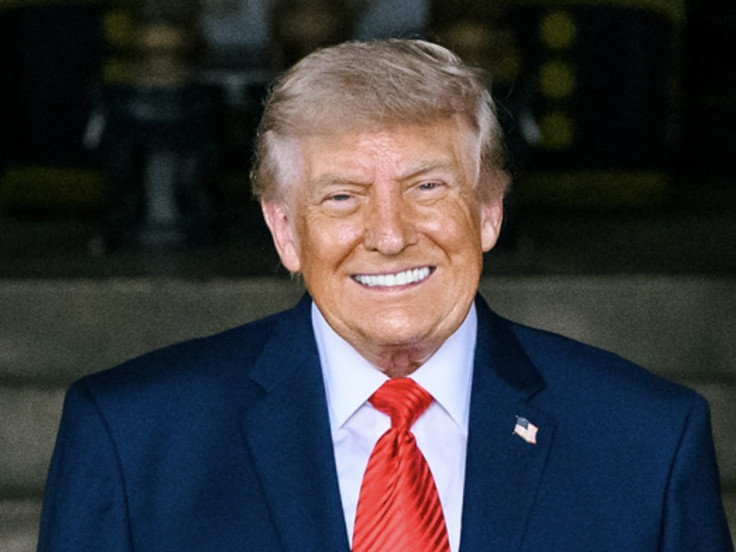
President Donald Trump used a White House signing ceremony on 12 June 2026 to launch a blistering attack on Somali immigrants, labelling them 'ingrates' who 'didn't build anything'.
The comments were made while the President was surrounded by American fishermen at the signing of a proclamation opening the Pacific Remote Islands Marine National Monument to commercial activity.
What began as a domestic policy announcement quickly pivoted to aggressive political rhetoric, with the President distinguishing between those he categorised as 'builders', specifically mentioning farmers and fishermen, and those he dismissed as 'complainers'.
The President singled out Congresswoman Ilhan Omar for specific condemnation, alleging she 'married her brother' and suggesting she should be 'thrown out of the country'. While Omar has repeatedly denied the marriage allegation, which has circulated for years without evidence, the President's public call for her deportation marks a significant escalation in the tensions between the White House and the Minnesota lawmaker.
Civil liberties advocates were swift to condemn the remarks, arguing that the President is using formal government events to fuel division. The President's rhetoric arrives amid a sustained campaign targeting the Somali-American community, which he has frequently linked to a large-scale federal fraud scandal in Minnesota.
Trump's Oval Office Remarks: The Full Context
When NTD correspondent Iris Tao asked Trump about the value of giving everyday Americans a platform in the White House, he replied with a contrast between those he deemed builders and those he deemed complainers. 'These people built the country, not the complainers,' Trump said. 'The complainers didn't build the country; these people built the country, whether it's fishermen or farmers or anything else, me, guys like me, they built the country.'
He then shifted without prompting to Somali immigrants in Minnesota. 'You know, I watch all these ingrates, they're always complaining, complaining. They didn't build anything, they couldn't build anything,' he said.
Trump may as well have called the rest of us peasants.
— Christopher Webb (@cwebbonline) June 12, 2026
According to him, it wasn’t workers who built America. It was rich guys like him and his cabinet:
“These people built the country, not the complainers. The complainers didn’t build the country…. Whether it’s fishermen or… pic.twitter.com/dxd4AnFyda
He alleged that Somali migrants had 'ripped off our system' and singled out Omar by name, alleging she 'married her brother' and suggesting she should be 'thrown out of the country'. Omar has repeatedly and publicly denied the marriage allegation, which has been circulating for years as an unproven claim.
The fishing proclamation itself reversed Obama-era conservation restrictions on the Pacific Remote Islands Marine National Monument, opening nearly half a million square miles of previously protected Pacific waters to commercial fishing. Executive Order 14276, signed in April 2025, had already directed federal agencies to reduce the regulatory burden on the fishing industry, and Thursday's proclamation extended that effort into the Pacific.
A Pattern of Escalating Rhetoric Toward Somali Immigrants
Thursday's comments did not emerge in isolation. Since December 2025, Trump has issued a sustained stream of attacks on the Somali-American community, largely framing them through the lens of a fraud scandal in Minnesota involving pandemic-era federal food assistance. Eighty-six people were charged in connection with the scheme, which investigators say netted approximately £750 million ($1 billion). All but eight of those charged are of Somali descent. Omar has not been accused of any wrongdoing in the case.
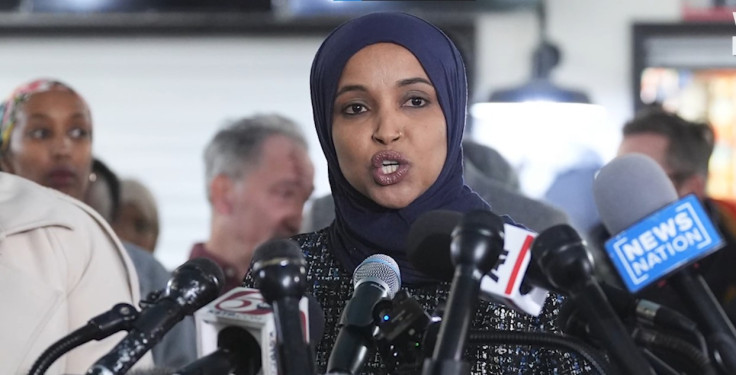
At a Cabinet meeting in December 2025, Trump called Omar and Somali immigrants 'garbage', saying the community 'contribute nothing' and that 'their country stinks'. He told reporters, 'These aren't people that work. These aren't people that say, 'Let's go, come on. Let's make this place great.'' During his 2026 State of the Union address, he referred to Somali immigrants as 'pirates', prompting Omar to shout back from the floor of the House Chamber.
In a January 2026 Truth Social post, Trump alleged that Omar 'knows everything' about the fraud scandal and declared she 'should be in jail, or even a worse punishment, sent back to Somalia'. In September 2025, he claimed at the Oval Office to have spoken with Somalia's president about deporting her; Omar called that account false, labelling Trump a 'lying buffoon'.
Omar's Record and the Broader Political Stakes
Ilhan Omar fled Somalia during its civil war and lived in a Kenyan refugee camp before arriving in the United States at age twelve. She became a US citizen in 2000 and was first elected to Congress in 2018. She has served in the US House of Representatives since January 2019 and has not been accused of any connection to fraud cases cited by the president.
Responding to Trump's December 2025 'garbage' comments, Omar said in a published interview: 'There's this creepy obsession that he seems to have on me that just feels pretty obnoxious. I've never been one to dwell on the words or attacks of bullies.' In a written statement published through her congressional office, she described Trump's comments as 'racist, xenophobic, and Islamophobic', and wrote: 'While he has consistently tried to vilify newcomers, we will not let him silence us.'
The political tension over Trump's rhetoric sits against a broader economic backdrop. Critics have noted that Trump's own construction projects, including Trump Tower in New York, relied on immigrant labour. Court records and reporting by NBC News documented the use of approximately 150 undocumented Polish workers during Trump Tower's construction in the early 1980s, a dispute that resulted in a legal settlement. Trump has said he was unaware of the workers' immigration status at the time.
With the Oval Office briefing now serving as a primary stage for these confrontational tactics, the future of the administration's relationship with immigrant communities remains deeply fractured. The debate is no longer just about policy; it is about the fundamental definition of who belongs in the nation they helped to construct.
© Copyright IBTimes 2026. All rights reserved.
- Recommended For You


